


 Posts




Russia and the West
Confrontational Russia
Aug 26th 2008
From Economist.com
Russia’s diplomatic recognition of two breakaway bits of Georgia is more bad news
TO GEORGIAN fury, Western consternation and strong support at home, Russia’s government recognised two breakaway regions of Georgia as independent countries on Tuesday August 26th. The map of Europe is different, and darker, as a result.
The planned dispatch of Russian diplomats to open embassies in Sukhumi and Tskhinvali, the main cities in Abkhazia and South Ossetia respectively, marks the formal dismemberment of Georgia: until very recently, Russia had at least in theory accepted its neighbour’s territorial integrity.
As long as Russia kept up its recognition of Georgian territorial integrity, it could claim that its soldiers in both places were peacekeepers operating under international mandates. Cynics, such as Georgia's president, Mikheil Saakashvili, had long joked that the Russian forces should be called “piece-keepers”, whose real role was to maintain the Kremlin's influence in the former empire. Russia says that its forces are protecting the Abkhaz and Ossetians from Georgian attack.
Diplomatic historians may find that the two new countries will not make for enduring study. The next act in the drama may well be that both new countries ask to become part of the Russian Federation. That underlines Russia’s dramatic military victory against Georgia in this month’s war, giving it a permanent presence south of the Caucasus mountains, close to the vital oil and gas pipelines that bring energy from the Caspian region and Central Asia to Turkey and beyond.
Russia likes to draw parallels with Kosovo—a state carved out of Serbia as a result of Western military intervention. But the parallel is superficial. Few embassies will open in South Ossetia (which, following the ethnic cleansing of its Georgian population, has a population little bigger than that of Liechtenstein). Close Russian allies such as Belarus and Tajikistan will be keen to put on a show of support. Others may be more chary of recognising Russian puppet states as independent countries. Moldova and Azerbaijan, for example, have headaches with similar entities, Transdniestria and Nagorno-Karabakh. Like South Ossetia and Abkhazia, they are the result of ethnic flare-ups in the dying days of the Soviet Union. Russian allies farther afield, such as Venezuela and Cuba, may be tempted to join in the humiliation of the West.
Hard words are flying. Britain and America have condemned the move. Angela Merkel, the German chancellor, called it “unacceptable”. She is on a hastily arranged visit to the Baltic states, which are now shivering in anticipation of what Russia’s foreign policy may hold in store for them. France, which holds the presidency of the European Union, had already called an emergency summit for September 1st to review ties with Russia. It was the French president, Nicolas Sarkozy, who brokered a ceasefire on August 12th. He is furious with what he sees as Russian double-dealing.
Some of the strongest words came from Carl Bildt, the Swedish foreign minister: “That the Russian government leadership now has chosen this route means they have chosen a policy of confrontation, not only with the rest of Europe, but also with the international community in general,” he said.
All that may be true. But for now, criticism of the Kremlin’s actions in Georgia seems to be fuelling the Russian leadership’s determination to do more of the same. Public opinion seems strongly behind the muscular new foreign policy, seeing it as a sign that Russia has recovered from the weakness of the 1990s. Russia seems not to care that Western countries are now threatening to block its membership of the World Trade Organisation.
Indeed, Russia feels it can easily withstand Western displeasure. Soaring oil and gas prices have put nearly $600 billion in its hard-currency reserves. Many Russians reckon that in the end the big European countries that matter will decide that they care more about trade ties and reliable energy supplies than they do about Georgia. On the evidence so far, that assessment may be correct.
Tuesday, August 26, 2008
| [+/-] |
this from Economist website today |
| [+/-] |
Colonel Khuiyovich is returning to duty |
This memo was published in the Baltic Outlook (part of the Baltic Independent in whic I was the managing editor) in the summer of 1993. Now seems a good time to republish it.
It was a (perhaps lame) attempt at satire. Posted further below is an account of what happened next (published in the Spectator in February 1994)
No laughing matter
Satirising the KGB was a mistake, Edward Lucas discovered
--------
The ambassador was in confidential mood. "Our intelligence agents have
found a secret document. The Russian secret service is planning to
destabilise the Baltic states, destroy our democracy and end our
independence," he explained. I began to feel uneasy. He started giving
details. I stopped him.
"Actually, I wrote that," I explained. "It was a joke, in a colour
magazine."
His face furrowed. "Joke? No, no, this was not joke. Is true. Our
security service send it to me." I persisted. He became cross, and we
parted in a miasma of mutual incomprehension and irritation.
Humour, and particularly satire, is a rare beast in the post-communist
Baltic, where journalism (whatever its factual shortcomings), is seldom
funny on purpose. Even my own newspaper, the Baltic Independent, seldom
strayed from a strict diet of heavy politics, diplomacy and business
coverage. Last year, however, we launched a colour magazine, Outlook,
deliberately intended to to entertain readers rather than just instruct
them. It was a considerable success, rapidly overtaking the parent
paper in pages and circulation.
Our first satirical effort was `Stereo-Balts' some thumbnail sketches
of common Baltic characters, including the ne'er-do-well returned
emigre, or the know-it-all foreign correspondent. Satisfyingly, several
people, some previously unknown to us, complained that the piece was in
reality a specific attack on them.
Next came a futuristic serial about the life and loves of a Riga-based
Scottish diplomat in a putative Riga of 1995. This also made people
cross, but being overtly set in the future, it was hard for them to
treat it as if it were true.
By the autumn, it was time for a change. I had been wondering for some
time what was actually going on inside the KGB (now renamed,
technically speaking, the Russian Intelligence Service). Clearly, there
must be somebody responsible for dealing with the Baltic states. What
did he do? How much did he really understand? Could he be conscripted
into a column? of the `Dear Bill' type in Private Eye.
(Edis notes. "Dear Bill" was a series of fake letters letters written as if
coming from Mrs Thatchers husband Dennis addressed to his friend Bill Deedes.
Appearing in the fortnightly satirical magazine Private Eye it gave a
'different' view of British events to the official Governement line)
Which was how Oleg Khuiyovich, Baltic desk officer at the KGB, made his
now scandalous debut in print. His name is as any speaker of
colloquial Russian would spot instantly impossible: it means,
literally, `Son of a prick'. I envisaged using him as a base to
satirise Baltic politics, Russian misconceptions about them, and life
in general. As a stylistic device, I would pretend that his memos were
being leaked to a `deep throat', and I would be credited as the
`translator'.
His first (and now last) appearance was a general scene-setter, in the
form of a memo to Boris Yeltsin, describing how the `re-integration' of
the Baltic into the Russian sphere of influence was proceeding, by
means of undermining democratic institutions through crime and
corruption, and paving the way for a take-over by regimes which would,
Latin American style, be autocratic at home, but docile towards their
superpower backers.
When this was written, last autumn, it was still possible to parody
Russian behaviour towards the Baltics. Vladimir Zhirinovsky was not yet
in parliament; the Russian troop withdrawal from the Baltics seemed,
with fits and starts, to be proceeding, and a really serious threat, as
opposed to the occasional threatening mumble, seemed a long way off.
Colonel Khuiyovich's memo was published, in the usual slot for a
humourous article (more serious features included an account of the
ten-day Riga-Istanbul bus route favoured by soap traders, and
interviews with Latvians about their wartime choice between Stalin and
Hitler).
Distributing all 12,000 copies from Tallinn's antique printing plant
takes some time. But two weeks later, a fax from the main Baltic
lobbying group in the United States arrived, requesting us to send the
`orginal' of the `KGB document' as soon as possible, so that it could
be used in a direct mail shot alerting Baltic-Americans to the fiendish
Russian plot. We giggled at what seemed an amusing, one-off
misunderstanding by a young, overly-serious American lobbyist. Rather
less funny was a phone call from the Latvian Defence Ministry. Please
could we urgently publish a correction. The Ministry was being
bombarded with faxes and phone calls from panicky Latvian-Americans,
who wanted to know what was being done to round up Mr Khuiyovich's
agents. Somewhat embarassed, the civil servant explained: "Of course
I know it's a joke. With a name like that it's obvious. But these
Americans don't believe me when I tell them."
Next came the Lithuanian parliament's research and analysis centre.
They did not call us, but had, we heard, spent several days `analysing'
the document (which by then had been translated in Lithuanian, minus
the author's name). The country's security service had been asked to
cross-check it point by point, and the embassy in Moscow was trying to
confirm it. Via a third party, we tried to put them off the scent. "If
it's a joke, it's not very funny," snapped an official and put the
phone down.
A few days later we received a phone call from the Estonian Foreign
Ministry. Could we be a bit more specific about how the document was
leaked, the official asked. We tried to explain. He was unconvinced.
"But look at the name Khuiyovich what it means in Russian". "I
don't speak Russian," he replied sniffily. "And anyway, only a sick
person would joke about a subject as serious as this."
By the time of my interview with the worried Baltic ambassador, the
memo had taken on wings of its own. Translated and re-translated, most
of the clues that it was fictional had disappeared. And with what the
Balts now call, without elaboration, the `Situation' (meaning the
threat from Russia) darkening by the day, Colonel Khuiyovich's menacing
assertions seemed all too likely to be true. We published correction
after correction, but to no avail. Like the notorious Douglas Hurd memo
on the desirability of expelling of Muslims from Europe (a palpable
forgery which is widely believed in the Arab world to be authentic),
fiction was proving more believable than fact.
There is an unhappy precedent to this. Our pre-war predecessor, the
Baltic Review, unwittingly provided the excuse for Stalin's annexation
of Estonia, Latvia and Lithuania by printing an article about the need
for a new Baltic security pact against the Russian threat. Stalin said
that this was evidence that the Baltic States were plotting against the
non-aggression pacts into which they had just been coerced, and marched
in. It is hard to imagine Colonel Khuiyovich's memo playing such a
deadly role. But in the current climate, his first appearance in print
will be--in so far as we can influence it--positively his last.
To: Boris Yeltsin, President, Russian Federation
From: Oleg Khuiyovich, Russian Intelligence Service
Re: Developments and prospects in the near abroad (Baltics)
I am pleased to report that the renewed integration of this region in
our historic sphere of influence is proceeding satisfactorily.
As you will recall, our policy is proceeding on two levels. On the
surface, we are dragging our feet on the question of troop withdrawal,
while continuing to protest about the abuse of human rights of our
Russian brothers and sisters in Estonia and Latvia.
Our real intentions are different. You will recall the seminar I gave
two years ago on the United States' `Monroe Doctrine' in Latin America.
This is the conceptual model we are now using for the Baltic region.
Keeping an overt military presence in these countries is costly, both
in terms of cash and of criticism from abroad. It is also ineffective:
our troops are, after all, basically useless except for crude military
intervention, which is not in our interest.
Our needs in the Baltic are quite simple: we want to know what is going
on, to be able to secure specific needs, and prevent anything we
dislike. The same, in fact, as the US enjoyed for decades in Latin
America.
In practice, this means preventing the establishment of a solid
democracy. A free press, independent-minded parliamentary deputies, an
unbribable judiciary or sound public administration would all be major
obstacles to our need to manipulate and influence what is going on.
Instead, we need a sleepy, corrupt and rather autocratic system, which
nevertheless enjoys fairly wide public support. (Both we and our
American colleagues have had considerable difficulties with allies who
were hated by their own people).
Stage one, which we are currently engaged in, is therefore to undermine
democratic institutions and public confidence in them. Stage two will
be to establish autocratic regimes, nominally independent but in fact
subservient to our interests.
Our chief weapons in undermining democracy are crime and corruption. We
have made great strides in inspiring a public dread of `the mafia'.
Bomb explosions in all the major cities of the region are now a regular
occurrence, and the police are (as one would expect given our
continuing presence in their ranks) getting nowhere. Certain
newspapers, not without some help from us, specialise in the most lurid
and sensationalist reporting of `organised crime'. As one would expect,
when it comes to `organising crime' our people are unbeatable. As a by-
product, we are now well established in sectors of the economy such as
hotels, transport, and import-export; we make a tidy profit, and when
the time comes, we will be ideally placed to make sure that our own,
and other people's criminal activities cease practically overnight. The
public will be heartily thankful, and all the more likely to believe
that the new `National Patriotic' authorities (or whatever name they
chose) were right to sacrifice the trappings of democracy on the altar
of law and order.
Another strongpoint is our manipulation of the armed forces. We have
successfully concocted two major scandals one in the Estonian
volunteer armed forces and one in the Lithuanian. We have placed well-
trusted agents in senior positions in the defence ministries of all
three countries. These two tactics produce the following beneficial
results: a) the West is highly sceptical of any serious military co-
operation with the Baltic states; b) any seriously patriotic forces in
the defence ministries or general staffs can be monitored and
sabotaged; c) public confidence in the armed forces is low, and d) when
the time comes, it will be easy to marshall them behind autocratic
rule.
We have infiltrated, with little difficulty, all the major
political parties; we also have certain groupings which are entirely in
our hands and may provide a useful platform for the seizure of power.
We have agents-in-place in the diplomatic services of all three
countries, even at the highest levels, meaning that we are minutely
informed about Western intelligence activities in the region. One of
our top agents was recently even a guest of the CIA! We have
discouraged the growth of independent broadcasters, and almost regained
our previous presence in state radio and television.
We plan to continue these activities until we are certain that an
indirect seizure of power will be both inconspicuous and completely
effective. Once we have created a climate of hopelessness, in which
both the public and most of the political elites despair of democratic
solutions to their problems, we will assist our `strongmen' into
office.
These `strongmen' (we have several candidates) are typically well-known
politicians, somewhat disappointed by their political fortunes and with
a firm sense of their own destiny. Many of these do not fully realise
that they are serving our interests: we have flattered them into
thinking that they alone really `understand' the situation in Russia,
the threat from the `mafia' etc. Although the plan varies somewhat
between the three Baltic states, in essence it involves them, backed by
some colleagues, the army and police, declaring a state of emergency
against crime. They will then suspend parliament on suspicion of
corruption (not difficult, given our activities in this field), impose
some restrictions on the press, freeze the activities of political
parties and restrict public gatherings. There is unlikely to be much
public protest. Criminal activity will have ceased dramatically, and we
will quickly strike some preferential trade deals, creating the sense
of increasing prosperity.
We do not anticipate any serious reaction from the West. Their
expectations were never very high anyway, and they are more likely to
be grateful for the sudden return of stability than believe what will
sound like wild conspiracy theories concerning its cause.
Saturday, August 09, 2008
| [+/-] |
Georgia: my take from today's London "Times" |
How Georgia fell into its enemies' trap
The fighting in the Caucasus should be a deafening wake-up call to the West
When is a victory not a victory? When it dents your country's image, scares your allies and gets you into an unwinnable war with a hugely stronger opponent.
That is the bleak outlook for Georgia this weekend, after what initially looked like a quick military win against the separatist regime in South Ossetia. Georgia's attack followed weeks of escalating provocations, including hours of heavy shelling by the Russian-backed breakaway province and signs of large-scale Russian reinforcement.
Thanks to American military aid, Georgia's 18,000-strong armed forces are the best-trained and equipped fighting force in the Caucasus. But it is one thing for them to defeat the raggle-taggle militia of a tinpot place like South Ossetia (population 70,000). It is another for a country of less than five million people to take on Russia (population 142 million). Now the Kremlin is reacting strongly. Russian warplanes are reportedly striking targets in Georgia. Reinforcements are pouring in. And the Kremlin's mighty propaganda machine is lumbering into action while a cyber-attack appears to have crippled Georgia's websites.
For it is the information war, not what happens on the ground, that will determine the victor of this conflict. Russia is portraying Georgia as the aggressor, an intransigent and unpredictable country determined to restore its supremacy over an unwilling province by means of military force and “ethnic cleansing”. Such a country, clearly, would be unfit to receive Western support.
That seems to be working. European leaders have long been dubious about Mikhail Saakashvili, a charismatic US-educated lawyer who stormed to power in the Rose Revolution of 2005. Where the fans of the Georgian President see charm and brains, his critics - such as the German Chancellor Angela Merkel - see a dangerously headstrong and erratic leader. A crackdown on the Opposition in November, bullying of the media and instances of abuse of power among senior officials have allowed detractors to draw uncomfortable parallels between Georgia and Vladimir Putin's Russia.
These are misplaced: Georgia is not perfect, but it is not a dictatorship. Its leadership does not peddle a phoney ideology, such as the Kremlin's mishmash of Soviet nostalgia and tsarist-era chauvinism. It has a thriving civil society, vocal opposition and ardently wants to be in the EU and Nato. Moral grounds alone would be enough reason for supporting it against Russian aggression.
But on top of that is a vital Western interest. The biggest threat Russia poses to Europe is the Kremlin's monopoly on energy export routes to the West from the former Soviet Union. The one breach in that is the oil and gas pipeline that leads from energy-rich Azerbaijan to Turkey, across Georgia. If Georgia falls, Europe's hopes of energy independence from Russia fall too.
Yet the West is both divided and distracted. America will be furious if reports turn out to be true that Russian warplanes bombed an airfield where Pentagon military advisers are based. But a lame-duck president is not going to risk World War Three for Georgia. In Europe, Georgia's allies are mostly small ex-communist states such as Lithuania; heavily outnumbered by those such as Germany that prize their relations with Russia, seemingly, above all else. It seems Russia is ready to hit back hard, in the hope of squashing the West's pestilential protégé.
In short, it looks more and more as though Georgia has fallen in to its enemies' trap. The script went like this: first mount unbearable provocations, then wait for a response, and finally reply with overwhelming military force and diplomatic humiliation. The idea that Georgia sought this war is nonsense. Recovering control of South Ossetia from its Russian-backed rulers has been a top priority for the Georgian authorities for years. But nobody thought it would come by military means. The Georgian strategy had been to use soft power, underlining its prosperity and the corruption-
busting successes of Mr Saakashvili's rule. That contrasted sharply with the isolation and cronyism of South Ossetia, which survives only on smuggling and Russian subsidies.
Now that strategy is in ruins. As things stand, Georgia will be fighting not to regain South Ossetia or even to deter aggression, but to survive. It is hard to see any good outcome. Georgia has failed to win a quick victory: crucially, it failed to block the Roki tunnel under the Caucasus mountains, normally used as a smugglers' highway, but now the route for Russian heavy weapons that Georgia cannot counter for long. Worse, the authorities in Abkhazia, Georgia's other breakaway region, may mount an attack, either on its own or with Russian help.
The fighting should be a deafening wake-up call to the West. Our fatal mistake was made at the Nato summit in Bucharest in April, when Georgia's attempt to get a clear path to membership of the alliance was rebuffed. Mr Saakashvili warned us then that Russia would take advantage of any display of Western weakness or indecision. And it has.
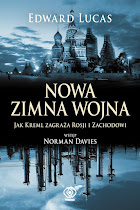
Edward Lucas is the author of The New Cold War (Bloomsbury)
Thursday, August 07, 2008
| [+/-] |
Recommended |
I had some hand in this print-edition obituary of Aleksander Solzhenitsyn, which is much better than the hurried "first take" which went up on the web on Monday morning. I had nothing at all to do with this three-page briefing on Russian intellectuals, except to read it, agree with it, and admire it.
| [+/-] |
Europe View no 93: more on Morar |
Europe.view
Corruption for and against
Aug 7th 2008
From Economist.com
Why Daniel Morar deserves the West’s support
CORRUPTION in Romania is a hot topic as the government decides whether to renew the mandate of the prosecutor-general, Daniel Morar. His supporters see him as a valiant scourge of high-level corruption; his opponents think he is an incompetent stooge pursuing political vendettas. These are the five common—but flawed—arguments against him.
First: the West is no better and its criticisms are hypocritical. Certainly since the collapse of communism the ethical underpinnings of the western system have steadily crumbled. The Europe of Gerhard Schröder and Silvio Berlusconi has little authority to condemn anybody.
But the worst features of old Europe should hardly be a model for anyone. Italy’s economy is in a terrible mess; Germany has been nobbled by Russia. And Romania, as a much poorer country, cannot afford bad government. It has a once-in-a-lifetime chance to catch up the lost decades of communist rule and that depends largely on billions of euros from the taxpayers of the richer part of the continent. Corruption endangers that.
The second argument is that Mr Morar has made no difference. Corruption is just as bad as it always was. Again, there is a grain of truth in that. Bribery in schools, clinics and the like is endemic. But to be fair, dealing with that is not Mr Morar’s job: his prosecutors are supposed to go after high-level corruption, not day-to-day sleaze. His lack of results is notable, but hardly his fault: courts hand down derisorily lenient sentences and parliament preserves the immunity of his top targets. Even if Mr Morar is just scratching the surface of the problem and if some or even many of his prosecutors are incompetent, it is hard to argue that things would be better if nothing was happening at all.
Third: the real story is a battle of political clans, one of which is using the “anti-corruption issue” to attack the other. This has a large element of truth, in that the political grouping headed by President Traian Basescu has indeed used the corruption issue to bash its opponents.
And the president’s deplorable way with advisers, plus unexplained parts of his communist-era personal history, when he had a plum job abroad, certainly give his critics some serious ammunition. But that does not mean that anti-corruption fight is a sham. Politics in a free society often involves parties pushing good causes for opportunistic reasons. At the very least the past couple of years have seen an end to the climate of impunity that long characterised Romanian politics.
Fourth: the corruption issue is exaggerated. Most Romanians don’t pay bribes and the non-corrupt bit of the economy is what matters. Certainly growth has boomed and foreign investment has been flooding in. Yet those same foreign investors lament the damage corruption does. In particular, corruption in the education system devalues the “currency” issued by schools and universities—they will eventually become meaningless. And it is hard, if not impossible, for public administration to produce a modern infrastructure in a system plagued by corruption. Without that, growth will be throttled.
Five: this isn’t about morals. Corruption is just a symptom of bad government. True. It would be insane to start an anti-corruption drive by locking up all the doctors and teachers who take under-the-desk payments. But that is no excuse for leaving things as they are. Better salaries in the public sector are a necessary condition for ending corruption. So is more transparency. But it is also essential to punish flagrant wrongdoers, particularly at the top. Without that, no anti-corruption drive will have any credibility.
| [+/-] |
Security thumbsucker |
A bowl of thin alphabet soup
Aug 7th 2008
From The Economist print edition
The Kremlin wants a new security club for Europe and Asia. Can it work? And should it worry America, which is relearning to love its allies?
WHETHER the story is Muslim separatists killing Chinese policemen, Iran threatening to close the Strait of Hormuz to Western oil tankers, lethal fighting in a breakaway province of Georgia or Russia planning to put nuclear bombers in Cuba in retaliation for perceived American adventurism in Europe—just to take news items from the past few days—it is easy to see why officials in Moscow, Beijing and elsewhere think the security of the Eurasian land mass could be in better hands. Old alliances such as NATO, and looser outfits such as the Organisation for Security and Co-operation in Europe (OSCE), do not seem to fit the bill. They are, critics say, too narrow in their membership, legally flimsy and too old-fashioned in their scope. High time, so it would seem, for something better.
That, roughly, is the thinking in Moscow, where for the first time in years Russia seems to be offering new ideas rather than old grumbles. Fuller details are promised in September. For now, the plan as outlined by President Dmitry Medvedev, and promoted by Russia’s ambassador to NATO, Dmitry Rogozin, is to have a big international conference in Moscow next year, attended by all NATO and EU countries, Russia and its ex-Soviet allies, as well as China and (probably) India, to set up a new security organisation to deal with issues such as terrorism and illegal migration. And who could object to that?
So far, the Western response has been muted. Some countries in Europe like the idea of a security structure that would rely less on American hegemony and more on international law. Others are privately sceptical, but think it would be rude to dismiss the plan before hearing it in full.
The idea of security organisations that span Europe and Asia is nothing new. Russia and China set one up by treaty in 1996. In 2001 it became the six-member Shanghai Co-operation Organisation (India and three other countries are observers). This aims to deal with the three big dangers (at least as seen by autocratic multi-ethnic countries): terrorism, separatism and extremism. The outsiders who support Islamist extremists in the North Caucasus are likely to be the same people who back Muslim separatists in China’s far west and insurgents in Uzbekistan’s Fergana Valley—so the thinking goes. The SCO’s chief role is still to swap information and co-ordinate anti-terrorist work.
It has gained weight since then, becoming both a talking-shop for countries twitchy about American dominance and developing a loose military role. Last year member states played war games in Central Asia—the biggest Russian-Chinese shindig of that kind since the Sino-Soviet split half a century ago. That prompted panicky reactions: “OPEC with bombs” or “the WWW” (World Without the West).
Such talk is exaggerated. Bobo Lo, a London-based security pundit and author of a forthcoming book called “Axis of Convenience”, says the SCO’s main aim is to promote Russian and Chinese interests in Central Asia “without spooking the natives”—in other words, smaller countries in the area. If it becomes too controversial, it loses usefulness. A Tajik-backed bid for Iran to get full membership, launched in April, has got nowhere.
One aim of the Russian plan may be to nudge Western countries into taking the SCO more seriously. It would have a seat at the table at the planned conference, ranking alongside international bodies such as NATO. Western nervousness about the SCO and similar bodies risks looking hypocritical: the EU and NATO fume about Russia’s use of “divide and rule” tactics, using bilateral arrangements to undermine multilateral organisations. Yet that is pretty much how the West treats Kremlin-sponsored international organisations.
But the big problem facing any new organisation is not Western fastidiousness but deeper conflicts of values and interests. Even the SCO does not function altogether smoothly. Russia and China are partners on some things, but rivals on others. Arms sales from Russia to China have slumped in the past two years. Russian policymakers realise that a rising China will become a steadily stronger neighbour, keen to redress past injustices. In the long term, says Mr Lo, these may include “red line” issues, such as the territories that a weakened Chinese empire ceded to tsarist Russia. That imbalance seems to be diminishing Russian enthusiasm. Russia is resisting full Chinese membership of the G8. Talk in Moscow of a “multipolar world” has given way to praise for “common European civilisation”. “They are worried that in a multipolar world not all poles are going to be equal,” says Mr Lo.
So how would the new Eurasian security organisation reach agreement? Disputes between pro-Western and pro-Russian states have crippled the consensus-based OSCE, an outfit that was once much liked by Russia as a non-military alternative to NATO. Russia banned OSCE election monitors from recent elections and has sidelined it in escalating conflicts such as Georgia (see article). So the new outfit is unlikely to find agreement more easy.
America and European countries will be encouraged if Russia truly wants to be part of a space that foreign-policy wonks such as Dmitri Trenin at the Carnegie think-tank in Moscow call the “Greater West”. But the problem is that being “Western” is hard to define. Speeches by Russian policymakers seem to reflect a 19th century understanding of Western-ness, based on a mixture of national sovereignty and a common cultural heritage in Christianity.
Those ideas are out of step with the realities of the 21st century. Western countries now sign up to lots of sovereignty-limiting multilateral accords, and try to live up to agreed standards on human rights and political freedom. Such agreements are anathema to many in Russia and other SCO countries, who see them as hypocritical and irrelevant to security.
In practice, it is often either the propagation of common values (in the case of NATO) or common dislike of those values (in the case of the SCO) that provides the sort of glue that can hold an international body together. Is any ideological glue strong enough to fuse the whole of Eurasia into a single unit? On any of the challenges common to all the countries in that vast area—from collective security to energy supplies to minority rights—views diverge. Until that changes, the prospects for the Russian grand design look dim.
| [+/-] |
War in Georgia |
he Caucasus
Bang bang, who’s dead?
Aug 7th 2008
From The Economist print edition
Sabre-rattling continues in a dangerous corner of Europe
IF IT is not the prelude to a real war, it risks being mistaken for one—and in a corner of Europe where Western and Russian interests could clash nastily. The talk of war has been in the air for months. But in the past two weeks six people have been killed in the breakaway (and Russian-backed) region of South Ossetia.
Claim and counterclaim abound. Russia says that Georgia fired first and is reinforcing its forces as a prelude to war. It sent warplanes into Georgian airspace last month—to deter an attack, it said. It also blames Georgian warplanes for violating South Ossetian airspace. Georgia says this is disinformation: Russia and its South Ossetian allies “are trying to create an alternative reality”, says a spokesman. Georgia has brought foreign ambassadors to inspect its lightly armed guard posts which, it insists, fire only in self-defence. This is by no means the first skirmish in the region. Georgian and South Ossetian politicians wrangled about a possible meeting on August 7th aimed at calming the mood.
But the row has given Russia a chance to step up pressure on Georgia, portrayed in the Russian media as a tiresome and aggressive Western stooge. The South Ossetian leader, Eduard Kokoity, said that he would force Georgian forces out of his self-declared republic (which is a patchwork of villages and small towns, some controlled by Georgian authorities and others by separatists). He says 300 Russian irregulars have come to his aid.
The quarrel in South Ossetia follows an escalation of tension in the other breakaway region of Georgia, Abkhazia. Russia has reinforced its military presence there, which is nominally part of a UN-monitored peacekeeping effort. A German-drafted peace plan for the economic revival of Abkhazia, indefinite autonomy and the return of Georgian refugees has so far stalled. The Abkhaz authorities are uneasy about the Russian embrace, but fear the return of ethnic Georgian refugees, once the largest ethnic group in the region.
The Kremlin’s immediate aim seems to be to force Georgia to return to the Joint Control Commission in South Ossetia. This body comprises Georgia, Russia, South Ossetia and the Russian republic of North Ossetia, just across the border, with the Organisation for Security and Co-operation in Europe (OSCE), a Vienna-based multilateral body, as an observer. Georgia thinks that this is intolerably unbalanced and has walked out.
Russia also wants Georgia to give a formal guarantee that it will not use force in either breakaway region. Georgia thinks that unless its refugees can return this would amount to de facto recognition of the secessionists. It wants a stronger OSCE presence, demilitarisation, and international (not Russian) peacekeepers. It also wants joint Georgian-Russian control of the Roki tunnel under the Caucasus mountains. This, Georgia says, is used both for smuggling and for illegal reinforcements to South Ossetia.
Russia’s broader aim may be to try to roll back the advance of pro-Western forces in its “near abroad” by highlighting the West’s inability to help Georgia. The hotting up of Georgia’s conflicts coincided with Kosovo’s declaration of independence, recognised by much of the West, and American pressure for the expansion of NATO to Georgia and Ukraine.
That move has been stymied, mainly by Germany; Georgia was promised eventual NATO membership but no firm plan. Though Georgia has become a vital corridor for oil and gas exports to Europe, this has not brought the support that its leaders had expected. A lame-duck American administration has been able to do little, though Georgians hope a presidential-election victory by John McCain, an ardent supporter, may change their fortunes. The country’s strong-willed and idiosyncratic president, Mikheil Saakashvili, is not seen by all European leaders as quite the paragon of legality, freedom and reform that he claims to be. Georgia’s image was severely dented in November last year by a crackdown against the opposition.
Georgia is in a quandary: its Western friends tell it to stay calm yet seem unable to stop Russian bullying. It is all too easy to imagine misjudgements on either side leading to a real war. Georgian officials will spend August nervously at their desks. Some of their European counterparts may have other plans. As the recipients of an often daily blizzard of alarms and appeals from Georgia, they think that a summer break might be just the ticket.
| [+/-] |
Americans in the Gulag |
Chained ghosts
Aug 7th 2008
From The Economist print edition
The Forsaken: An American Tragedy in Stalin's Russia
By Tim Tzouliadis
Penguin Press; 436 pages; $29.95. Little, Brown; £20
PARANOIA and exhibitionism, two of the defining characteristics of the Soviet system, make a nasty mix. It was the Soviet Union’s desire to crow over depression-stricken America that encouraged it to let hundreds of workers, desperate for jobs and a new start in life, immigrate there in the early 1930s. Exactly how many nobody knows; almost all ended up in mass graves. Initially lauded as welcome refugees from the miseries of capitalism (and as useful specialists who might help replicate the bits of it that worked, such as factories) from 1935 onwards they became enemies of the people, infiltrators and spies. A tiny handful, such as Paul Robeson, a singer, were tolerated as propaganda trophies. The rest sank into a living Hades of torture, rape, slave labour, starvation, frostbite and death, shared with millions of others.
The horrors of the Gulag ought to be as well known as Auschwitz, but they aren’t. Tim Tzouliadis includes many of them in his sprawling narrative. His statistics are sometimes sloppy and he seems barely aware that for most of its people the Soviet Union was already a hell-hole, even when the American workers were happily playing baseball in Gorky Park.
The real value of his book is in chronicling the extraordinarily supine behaviour of American bureaucrats and politicians towards the fate of their fellow-countrymen. Even before their arrest, most of the Americans were, in effect, prisoners: with their passports confiscated they were involuntary Soviet citizens. But the only people who might have helped saw no reason to do so. Diplomats in America’s newly established embassy in Moscow regarded all the migrants as communist sympathisers who had thrown in their lot with the system. Some were, but many were not. Yet the diplomats put every obstacle and delay in the way of desperate people who were risking instant arrest for even contacting the embassy, for example by demanding that fees for replacement passports be paid in dollars at a time when possession of hard currency was a criminal offence.
Equally astonishing was the lack of even a single squeak of protest. America’s ambassador, Joseph Davies, was an idle, gullible, Stalin-loving art collector. When the case of a missing American was half-heartedly raised by a subordinate, he promptly apologised to the Russians. Even when Americans working as locally hired staff at the embassy were arrested, nobody complained. George Kennan, a diplomat, eventually realised what was happening and wrote an eloquent memo. But nobody acted.
If the diplomats look bad, so too do the Moscow-based foreign journalists, who shunned the story as liable to risk their official accreditation; the debaucheries on offer nightly at the Hotel Metropol, courtesy of the NKVD secret police, may have led them to choose their own livelihoods over the lives of others.
The outbreak of war would have been a chance to ask for Stalin’s co-operation. Allied pressure brought a ragtag army of starving Poles from the depths of Siberia. But nobody cared about the Americans. President Franklin Roosevelt and his advisers emerge remarkably badly on this issue, seemingly determined not to bother Stalin with such trifles.
The most revolting and murky twist to the story is the treatment of another wave of American captives: prisoners-of-war in Germany who had the misfortune to be freed by Soviet troops and were deported to the Gulag. Clues abounded, chiefly from defectors and former Gulag inmates who reached the West. Yet the files remained secret. Neither their fate, nor that of Americans captured during the Korean War, received attention. The American Red Cross brushed aside a request to intervene, saying that inquiries about Americans “domiciled” (hardly the right word) in NKVD camps would be a source of “annoyance, if not embarrassment”.
A handful of survivors returned to tell their story to an often disbelieving public. Mr Tzouliadis has unearthed scandalous nuggets from the American archives. In that sense, he is right in his comforting assertion that “the truth, although it may be initially disbelieved, will always surface eventually.” But in another sense he is wrong. Even if the Russian archives were to yield everything they contain about the American names that so tantalisingly surface in his book, other questions would remain unanswered. When the eyewitnesses, perpetrators and victims are all dead, the real story of a crime dies too.
Monday, August 04, 2008
| [+/-] |
First take on Solzhenitsyn (online obit) |
Alexander Solzhenitsyn
An icon of his age
Aug 4th 2008
From Economist.com
The death of Alexander Solzhenitsyn gives Russia a chance to reflect on authoritarianism
PROPHETS are without honour in their own country—at least until they die. For most of his adult life in the Soviet Union, Alexander Solzhenitsyn was persecuted. In exile in the West from 1974, his gloomy philippics and increasingly turgid prose aroused more bafflement than appreciation. After he returned to Russia in 1994, he was welcomed but then ignored.
His death is a chance to make amends, although whether a Russia that is increasingly nostalgic for its totalitarian past will chose to take it is another matter. In an online poll (admittedly wildly unscientific) taken in recent weeks, the totalitarian leader Joseph Stalin is a front-runner for the title of greatest Russian. It was criticism of Stalin, expressed privately in a letter to a friend, that landed Mr Solzhenitsyn with an eight-year sentence in the camps. It counted for little that he was a twice-decorated artillery officer, on the front-line of the Red Army’s triumph over Nazi Germany.
Having experienced the crimes of Stalinism at first hand, he exposed them in both fiction and factual form. “One Day in the Life of Ivan Denisovich”, published in 1962, gave Soviet citizens their first opportunity to read about the brutality, squalor, humiliation and fear of daily life in a prison camp, all told in the matter-of-fact style of a Russian folk tale. “The Gulag Archipelago” described the system, its tortures, rules and subculture, in relentless, gruesome, encyclopedic form. Modern scholars, able to research the subject with a freedom that Mr Solzhenitsyn could never have dreamed of, say it is astonishingly accurate.
His other books are more patchy. Although he detested the ravages of communist rule on Russian language and culture, the clunky techniques of Socialist Realism are all too visible in works such as “The Cancer Ward”. His later works are mostly panoramic histories of Russia in the past century that most readers found impenetrable. His latest work, a lengthy series of reflections on Jewish-Russian relations, prompted charges of anti-semitism that he furiously denied.
Mr Solzhenitsyn was a loyal communist in his youth. As a young man, he dreamed of writing a history of the Russian revolution, oblivious to the Stalinist terror going on around him. As a bright, young maths student, he once said he could easily have ended up being recruited by the NKVD, the secret police, to perpetrate terror. Instead he became its most potent critic. His political awakening came from long talks in prison with Arnold Susi, an Estonian lawyer jailed for being a minister in a non-communist government. That friendship survived for many years after both men were released.
As well as the gulag, Mr Solzhenitsyn’s titanic willpower triumphed over other adversaries: cancer, censorship and Soviet bureaucratic intimidation. In 1970 he won the Nobel prize for literature, but declined to accept it in person for fear that he would not be allowed to return to the Soviet Union. But by 1974, the Soviet authorities had had enough: he was bundled onto a plane to West Germany, to spend two decades abroad. Those in the West who had championed his cause were disconcerted to find that he saw the capitalist system as little better than communism. He denounced materialism and moral emptiness, and lived in increasing seclusion in a remote corner of New England.
As communism collapsed, his books, once read only in flimsy, blurred carbon copies, could all be published legally inside the Soviet Union. But he detested the man who brought that about: Boris Yeltsin, the first freely-elected leader in Russia’s history, spurning his offer of a state decoration. He could not, he said accept honours from a man who had brought misery on his people.
To the consternation of some of his supporters, he did accept an award from the ex-KGB officer who became Mr Yeltsin’s successor, Vladimir Putin. He even seemed to downplay Mr Putin’s role in the KGB, saying that every country needed an intelligence service. Yet, although he praised the self-respect and stability that Russia had regained under Mr Putin, he remained deeply critical of its politics and the corruption and greed that capitalism had exposed and fuelled.
That message, often delivered in sententious, near messianic tones, had little appeal. A television programme consisting largely of all but unwatchable monologues lingered painfully on the airwaves and then died, unlamented. Few read his books.
But his death is a chance for Russia’s rulers to say what they think about totalitarianism. Was the collapse of the Soviet Union the “geopolitical catastrophe” of the last century? Or is the real disaster the failure of an independent Russia to cast off the chains of authoritarianism and empire? If Russia’s new president, Dmitry Medvedev, goes beyond simply offering condolences to the Solzhenitsyn family, his thoughts on that would be eagerly awaited.
Thursday, July 31, 2008
| [+/-] |
EU Divorce law |
Divorce without borders
Jul 31st 2008
From The Economist print edition
A simpler way to part ways
SHE was French; he was English; they had just moved to London from Paris. When he found out about her affair, she begged for a reconciliation. He was more ruthless: the same afternoon, he filed for divorce in France, one of the stingiest jurisdictions in Europe for the non-earning spouse and where adultery affects the court’s ruling. Had she filed first in England her conduct would have been irrelevant, and she would have had a good chance of a large share of the marital assets, and even maintenance for life.
International divorce is full of such dramas and anomalies, so the natural response of policymakers is to try to make things simpler and more predictable. But the biggest attempt in recent years to do just that, in a European agreement called Rome III, has just been shelved. Instead, several EU countries are now pressing ahead with their own harmonisation deal. Many wonder if it will work any better.
At issue is the vexed question of which country’s law applies to the break-up of a mixed marriage. The spouses may live long-term in a third country and be temporarily working in a fourth. The worst way to sort that out is with expensive legal battles in multiple jurisdictions.
The main principle at present is that the first court to be approached hears the case. Introduced in 2001, this practice has worked well in preventing international legal battles, but has made couples much more trigger-happy, because the spouse who hesitates in order to save a troubled marriage may lose a huge amount of money. Rome III aimed to remove the incentive to go to court quickly. Instead, courts in any EU country would automatically apply the local law that had chiefly governed the marriage. This approach is already in force in countries such as the Netherlands. A couple that moved there and sought divorce having spent most of the marriage in France, say, would find a Dutch court dividing assets and handling child custody according to French law.
That works fine among continental European countries where legal systems, based on Roman law, leave little role for precedent or the judge’s discretion. You can look up the rules on a website and apply them. But it is anathema in places such as England, where the system favours a thorough (and often expensive) investigation of the details of each case, and then lets judges decide according to previous cases and English law.
Another snag is that what may suit middle-class expatriates in Brussels (who just happened to be the people drafting Rome III) may not suit, for example, a mixed marriage that has mainly been based in a country, perhaps not even an EU member, with a sharply different divorce law. Swedish politicians don’t like the idea that their courts would be asked to enforce marriage laws based on, say, Islamic sharia.
The threat of vetoes from Sweden and like-minded countries has blocked Rome III. But a group of nine countries, led by Spain and France, is going ahead. They are resorting to a provision in EU rules—never before invoked—called “enhanced co-operation”. This sets a precedent for a “multi-speed” Europe in which like-minded countries are allowed to move towards greater integration, rather than seeking a “big-bang” binding treaty that scoops up the willing and unwilling alike. Some countries worry that using enhanced co-operation will create unmanageable layers of complexity, with EU law replaced by multiple ad hoc agreements.
The real lesson may be that Rome III was just too ambitious. A more modest but useful goal would be simply to clarify the factors that determine which court hears a divorce, and then let that court apply its own law. David Hodson, a British expert, proposes an international deal that would start by giving greatest weight to any prenuptial agreement, followed by long-term residency, and then take into account other factors such as nationality. That would then make it easier to end marriages amicably, with mediation and out-of-court agreement, rather than a race to start the beastly business of litigation.
| [+/-] |
Daniel Morar |
Romania
Mr Too Clean?
From The Economist print edition
An anti-corruption crusader faces the sack
FIGHTING corruption in a country that tolerates it is a lonely job, and Daniel Morar may not have his for much longer. Intensely disliked by most of Romania’s politicians and vilified in the media, he reaches the end of his term as head of the Romania’s anti-corruption agency on August 12th. A government announcement on his future—and likely replacement—is expected imminently.
If so, Romania’s hottest political issue will become an international one. A European Commission report on July 23rd criticised Romania’s lacklustre effort against wrongdoing, but did not impose sanctions as it did against Bulgaria. It praised Mr Morar’s agency, and a spokesman says his status is a “test case” of Romania’s readiness to curb high-level corruption after joining the EU in 2007.
The Romanian parliament, however, does not share this admiration. It uses its veto to prevent Mr Morar’s hottest cases from going to court. And of the 109 cases that were prosecuted in 2007, only 25 resulted in prison sentences, mostly for the minimum three years, or (with mitigating circumstances) even less.
Critics say that Mr Morar is pursuing political vendettas on behalf of his backers, chiefly Romania’s president, Traian Basescu, whose supporters are the main opposition Democratic Party in parliament. Mr Morar’s agency has indeed chiefly gone after politicians from other parties; but it has prosecuted some important figures in Mr Basescu’s camp too.
Mr Morar’s difficulties are a symptom of something else: a culture in which corruption does not equate with disgrace. Transparency International ranks Romania as the most corrupt EU country. Bribery is endemic, typically to secure medical treatment or teachers’ favours.
At an off-the-record seminar organised by a German think-tank recently, judges said punishing corruption severely would be hypocritical and harsh. The Romanian language has no precise word for “accountability”.
| [+/-] |
europe view no 92 |
Europe.view
Vague but sinister
Jul 31st 2008
From Economist.com
Russia’s new foreign policy concept
AS LAUNCHES go, it was more an ominous fizzle than a big bang. At a briefing in Brussels on July 28th, Russia’s ambassador to NATO, Dmitry Rogozin, answered most questions about the Kremlin’s plans for European security with a mixture of “don’t know” and “wait and see”. But the outlines are clear—and not particularly comforting.
The idea, first put forward by President Dmitri Medvedev, is to have a big international conference in Moscow, perhaps with India and China involved, to agree a legally binding treaty that will set up a European security organisation focussed on hot issues such as migration and terrorism. Its reach will stretch from “Vladivostok to Vancouver”.
But Europe already has an outfit with that mandate: the Organisation for Security and Cooperation in Europe (OSCE). Set up in the happy heyday of east-west cooperation, the OSCE is a talking shop with some do-gooding bits attached. Its members include America and Canada as well as every country in “Europe” (including five ex-Soviet republics normally counted as Central Asian). Its activities range from promoting media freedom to arms control. And Russia, lately, has been increasingly critical of the OSCE, particularly its election-monitoring arm.
That is because, put bluntly, Russia now thinks it got a bad deal when the old cold war ended. The OSCE promotes an interfering “western” agenda of human rights and open elections. The associated treaty on Conventional Armed Forces in Europe, signed in 1990, allows America to do too much and Russia too little in Europe. NATO and the EU run riot—for example in bombing Serbia and recognising Kosovo—unconstrained by international law.
The first, unstated, aim of the new Russian plan, based on what Mr Medvedev calls “21st-century realities”, seems to be to weaken, supplant, or outright replace the OSCE. Russia has already put the OSCE’s election-monitoring outfit under intense political and budget pressure (and blocked its observers’ visas in both recent Russian elections). Conveniently, Kazakhstan, a Russian ally, will be running the OSCE (into the ground, some think) in 2010.
Another element in the Kremlin plan is to get the outside world to take seriously Russian-led outfits such as the Collective Security Treaty Organisation, the Eurasian Economic Union, the Russian-Belarusian Union and the Commonwealth of Independent States. These bodies are so obscure and bureaucratic that they make the even the lame-duck OSCE seem important. The West has shunned official contact with them, seeing them as mere vehicles for Russia’s post-Soviet grandstanding. The Russian plan would give them similar ranking to the EU and NATO.
A third element may be to promote the “Finlandisation” of Europe, by diminishing American influence (but probably not removing it: Russia likes having some Americans around in Europe in case the Germans start getting uppity).
Now Western countries, divided and distracted as never before, just as Russia is newly rich and confident, must decide what to do. Ignoring the plan would look rude and hypocritical: after years of stroppy whinging, Russia has at least come up with a positive idea.
The main response should be that security is not just about powerful countries and blocks striking legalistic deals; it is also about values. That was the breakthrough that launched the OSCE’s predecessor in 1973 in Helsinki, when the Soviet bloc traded acceptance of its borders for recognition that human rights crossed them. If Russia now chokes on the notion of a Europe-wide commitment to political freedom, the rule of law and the rights of small countries to determine their future, that is troubling. But it is says more about what’s wrong with Russia than about anything else.
Friday, July 25, 2008
| [+/-] |
Bulgaria/Romania corruption |
Bulgaria, Romania and the EU
Balkan blushes
Jul 24th 2008 | SOFIA
From The Economist print edition
The European Union softens its criticisms of Bulgaria and Romania
BY THE polite standards of Brussels, it was quite tough. On July 23rd the European Commission issued critical reports on Bulgaria’s and Romania’s progress (or lack of it) in fighting corruption and spending European Union money. Yet after intense lobbying, the language was weaker than in the scalding drafts leaked earlier. And the commission dropped an explicit warning that Bulgaria was endangering its chances of joining the euro and the Schengen passport-free travel area.
Even so, the reports hit home, complaining of a “striking” absence of convincing results in Bulgaria’s anti-corruption fight, and of a “grave problem” over the “lack of accountability and transparency in public procurement” when spending EU funds. The commission announced severe sanctions, suspending aid worth as much as €486m ($770m). Without reform, the suspended sum will rise sharply by November.
Bulgaria’s prime minister, Sergei Stanishev, welcomed the softened language of his country’s report and promised an “action plan”. Outsiders treat all promises of improvement, along with such flourishes as the appointment of a well-regarded ex-ambassador, Meglena Plugchieva, to oversee the use of EU funds, with justified scepticism. Despite much shuffling of departments and expensively publicised initiatives, and what on paper look like the right laws and procedures, the glaring fact remains that Bulgaria’s efforts have shown almost no results in terms of convicting fraudsters or corrupt officials.
Indeed, public figures sometimes seem not just weak but malevolent. For example, the EU’s anti-fraud agency, OLAF, has accused high-ranking officials of being a “political umbrella” for gangs who have stolen millions of euros meant for Bulgaria’s backward and dirt-poor countryside. “Influential forces” in politics and the bureaucracy, suggested OLAF’s leaked letter, are “not interested” in punishing those linked to two notorious crime bosses.
Worries about Bulgaria and Romania, especially over their ability to administer nearly €38 billion promised by the EU up to 2013, are hardly new. In January it emerged that the man in charge of Bulgaria’s roads, Veselin Georgiev, had granted contracts worth hundreds of millions of euros to a company owned by his brother. The commission froze €144m for farming and road improvements, and Mr Georgiev resigned. So did the interior minister, Rumen Petkov, after reports that a drug gang had obtained secret internal documents from his ministry, and that illegal booze producers had traded money for favours from a senior crime-fighter. Mr Petkov is in charge of fund-raising for the Socialist (ex-communist) party, which heads the governing coalition and also won the presidential election in 2006.
Crime, corruption and a weak judicial system are overlapping problems. Not one of dozens of gangland killings since 2001 has been solved. The kidnapping of the president of a leading football club and, later, his wife within the past two months has highlighted the authorities’ seeming helplessness over organised crime.
What scandalises ordinary Bulgarians is that their country, the poorest in the EU, is missing a vital chance to modernise. Public services are dire—shown by a crisis this month in Sofia’s rubbish collection, which has left the streets piled with rotting piles of garbage. So foreign criticism, which in some countries might arouse defensiveness, is in fact welcomed. The EU’s popularity has rocketed, whereas the government’s negative rating is now as high as 73%. The country has lost, by some estimates, a quarter of its population since the early 1990s, shrinking from 10.5m then to as low as 7.5m now. That is a huge vote of no confidence by the public.
Parliament is another story. The government looks set to survive a no-confidence vote next week. A general election is due next summer, when a new centre-right party, headed by the mayor of Sofia, Boyko Borisov, is expected to do well. He attracts praise for his dynamism, though fastidious Bulgarians flinch at his background as an ex-wrestler, bodyguard and police chief: emblematic in their eyes of the political milieu that the country needs to dump.
In Romania, by contrast, politicians are relieved after escaping sanctions in a softly worded commission report on their anti-corruption and legal reform efforts. This too was watered down from the draft, itself weaker than some seasoned Romania-watchers had hoped. The commission bemoaned the lack of practical results but welcomed a “move in the right direction”. In Bulgaria, sadly, outsiders find it hard to see any movement at all.
If you wanted to discredit the EU, squandering taxpayers’ money in its most corrupt new members, Romania and Bulgaria, would be one way to go about it. Yet though Brussels is disappointed and even angry about the two countries’ performance since joining the club in January 2007, Eurocrats are not sure what to do. Sharp criticism and tough sanctions might merely demoralise those who are trying to make things better, as well as undermining the membership hopes of other Balkan countries. Despite everything, few believe that any of the new members would be better off out than in.
| [+/-] |
Geremek obituary |
Bronislaw Geremek
Jul 24th 2008
From The Economist print edition
Bronislaw Geremek, a Polish historian and politician, died on July 13th, aged 76
HAD he been in the West, Bronislaw Geremek said, he would have stayed out of politics. Safe in his enclosing study, with the lovingly filled and refilled pipe and the esoteric books, his fame would have centred round investigations of vagabonds in medieval Europe. Instead, because he was in Poland, he chose struggle. “The intellectual must be engaged,” he insisted. “We are fighting for the very right to think.”
His life mirrored his country’s story, of disaster, reconstruction, freedom and frustration. And he shaped it. Without cultured supporters like Mr Geremek, the communist regime in Poland in the 1950s and 1960s would have been even less credible than it was. Without its wily mastermind, Poland’s opposition in the 1980s would have found it far harder to outwit its oppressors. Without “Bronek”, as his friends knew him, polyglot, tweed-clad and cosmopolitan, Poland’s return to the European family of nations would have been slower and less certain.
It took him some years to become one of the “grains of sand” that clogged the machinery of totalitarian rule. First he abandoned the Communist party, in 1968 after the Soviet invasion of Czechoslovakia; later he taught in Poland’s flourishing intellectual underground. But his moment of glory came in August 1980 when, in his Volvo, he drove to Gdansk to deliver the Warsaw intellectuals’ message of support to the striking workers at the Lenin shipyard. He had been chosen mostly for his car; it was the most reliable motor the eggheads had.
He forged an unlikely but effective alliance with Lech Walesa, the earthy, mercurial leader of the nascent Solidarity trade union. “The most honest, truthful and intelligent person I ever knew,” Mr Walesa said of him, forgetting the anti-intellectual gibes he had chucked at him. Geremekian guile helped win a temporary victory: a few precious months of semi-freedom when Poles could speak, meet and publish, before the military crackdown in December 1981. Mr Geremek was interned, released and arrested again; in prison, he shovelled coal. The authorities confiscated his passport, booted him out of his university job, and prevented him publishing even purely academic work. “There’s one word in the book that they object to,” he told an interviewer. “It’s ‘Geremek’.”
The winds of history
That name was not the one he had been born with. He was the son of Borys Lewertow, a Jewish businessman and teacher, in a world that was soon destroyed by the Nazis. He referred to those years as a “closed chapter”, an experience that meant he could never be a writer as he intended, for he would never understand the horrors he had seen. “I saw my world go up in flames before my eyes…the little world of family continuity…of values, principles and rules.” He escaped from the Warsaw ghetto through a hole in the wall; his father died in the camps.
Sheltered by a Catholic Pole who later married his mother, the renamed Bronislaw Geremek survived the war. In 1950, at the height of the Stalinist terror in Poland, he joined the Communist party. He was 18. As a trusted party member (and talented historian), he was allowed to travel to the Sorbonne to study, a rare privilege. When critics later attacked him for this, he said he had been “seduced” by the socialist ideal.
And he more than made up for it. Released from jail in 1983 as communist rule in Europe neared its end, Mr Geremek devoted himself to hastening the regime’s downfall. Other Polish opposition figures could be waffly or provincial; it was hard to see them running the country. Not he. Urbane, brainy and funny, he seemed the embodiment of Poland’s hoped-for future. All that was necessary for the downfall of communism, he used to say, was for the barriers of fear and passivity to fall.
At the “round-table” talks in the spring of 1989, it was Mr Geremek who devised the terms for the communist surrender. The key was elections, free enough for the Solidarity-backed candidates to have a chance of winning. In fact, the result was a rout; and once Poland, the biggest country in eastern Europe, was free, the fall of the Berlin Wall was only a matter of time. The winds of history, Mr Geremek knew, would do the rest.
The country’s position in 1990 still seemed perilous. Would the economy survive the shock of transition? Would Poland ever be ready join the EU, let alone NATO? Mr Geremek was sanguine. And as a senior member of parliament and, from 1997 to 2000, foreign minister, he made things sure, signing the agreement in 1999 that brought Poland into NATO—“anchored for centuries” in Europe, as he hoped. His last job was as a member of the European Parliament, a distinguished and passionate member of an often undistinguished institution. “We have created Europe,” he said. “Now we have to create Europeans.”
His critics saw it all differently. The round-table deal was a canny fix, in which weak-willed opposition figures allowed the cronies of the old regime to maintain their power. That approach prompted the demand in 2006 for all public figures to admit any past collaboration with the communist authorities. Mr Geremek responded, echoing Dreyfus, “Je refuse”. The answer of an historian, a European, and a man of moral courage.
| [+/-] |
Europe View no 91 |
Europe.view
For your freedom and ours
Jul 24th 2008
From Economist.com
Captive nations inside Russia
Is Cornwall a “captive nation”? As last week’s Europe.view noted, influential Russians are pushing for America to rewrite the resolution that marks its Captive Nations Week (the third week in July), to make it clear that communism, not Russia, is the target. An even trickier question is not what other former Soviet-ruled countries make of this, but of Russia’s own internal composition—which includes places that some might also count as “captive”.
Countries’ borders grow and shrink, partly by consent, but also by conquest. Nations—defined, loosely, as people sharing a common language or culture—may find themselves no longer masters in their own house. Some may despair. Others start plotting.
Practicality is not the main determinant. In Cornwall, which lost its independence around 875AD, a doughty band of campaigners has revived the language and hopes to win back more rights. But compared to Scotland, where the separatist tide is running strongly, theirs looks like a lost cause. So does secession in Vermont, say, or Hawaii. In Russia, at least for now, those reviving, say, the Siberian language, or commemorating the short-lived and abortive independence of the Siberian republic in 1918, look a lot closer to Cornish nationalism than Scottish. But for how long?
Since 1991 the state calling itself the Russian Federation has been a miniature, de-communised version of the Soviet Union, paying lip-service to multi-ethnicity, but withholding actual cultural or political freedom from non-Russians: when Tatarstan wanted to write the national language in the orthographically better-suited Latin alphabet, the Kremlin insisted that Cyrillic was the only script to be used officially in the Russian Federation, regardless of practicality.
Since 1989, Russia's Muslim population has increased by 40% to about 25m. By 2015, Muslims will by some estimates make up a majority of the army, and by 2020 a fifth of the population—by far the majority in some regions.
How many of those Muslims will look to the tolerant “Euroislam” pioneered in the Tatar capital, Kazan, in the early years of the last century, or to indigenous Sufi forms, and how many may look abroad for more radical forms of Islam?
Added to ethnic and religious discontent is a growing regional consciousness. The colossal bribe-collecting opportunities created by Putinism have heightened the divide between big cities (particularly Moscow) and the rest of the country.
Heightened resentment does not mean that Russia is going to fall apart as the Soviet Union did. For now, no part of the Russian Federation looks remotely like being a viable independent state. Even the most ardent supporter of Captive Nations Week would not argue that the “Idel-Ural” that it cites (present-day Tatarstan, Bashkiria and their Finno-Ugric neighbours, briefly independent after 1917) has any chance of a Baltic-style breakaway.
But if anything can upset the post-1991 apple cart it will be ethnic-Russian chauvinism and heavy-handedness. As Paul Goble chronicles in his “Window on Eurasia” bulletins (a must-read for anyone interested in the politics of post-Soviet ethnicity), the Sochi Olympics have fuelled the revival of national consciousness among the Circassians. For this far-flung ethnic group, scattered throughout Asia Minor and the Levant by near-genocidal Czarist brutality, seeing the Olympics being planned at the site of their greatest historical tragedy is hugely offensive: some compare it to how Jews would react to a big international sporting festival being held at Ravensbrück or Dachau.
Russian ethno-nationalism, coupled with bad government, may disillusion Russians of all stripes with the lingering imperial features of Russian statehood. If talk of “captive nations” jars Russian sensibilities, the best answer is the great slogan of freedom-lovers in the Czarist empire: “for your freedom and ours”.
Saturday, July 19, 2008
| [+/-] |
Captive Nations Resolution (original) |
The original Captive Nations resolution of the U.S. Congress
PUBLIC LAW 86-90
Whereas the greatness of the United States is in large part attributable to its having been able, through the democratic process, to achieve a harmonious national unit of its people, even though they stem from the most diverse of racial, religious, and ethnic backgrounds; and
Whereas this harmonious unification of the diverse elements of our free society has led the people of the United States to possess a warm understanding and sympathy for the aspirations of peoples everywhere and to recognize the natural interdependency of the peoples and nations of the world; and
Whereas the enslavement of a substantial part of the world's population by Communist imperialism makes a mockery of the idea of peaceful coexistence between nations and constitutes a detriment to the natural bonds of understanding between the people of the United States and other peoples; and
Whereas since 1918 the imperialistic and aggressive policies of Russian communism have resulted in the creation of a vast empire which poses a die threat to the security of the United States and of all the free people of the world; and
Whereas the imperialistic policies of Communist Russia have led, through direct and indirect aggression, to the subjugation of the national independence of Poland, Hungary, Lithuania, Ukraine, Czechoslovakia, Latvia, Estonia, White Ruthenia, Rumania, East Germany, Bulgaria, mainland China, Armenia, Azerbaijan, Georgia, North Korea, Albania, Idel-Ural, Tibet, Cossackia, Turkestan, North Viet-Nam, and others; and
Whereas these submerged nations look to the United States, as the citadel of human freedom, for leadership in bringing about their liberation and independence and in restoring to them the enjoyment of their Christian, Jewish, Moslem, Buddhist, or other religious freedoms, and of their individual liberties; and
Whereas it is vital to the national security of the United States that the desire for liberty and independence on the part of the peoples of these conquered nations should be steadfastly kept alive; and
Whereas the desire for liberty and independence by the overwhelming majority of the people of these submerged nations constitutes a powerful deterrent to war and one of the best hopes for a just and lasting peace; and
Whereas it is fitting that we clearly manifest to such peoples through an appropriate and official means the historic fact that the people of the United States share with them their aspirations for the recovery of their freedom and independence:
Now, therefore, be it
Resolved by the Senate and House of Representatives of the United States of America in Congress assembled, That:
The President of the United States is authorized and requested to issue a proclamation designating the third week in July 1959 as "Captive Nations Week" and inviting the people of the United States to observe such week with appropriate ceremonies and activities. The President is further authorized and requested to issue a similar proclamation each year until such time as freedom and independence shall have been achieved for all the captive nations of the world.
| [+/-] |
Europe view no 90 |
Europe.view
Who’s captive now?
Jul 17th 2008
From Economist.com
A question about Russia
Each year since 1959, in the third full week of July, America has marked Captive Nations Week. The original Congressional resolution is worth reading. It highlights both what the drafter, the late Lev Dobriansky, saw as the success of the United States in “e pluribus unum” (making one nation out of many), and the failure of Communist empires to do the same. The continued celebration of the week is something of a totem for old cold warriors who believe that the victories of 1989-91 are still sadly unconsummated.
Yet the resolution's wording rings oddly. The list of “captive nations” reads: “Poland, Hungary, Lithuania, Ukraine, Czechoslovakia, Latvia, Estonia, White Ruthenia, Rumania, East Germany, Bulgaria, mainland China, Armenia, Azerbaijan, Georgia, North Korea, Albania, Idel-Ural, Tibet, Cossackia, Turkestan, North Viet-Nam, and others [sic, throughout]”.
It is hard to find rhyme or reason in that, even in its original context. Cossacks are Russian patriots; their beastly treatment under Soviet rule does not equate to a desire for national independence. Others whose history gives them every cause for complaint, such as the Circassians, don't appear at all. Is the aim of the resolution ethnic self-determination, or the destruction of communist rule? As it stands, the two are conflated.
Moreover, the phrase “Communist Russia” is wince-making. Many Russians find it unfair or outright racist to link Soviet rule, under which more Russians perished than any other nationality, with Russia itself. From a Russian point of view, it can be argued that the motherland was the greatest captive nation of all, its destiny hijacked by murderous ideologues (many of them, incidentally, not Russians).
A seminar this week in Moscow may mark the start of another push to have the resolution revised. One of the initiators, the Russian-American academic Edward Lozansky, believes that a differently phrased resolution could be the start of a real rapprochement between modern Russia and the countries of central and eastern Europe.
But there are two snags. One is that Soviet rule, particularly in its latter decades, did indeed mix Russian chauvinism with proletarian internationalism. The forcible Russification policies in the Caucasus, the Baltic states and elsewhere have left lasting bitterness.
Secondly, the Russian Federation is a work in progress. Around a fifth of the population are not ethnic Russians. Some are deeply integrated and count themselves as patriotic citizens of a common state. But others aren't. The spectrum of discontent ranges from separatists pursuing their cause by violent means (so far, thankfully, confined to the Caucasus) to moderate demands for greater cultural autonomy.
Bad government stokes such grievances, just as the rule of law and political freedom defuse them. America conquered the Sioux and the Cherokee, and treated its aboriginal population abominably for decades. But the political and legal systems at both state and federal levels, albeit imperfect, now work well enough to make separatism both fanciful and unnecessary.
The pervasive feeling of injustice and voicelessness in the Soviet system stoked captives' desire to be free, and fatally corroded a system already vulnerable because of its economic failure. But if Soviet legitimacy was based on phoney ideology, what of the new Russian state's identity? Is it a Swiss-style federation of equally sovereign peoples? Or is it an ethnically Russian state in which non-Russians are outsiders, guests or immigrants? The first would require an unprecedented degree of tolerance from ethnic Russians. The latter would relegate the 20% of the population to permanent second-class status.
Ever since 1991, the answer, usually unspoken, has been “don't know”. Next week's Europe.view will suggest some answers—and, if anyone is puzzled, have more on the mysterious country of “Idel-Ural”.
| [+/-] |
book reviews |
Russia
Doom, gloom and boom
From The Economist print edition
Crooks and spooks run amok in Russia
|


THE comforting conventional wisdom is that after Russia’s chaos and humiliation in the 1990s, eight years of tough rule by Vladimir Putin has brought prosperity and stability. Russia is now on course to become free and law-abiding. These four books suggest that mild panic might be the better part of wisdom.
The most alarming (or alarmist) of the books is “The Age of Assassins”. It stitches together the most lurid scandals in post-Soviet history in a narrative of infamy and camouflage, arguing that Russia is run by a gang of murderous ex-KGB men. Though Yuri Felshtinsky and Vladimir Pribylovsky present “evidence” to support their case, what they really do is raise questions of varying likelihood. Did Russia’s secret services kill hundreds of people in 1999 in staged “terrorist” bombings to help Mr Putin’s tough image (not as mad as it sounds)? Does the lack of evidence about Mr Putin’s early childhood point to a hidden family in Georgia (not really)? What is the extent of his personal fortune (probably huge) and how exactly did he spend his years in the St Petersburg bureaucracy (murkily)?
As the authors point out, witnesses and those who investigate these mysteries tend to end up dead. That is sinister, but not proof. Idiosyncratic structure, layout and syntax also blunt the book’s appeal, as does its gentle treatment of Boris Berezovsky, a prominent tycoon in the 1990s who now lives in exile in London. Any discussion of Mr Putin’s rise to power is incomplete without mention of his sponsorship by, and revenge on, Russia’s arch-intriguer.
The same ground is covered more professionally by Steve LeVine in “Putin’s Labyrinth”. His material also includes mysterious murders, but he follows the fact-based conventions of American journalism, an art at which he excelled during a decade of reporting from the ex-Soviet area. His reconstruction of a savagely botched anti-terrorist operation at a Moscow theatre is particularly effective.
The search for balance does sometimes lead him to give undue weight to shadowy hangers-on: splitting the difference between liars and madmen does not necessarily produce the truth. But his thoughts about the casual lethality of power and wealth in Russia are all the more convincing for being cautious.
“From Soviet to Putin and Back” is an encyclopedic history of Russia’s oil industry, peppered with acerbic remarks about its politics. Some of the ground was covered more readably in a 2007 book by Mr LeVine: “The Oil and the Glory” (Random House). But Michael Economides and Donna Marie D’Aleo offer an invaluable first-hand account of the way in which Soviet state planners abused their country’s natural riches and Kremlin kleptocrats drove out foreign investors. Disappointingly, the book tails off before fully answering the big question: where is Russia headed now? Will the ex-KGB men now running the country’s biggest hydrocarbon firms put profit first or geopolitics or simply self-enrichment?
No such doubts cloud Marshall Goldman’s mind. One of America’s most seasoned Kremlin-watchers, his snappily written “Petrostate” argues boldly that Russia has become an energy superpower with a strong political agenda. Readers will wince in disbelief at the way in which Russia has outmanoeuvred the European Union in tussles over pipelines. And his description of the way that Russian money has influenced politics in both Germany and America is worrying.
Trying to find a single coherent account of events in a country as diverse as Russia is risky. Mr Putin’s rise to power—and his recent move out of the Kremlin to be prime minister—cannot be explained solely as part of a putsch by the old KGB (indeed Mr LeVine thinks that thesis to be “vastly exaggerated”). Economic reformers in high office may be marginalised at times but they are not there just as decoration. Russia can be a bully but also yearns for international respect. Even so, murder is murder.
Sunday, July 13, 2008
| [+/-] |
Soviet Cars book review |
Soviet cars
Spluttering to a halt
From The Economist print edition
|

THEY were the butt of jokes in the West. (“How do you double a Lada’s value? Fill up the tank”). Inside the Soviet Union, however, the quantity and quality of the cars it produced epitomised both the system’s failure and the capitalist world’s advantage.
Cars bring freedom of movement (at least until the roads are full of them) and symbolise personal aspiration: both were frowned on in the Soviet Union. In “Cars for Comrades”, Lewis Siegelbaum, a professor at Michigan State University, provides extensive examples of the mental knots in which the Communist leaders tied themselves, wanting on the one hand to boast about their superiority over the West on all fronts, and being unable and unwilling to match it when it came to cars. A revealing bit of Soviet jargon applied to owners of cars was chastnik, meaning, roughly, a suspicious private person. Until the early 1960s, Mr Siegelbaum reports, vandalism against private cars was dismissed by the police as an understandable expression of egalitarian sentiment.
“Cars for Comrades” is a bit too generous. The truth was that even for Communist Party members, a private car was a huge and barely obtainable luxury for most of the decades of Soviet rule. Only in 1972 did the Soviet Union begin producing more private cars than trucks. And once it did, as Mr Siegelbaum aptly notes, it sowed the seeds of its own destruction. One reason, of course, was the glaring unfairness. For the Soviet elite, cars were plentiful. Some, like Leonid Brezhnev, had big collections of Western cars. The system also provided luxury limousines such as the sleek black ZIL. These were unreliable and thirsty, but a horde of mechanics took care of them.
As you became less important, life got worse. Lower down the range, there was the Volga, a mid-size saloon whose interior tended to fill with petrol fumes. The Lada was an obsolete Fiat, produced at the Togliatti factory south-east of Moscow: bought new, it required extensive repair in order to become roadworthy. Soon after that it would start rusting. Getting it serviced was a nightmarish process involving long waits, the use of personal favours, and unpleasant discoveries (light-fingered mechanics would steal scarce items such as the wing mirrors or windscreen wipers).
Soviet cars weren’t all bad: the excellence of Soviet engineering in the military field sometimes filtered through to civilian life. The Niva, an adapted army jeep, was a highly-strung but handy 4x4; oddly it is unmentioned in the book. Your reviewer bought a new one for $4,000 in 1998. It caught fire shortly after purchase, but then gave excellent service until its gearbox seized up four years later.
But those were rare exceptions. The worst Soviet cars were almost comical: when the Oka was launched in 1987, Mr Siegelbaum notes, “like the Zaporozhets [its predecessor], with which it shared a diminutive size and lack of safety features…it quickly became the subject of horrifying stories and mordant humour”. And for ordinary citizens, getting hold of even the worst rattletrap involved many years of waiting.
Even good cars fare poorly in Russia’s climate. The harsh winters, sloppy construction and scanty maintenance mean bad roads; salt and grit take their toll on bodywork. It is not surprising that Russia’s elite nowadays favour huge jeeps, invariably foreign-made. It is a pity that Mr Siegelbaum’s book has such poor photographs: for those who never experienced the true horrors of Soviet-era motoring, words are not enough.
Cars for Comrades: The Life of the Soviet Automobile.By Lewis H. Siegelbaum.
Cornell University Press; 309 pages; $39.95 and £20.50


