


 Posts
Posts




Constanze Stelzenmueller writes an interesting and thoughtful piece about German security and foreign policy
here. She wants Germany to be less neurotic, less stingy and more decisive--with a new national security commission (ie council) to run things. Great idea--but what happens if we then get Europe's most powerful country run by another Schroeder?
Showing posts with label Germany. Show all posts
Showing posts with label Germany. Show all posts
Monday, March 08, 2010
| [+/-] |
Germany's Lostpolitik |
Saturday, February 20, 2010
| [+/-] |
Ambassador Habsburgshvili |
The Habsburgs' new empire
The princess and the bear
Feb 18th 2010
From The Economist print edition
Europe’s aristocracy, alive and kicking
GEORGIA struggles to make its case in Germany, which sees trade ties with Russia as vital and the ex-Soviet Caucasian republic as troublesome. So who better to burnish Georgia’s image there than a German-educated Habsburg? Georgia’s new ambassador to Berlin, once she presents her credentials to the president next month, will be Gabriela Maria Charlotte Felicitas Elisabeth Antonia von Habsburg-Lothringen, princess Imperial and Archduchess of Austria, Princess Royal of Hungary and Bohemia. A name like that, says Georgia’s president Mikheil Saakashvili, should open doors.
The towering figure on the Berlin diplomatic scene is the Russian ambassador to Germany, Vladimir Kotenev, an indefatigable socialite who runs what is probably the biggest embassy in Europe. Ms von Habsburg (the name she prefers) will not, despite her titles, have the cash to match his efforts. But she may still help Germans think again about Georgia’s European roots and future. Born in Luxembourg, brought up in Germany and Austria, the polyglot Ms von Habsburg is an avant-garde sculptor, specialising in large steel outdoor works. She has lived in Georgia since 2001, has become a Georgian citizen and gained a command of the language (it is “improving every day”, says Mr Saakashvili).
By the standards of her family, a spot of diplomacy in Berlin is not particularly exotic. The heirs to the Habsburg emperors helped speed the downfall of the Soviet empire, particularly by arranging the cross-border exodus from Hungary to Austria in the summer of 1989 that punched the first big hole in the iron curtain. Among Ms von Habsburg’s six siblings, her younger sister Walpurga is a leading conservative politician in Sweden; her brother Georg is an ambassador-at-large for Hungary. Another used to be in the European Parliament.
Her father, Otto von Habsburg, now aged 97, is one of very few who can remember the Austro-Hungarian empire (his father, Karl, was its last emperor and it collapsed when Otto was six). He does not mourn the demise of that world: liberated from court etiquette, he says, he can call someone an “idiot” if he wants, instead of “your excellency”. His daughter may find German diplomatic protocol rather more constraining.
Thursday, October 01, 2009
| [+/-] |
Europeview/Germany and CEE |
Europe.view
Lostpolitik
Oct 1st 2009
From Economist.com
Will the Free Democrats quell east Europe's fears?
EASTERN EUROPE owes a huge debt to the Germans. By showing that capitalism worked better than planned economies, West Germany helped win the cold war. East Germans kept trying to escape, forcing the Soviet-backed regime to build the Berlin Wall, destroying communism’s claim to be popular. East German people-power brought that wall down and tore up Stalin’s map of post-war Europe by demanding unification. In the 1990s Germany forced expansion onto the European Union’s agenda and then made it happen (and paid for it, German taxpayers would add sourly). And to this day, Germany’s Vergangenheitsbewältigung is a template for other countries wanting to come to terms with their past.
All the odder, therefore, that Germany is not more popular in the east. The burgeoning trade and political ties between Berlin and Moscow have spooked the countries in between. Germany and Russia are planning a condominium, just like 70 years ago, the worriers say. An opinion poll last year showing that a substantial majority of Germans would oppose the military defence of the Baltic states if they were attacked further stoked those fears. The countries between Russia and Germany feel squeezed—all the more so now that America is distracted, NATO divided, and Britain out of the game.
Germans find that sort of talk rather hurtful, especially when it is laced with crude references to the Nazi past. Some Polish politicians have made a speciality of that. The result is a vicious circle. German policymakers see the easterners as ungrateful and mad, so concentrate more on the profitable business of selling things to Russia. The easterners see a game being played over their heads, and get even crosser.
Until this weekend, the easterners had a point. Even the best German diplomats could not conceal the fact that Germany’s economic relationship with Russia to some extent trumped the security fears of the nominal allies in the east. German scepticism about NATO expansion was well-known. Even the departure of the Russia-loving Gerhard Schröder, who after leaving the chancellery went to work for a German-Russian gas pipeline, made little difference. Angela Merkel might have the right instincts, the Poles and others reckoned, but she was constrained by the grand coalition with Mr Schröder’s old party, the Social Democrats.
This weekend’s election offers a glimmer of light. The Social Democrats are out and the liberal Free Democrats (FDP) are in. Their leader, Guido Westerwelle (pictured at right, above), is likely to be Germany’s new foreign minister. Although a foreign-policy novice, one of his few notable campaigns was against Mr Schröder’s business dealings. The ex-chancellor fought a lengthy legal battle to gain an injunction preventing Mr Westerwelle from repeating allegations of improper conduct.
It would be premature for the east Europeans to pin much hope on Mr Westerwelle. Even in the days of his FDP predecessor, the legendary Hans-Dietrich Genscher, it was the federal chancellery, not the foreign ministry, that largely decided Germany’s foreign policy. Freed from the baleful influence of the Social Democrats, Mrs Merkel may be tougher with Russia on some issues. But Germany’s business lobby is the biggest supporter of the “Russia First” policy. And conservatives in Mrs Merkel’s CDU/CSU have the closest ties to German industry.
What could make a difference is having a solidly pro-nuclear German government. If Germany makes serious plans to extend the lives of its nuclear power stations, it reduces the country’s dependence on imported Russian gas—the cornerstone of the “special relationship” between Berlin and Moscow. Perhaps countries such as Poland, which love whinging about energy security but have been slow in doing anything practical, may then get round to following Germany’s example. Just don’t expect gratitude.
Saturday, June 06, 2009
| [+/-] |
History, again |
BRITAIN is gripped by a feeling of historical injustice. The 65th anniversary of the D-Day landings has been hijacked by the ungrateful French and self-obsessed Americans. President Nicolas Sarkozy wants to grandstand with Barack Obama. Neither country wants to admit the role of British (and Canadian) forces in the victory in Normandy. The Queen (the only living head of state actually to have worn a uniform in the war) was not even properly invited. Yet this is how the Poles usually feel when the war is discussed. And not only them. One of the most tiresome statements in the British mythography of the war goes along the lines of “Our island fortress fought alone—all of Europe was either conquered by Hitler, or stayed neutral.” They didn't surrender either It is hard to find even the narrowest sense in which that is true. Britain never surrendered, but neither did many other countries; their governments-in-exile shared the delights of the Blitz with us in London. Few if any countries counted as truly “conquered”. The Nazis met systematic armed resistance in France, Norway, the Netherlands, Denmark, Greece, Czechoslovakia, Poland, Yugoslavia and other countries as well. By contrast, the Channel Islands, which were under German occupation during the war, were not exactly a hotbed of anti-Nazi resistance. The most fatuous expression of this fatuous Britain-centred view of the war came when the xenophobic British National Party used a picture of a Spitfire in a poster. The party’s strategists presumably thought this epitomised British national pride. Unfortunately they failed to check the markings on the plane depicted. It actually flew in the RAF as part of the Polish 303 ("Kościuszko") squadron. In short, if the British want their wartime history to be treated fairly by other countries, they need to make sure that they themselves present a balanced perspective. Admittedly, that process is in part underway. Your columnist’s bookshelves groan with two giant tomes examining Anglo-Polish wartime cooperation. The historians were given unprecedented access to the files of Britain’s Secret Intelligence Service (commonly known as MI6). They didn’t find much (spies tend to regard record-keeping as a menace, not a duty). Some of the most interesting documents turned out to have survived, neglected and untouched, in cardboard boxes in the attic of the Sikorski Museum in London. It is nearly 20 years since the British Foreign Office finally acknowledged that the Katyn massacre was the work of the NKVD, not the Gestapo (disclosure: this newspaper covered the disclosure of Katyn abominably, demanding that the Polish government-in-exile sack those responsible for slandering the Soviet Union—see article). Against that background, how should Britain deal with another looming snub: the planned Polish commemoration of the start of the war in Gdansk on September 1st? It is entirely reasonable for the Poles to highlight the unprovoked Nazi attack. It is touching that Angela Merkel, the German chancellor, is planning to attend to highlight Polish-German reconciliation (that has two strands—the epic process launched by Willy Brandt in 1970, and the more recent rapprochement caused by the change of government in Warsaw). It is outright remarkable that Vladimir Putin is apparently planning to attend (thus distracting attention from the equally disgusting Soviet attack on Poland on September 17th 1939). The message is “Poland was attacked, but we survived and now we are all friends”. But what about the British, who declared war on Nazi Germany September 3rd in response to the invasion? Senior British figures will not want to provide the unacknowledged backdrop for a German-Polish-Russian love-fest. Will anyone notice if they don’t show up?
Europe.view
Mentioning the warJun 4th 2009
From Economist.com
Misaligned histories in Britain and eastern EuropeAP 
Thursday, December 18, 2008
| [+/-] |
Standpoint: Germany and Russia |
Bearhugged by Uncle Vlad
EDWARD LUCAS
January 2009
Germany's relationship with Vladimir Putin's Russia is the most puzzling and troubling feature of modern European politics. Not only is Germany Russia's biggest trading partner, it is also her biggest ally. It is Germany that has derailed Nato expansion. Germany reversed the EU's initially tough line on Russia after the invasion of Georgia. Germany prevents the Council of Europe scrutinising Russia's flawed elections. Germany forces the European Bank for Reconstruction and Development to channel money to companies run by Kremlin cronies. Germany keeps Europe's energy market rigged in favour of Russian gas imports.
Germans find these accusations infuriating. In the past eight years, they say, Vladimir Putin, the judo-loving ex-KGB officer, has transformed Russia from a basket case to a great power: self-confident, wealthy, even belligerent. The cost has been political freedom, spiralling corruption and the erosion of the rule of law. But for many people inside and outside Russia, this is a price worth paying. Western policy towards Russia in the Boris Yeltsin era was triumphalist and clumsy, force-feeding Western-style democracy, and it didn't work. Now Russia is running its own affairs, with the broad assent of the vast majority of the population. Political developments are distressing, but they are surely only temporary. And there's not much we can do about it anyway - Russia is now too big and too rich to push around. So if we don't like it we can lump it.
Germans who argue along these lines feel that they are carrying out a vital role - helping Russia integrate economically with Europe. The worst way to deal with Putin's Russia, they say, would be the mixture of paranoia, posturing and provocation exemplified by Georgia's President Mikheil Saakashvili and his nutty East European and American neocon backers.
Setting up such straw men only to incinerate them is the usual, rather facile, German approach to criticism. Nobody is suggesting that we ignore Russia. Nor is anyone arguing for broad economic sanctions. And it is possible to support Georgia's desire for freedom and security without endorsing its reckless and ill-advised president. The truth about the Putin regime is that it has been startlingly incompetent, as well as aggressive abroad and repressive at home. The fall in the oil price is making that increasingly clear.
The really puzzling question is why Germany feels this way towards the Russian regime. Are the Germans deluded? Or just ill-informed? Have they been bought by the profits from ballooning exports? Is their unwillingness to confront Russia the result of historical trauma - the defeat, destruction, rape and looting of the Soviet march westwards? Is it guilt about the mass murder that accompanied Germany's attack on the Soviet Union? Or is it deeper - the echoes of a frustrated colonial relationship that goes back to the days when the German-born Tsarina Catherine the Great invited German farmers to settle on the Volga?
It is hard to think of a more promising guide to these questions than Michael Stuermer (as he spells his name in English; in German it would be Stürmer). He is the archetypal good German: urbane, Anglophile, Atlanticist and brainy, spanning the worlds of academe and journalism in a way that is quite common in the Anglo-Saxon world, but still rare in the German-speaking one. His rough equivalent in Britain would be Timothy Garton Ash.
He is a world away from the sinister Russophilia of someone like Gerhard Schröder, the former German Chancellor, who regards Putin as a "flawless democrat" and chairs a controversial Kremlin-backed pipeline consortium.
He is certainly not the sort of person to fall foul of lazy thinking or the conventional wisdom. By the standards of the German chattering classes, he is something of an iconoclast - a man who delivers blunt truths about the real world to the pampered and idealistic Heimat.
To be fair to Stuermer, in his new book Putin and the Rise of Russia (Weidenfeld and Nicolson, £20), he does not adopt the main themes of Kremlin propaganda. He does not claim that the West's behaviour is just as bad as or worse than anything of which Russia is accused. He does not overlook corruption, nor claim that the Soviet Union was much misunderstood and that Stalin was "one of its most successful leaders" (as a Kremlin-endorsed school textbook calls him). He does not think that the West is entirely to blame for deteriorating relations in recent years. He doesn't even demonise the Bush administration.
He also grasps, every now and again, the single most important fact about contemporary Russia: that it is run by the ex-KGB and its business cronies. "The FSB has become the State itself," he writes, referring to the Federalnaya Sluzhba Bezopasnosti, the service which Putin ran before becoming president and which is the main heir to the old Soviet secret police. He terms it the "spookocracy" and highlights the link between the state-owned energy behemoth and the Kremlin: "Russia is Gazprom; Gazprom is Russia." He rightly exposes the combination of brutality and brittleness in the regime and the weakness in the much-touted "Putin plan", which he terms "a road-map to the promised land but without any detail, landmarks or clearly-defined goals".
But instead of using these points as the foundation for a critical analysis of the criminalised, authoritarian and revanchist regime running Russia, he buries them in a noxious slush of error and wishful thinking. Among the notes scribbled in this reviewer's copy are: glib, grating, garbled, garrulous, coy, naive, starstruck, self-important, sloppy, chatty, repetitious, sententious, sweeping, ponderous, bitty, lazy, uncritical, ill-sourced and facile.
Part of the problem is that Stuermer's knowledge of Russia appears to rest chiefly on his regular meetings with Putin at the Valdai discussion group - a select group of mainly appreciative Western commentators who are given an annual lengthy audience with the Russian leader. The occasion displays Putin's best side: the former intelligence officer's ability to read a subject's mind, his remarkable grasp of detail and his self-confidence. How many Western politicians would submit to a four-hour grilling by several dozen foreign journalists, with no notes or aides needed? Putin is indeed steely, fluent and convincing in person. As Stuermer tells us breathlessly on at least four occasions, he speaks excellent German as well as (we are told) English and French. Stuermer is similarly impressed with Kremlin sidekicks such as Sergei Ivanov, another polyglot ex-spy, with whom he has, he informs the reader, an "exclusive" interview. He thinks that the current President, Dmitri Medvedev, previously the in-house lawyer to Putin and his pals, is charming and competent.
That hints at one of the fundamental problems with the book. Most of it is deeply flawed reportage, by a writer who speaks practically no Russian and hardly knows the country. By far the most interesting part is at the end, where Stuermer tries to outline how the West should deal with Russia. The attempt by the author to establish his credibility as an authority on Russia in the preceding 200 pages is a failure.
For a start, Stuermer's main source material, his enviable access to the Russian leadership, is not accompanied by a willingness to listen critically to what they tell him. He offers the reader some banal observations about the circumstances of the meetings, but scarcely a note of real analysis about what is said, or who is saying it. He takes at face value, for example, the question of Putin's academic credentials. Yet research by Clifford Gaddy, an American scholar, has identified a huge chunk of what purports to be original research in Putin's PhD thesis that had been copied from another book. Although he is willing to accept that corruption has rocketed under Putin, and that it gets worse the higher up you go, he seems unaware of any of the speculation surrounding the Russian leader's personal wealth. Indeed, he suggests - seemingly with a straight face - the comical notion that Putin might want to retire from politics and take up a provincial job in Gazprom in St Petersburg "to make real money". He also ignores Putin's notorious propensity to use gangster slang and his racism - for example, in banning non-Russians from trading in the country's markets. He seems to think that because Putin speaks Western languages and knows how to deal with foreign journalists, he is ipso facto no different from any other European politician. This is a severe misapprehension which weakens the rest of the book.
Stuermer's attempts to explain Russia are crippled by his shaky grasp of the country's recent history and a remarkable inability to get the details right. To take just one elementary example, he seems unaware that magazin in Russian means "shop" and writes of boutiques in the "old GUM Magazine buildings" near the Kremlin - a double mistake, because the "M" in "GUM" already stands for magazin. That is a bit like calling the Gestapo (Geheime-
StaatsPolizei or Secret State Police) the "Gestapo police". He misspells the name of the Tsarist-era secret police and mistranslates the FSB as the Federal Intelligence Service. He calls the pro-Putin youth movement Nasi, not Nashi (a word that means "Ours" in Russian). He thinks that Siloviki means the people in power; the word indeed derives from the Russian word sila, or power, but it means veterans of the Soviet security, intelligence and military organs . Though these people are again in power their label comes from their previous jobs. That is quite a revealing error.
Stuermer was ill-advised to write the book in English. Although his command of the language is exceptional, the difficulties of writing about a third country, especially one with complicated orthography, are formidable. Perhaps because they were rushing to get it out while Russia is in the news, the publishers appear not to have copy-edited the manuscript at all. In his native German, Stuermer is a fine stylist. One would not know it from this book, which exemplifies the cliché-strewn dangers of writing in a non-native language. With a bit more time, the author might have provided some footnotes; indeed the discipline of backing up his impressions about Russian energy policy and demography with some sources and facts would have saved him from many garbles, misapprehensions and lacunae.
But such shortcomings are trivial compared with the really serious charges against the book. Indeed, they would be forgivable if Stuermer were to conclude his book by warning his fellow-countrymen that they had got Russia wrong. It poses a profound challenge to the security and wellbeing of the continent and this threat is made graver still by the greed and complacency of his compatriots. He might even have argued, defensibly although in my view wrongly, that though Russian revanchism and corruption are not a huge problem for Germany itself, they do pose a threat to his country's allies in the EU and Nato, and that Germany is therefore honour-bound to defend them.
Not a bit of it. Despite having outlined the criminality and chauvinism of the ex-KGB regime in the Kremlin, and conceded that we are, if not back in a new Cold War, at least in a "new Great Game", Stuermer backs away from drawing the obvious conclusion - that we are involved in a contest with dangerous people who want to harm us. Sometimes, this will be through outright aggression (even Stuermer concedes that the Russian "assertiveness" seen in the war in Georgia was a "prelude" and that "more is to come"). More often, it will be by subverting our political and economic system to make it more pliant to their wishes.
Yet the tone is one of ineffable complacency. Russia "has not had a happy youth", he writes. Now it is behaving like a "lonely wolf". That can't last, so just give it time. We should expect snarls but not take them seriously. The big need is for some more intelligent management of clashes of interest, which are bound to occur from time to time. These are hugely outweighed by common interests in fighting the world's ills, from nuclear proliferation to piracy. The Americans need to calm down and stop pushing their interests in the Russians' back yard. The Europeans (by which he means Germany and the big countries of "old Europe") should concentrate on promoting trade and investment, thus building up the middle class which will one day run Russia in a friendly, predictable and manageable way.
That is wrong for lots of reasons. Stuermer ignores the way in which the Kremlin has created a powerful lobby in European countries, including his own. The scandalous behaviour of Gerhard Schröder rates only a solitary mention (and that is in the context of a remark by Putin defending the German-Russian gas pipeline that the former German chancellor first blessed and now runs). It appears not to trouble him in the least that the EU's efforts to diversify away from gas, to diversify its sources of gas, and to reform its gas market to make it less vulnerable to Russian manipulation, are all blocked or delayed thanks to a Kremlin veto. He ignores the scandalous (and largely invisible) use of Russian money to influence opinion in Brussels, in the decision-making bodies of the EU. He ignores the fact - surely troubling for such a distinguished Atlanticist - that his own compatriots think America is a greater danger to world peace than Russia.
His biggest misapprehension is the repeated assertion that Russia has no grand design. He appears not to have read much Russian foreign-policy thinking, instead quoting repeatedly from an article by a minor Kremlin adviser published in the International Herald Tribune. It would be interesting to set him some homework, such as reading Russkaya Doktrina ("The Russian Doctrine"), a revanchist manifesto published last year by a bunch of senior Kremlin henchmen. He might even look at the Russian foreign ministry website, where the official statement of Russian foreign policy endorses the use of energy as a political weapon (something that German politicians in general seem not to have taken in, as they avidly increase their country's dependence on gas imported through Russia's monopoly of east-west pipelines). He seems not to care that Russia's leaders explicitly want to break the Atlantic alliance - the cornerstone of Germany's security thinking since the days of Konrad Adenauer. Putin himself describes Atlanticism as "silly". Stuermer, instead, places a touching faith in the ability of Western institutions to spread civilisation eastwards. It is true that in the 1990s, the desire to be presentable in the eyes of Western law firms, accountants and capital markets was a big spur to improvement. Russian companies such as Yukos (now looted by Putin cronies) cleaned up their books, stopped diddling minority shareholders, dropped their livelier business practices and saw their share price rocket as a result.
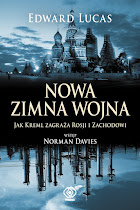
But the story in recent years is different. Instead of Russian companies raising their standards, foreigners have been dropping theirs. Foreign capital markets gladly handle stolen goods if the price is right. Western accountants audit the indefensible and hastily revoke audits for clients who have fallen foul of the Kremlin. Western law firms, disgracefully, let themselves be used to intimidate those who criticise powerful Russians. (A large chunk of the advance for my book, The New Cold War, was spent on legal fees; some of the most pungent passages were excised or diluted, not because they were incorrect, but because the cost of litigation is so high.)
It would be possible to argue (though Stuermer doesn't do so explicitly) that this is just too bad. The West has dropped its standards in dealings with Saudi Arabia and with China, so why not do so with Russia? Our system has survived the influx of petro-dollars and it will survive a flood of petro-euros too. All that talk of human rights, freedom and justice is just for show. It may have helped us win the last Cold War, but nobody takes it seriously now. Nothing short of a major war with Russia will be allowed to disrupt trade and investment, and as that is not going to happen, there's nothing to worry about.
That is a well-informed if cynical argument, and it is truer than I would wish. But it is not a clincher. Saudi Arabia and China have their interests, sometimes rather unpleasant ones. We have seen what Saudi financing of jihadism can do. We should not make the same mistake again. Crucially, if we think that only money matters, then we are defenceless when people attack us using money.
The second big reason why Stuermer's approach is mistaken is that he creates the impression (I hope a wrong one) that he does not care two kopecks for the countries between Germany and Russia. Nato expansion to Poland is dismissed airily as a piece of domestic politicking by Bill Clinton. The expansion to the Baltic states is described mockingly as "a bad idea whose time has come". This is a huge and revealing gap in his argument. The former communist countries of the Soviet empire ("ex-captive nations", as I like, rather unfashionably, to describe them) are not passive onlookers in all this. The new member states of the EU amount to 105 million people, not much less than Russia's fast-shrinking 142 million. Add Ukraine and they easily outnumber Russia. The huge benefit of Nato expansion in the past 15 years has been to stabilise this region. Countries such as Poland do not need to base their military planning on the central scenario that they may be fighting alone against Russia. Instead, they act as part of Nato. Their weapons, training and planning are all designed to fit into the alliance. That contributes greatly to everyone's security - not least Russia's. Georgia's disastrous incursion into South Ossetia would have been all but impossible had that country been a Nato member, or even close to it. Spheres of influence may look neat from the outside; for the countries concerned, they guarantee friction and conflict (as the origins of both world wars in the last century prove).
These countries feel scared, largely with good reason, and it is shameful that Germany does not take those fears into account. An opinion poll in the Financial Times last September showed that a majority of Germans would oppose going to war to defend the Baltic states, even if they were attacked militarily by Russia. Is it any wonder that the East European countries bordering Russia feel rather twitchy, and are disinclined to place complete trust in Nato's willingness to defend them? When they are then told by Germans such as Stuermer that they should "not get hot under the collar" and that America has no business in trying to bolster their security, it is not surprising if tempers shorten.
Of all the explanations for Germany's Russlandliebe, my favourite is the cheekiest. Russia is the closest that Germany has had to a colony. It is not just the German farmers invited by Catherine the Great. German engineers flocked to Russia in the Tsarist era (a Siemens power station built in those years is said to be running in Siberia to this day). It was not quite the "place in the sun" of which the Wihelmine German empire dreamed; more a place in the snow. For much of the last century it was an abortive dream. Under Stalin, ethnic Germans were deported from the Volga region to Kazakhstan and Siberia. Under Gorbachev and Yeltsin, they were allowed to move to Germany, a few still speaking the antique German dialects with which their forbears had left three centuries earlier.
Now it is third time lucky - Germany is Russia's biggest trading partner. It needs German investment, German habits, German management, German values. Just as German visitors to scruffy homes in Britain sometimes feel an irresistible urge to tidy the messy closets and cupboards, so Germans in Russia feel an almost mystical duty to set things in order. Never mind the corruption, the bellicose rhetoric, the dreadful unpunctuality - just get going and set an example. In return, Russia offers what Germany lacks: wide open spaces (don't call it Lebensraum though); a sense of fun, of spontaneity, of a different and less dull outlook on life. On top of all that, the profits are colossal. Russia's modernisation needs just the sort of construction, heavy machinery and know-how in which Germany excels. The same combination of gritty determination and brainpower that rebuilt Germany after the collapse of the Third Reich is what is needed in Russia now. Faced with another economic miracle in the making, is it any wonder that many Germans prefer Moscow to Munich in which to do business?
That is mostly to be welcomed. Even if the economic prosperity of recent years proves to have been superficial, Russia can only return to its natural place in the European mainstream through human contact and the growth of institutions. The dependability of German business, and German experience of creating order and the rule of law in the aftermath of dictatorship, should rub off on Russia to everyone's benefit. Had he stuck to making the case for pragmatic engagement, Stuermer would be on safer ground.
The problem is that the semi-colonial relationship that Germany seems to want with Russia is in fact a two-way street. As other imperial countries know well, you may start off exporting your values and outlook, but you end up importing theirs. German business was already surprisingly corrupt even before the great push eastwards that followed the collapse of communism. Dealing with Russia has accentuated that. Germany's commitment to the Atlantic alliance was looking wobbly from the 1980s onwards; now it is frayed and rotten. Rather than exporting German virtues to Russia, the danger now is that Germans are importing Russian sleaze, corporatism and anti-Americanism.
That is bad for Russia, bad for Germany and terrifying for the countries in between. Of that risk, however, the saturnine but self-satisfied Professor Stuermer seems blissfully ignorant.


Subscribe to:
Posts (Atom)