


 Posts
Posts




Poland's election
Bad habits
Sep 27th 2007 | WARSAW
From The Economist print edition
The ruling party is faring well in the election campaign. That is worrying
Get article background
A CIRCUS, a farce, a tragedy, or a thriller with an increasingly sinister plot: depending where you stand, Polish politics can look like any or all of these. After a year of fractious coalition government with two unsavoury small parties, the ruling Law and Justice party (PiS) faces a fresh election on October 21st. And, despite its patchy record, it looks likely to win.
It is easy to depict PiS as a bunch of provincial incompetents, obsessed by historical grievances and ignorant of the modern world. Strong economic growth has disguised Poland's soggy public finances, lousy bureaucracy, bad roads and inadequate schools. PiS has so far done little to remedy these. The PiS leader and prime minister, Jaroslaw Kaczynski, and his twin brother Lech, who is president, have also masterminded a resentful and unpredictable foreign policy that reduces even friendly European countries to despair.
The biggest worry is the blurring of lines between politics and public institutions. It is odd that a partisan political appointee, Antoni Macierewicz, runs the military counter-intelligence service; odder still that he is standing for parliament. “Macierewicz can spend the morning in the office reading transcripts of our conversations, and the afternoon at PiS campaign headquarters telling them what we are up to,” says an opposition leader, as he scribbles down a point, safe from the bugs he says are in his home.
Nerves are also jangling at the zealous behaviour of the justice minister, Zbigniew Ziobro. His fondness for announcing investigations and arrests at press conferences, and his enthusiasm for setting his prosecutors on to political opponents, suggest that he has little regard for the separation of powers or for due process.
PiS supporters strongly contest all this. The climate of fear is created by a hysterical media, not the government, says Adam Bielan, a party strategist. PiS won the 2005 election by promising to uproot the uklad, a network of ex-spies, corrupt businessmen and political insiders who have dominated Poland since 1989. Mr Ziobro's public toughness is changing the climate; the howls of protest are self-interested, and a sign that the anti-corruption offensive is working. A stronger electoral mandate will let PiS finish the job.
He has a point. Sleaze had become pervasive in Poland. The intelligence services had often escaped political oversight in previous years, and their veterans have an alarming knack of finding profitable business niches. But Jaroslaw Kaczynski has yet to prove that the uklad is as sinister as he claims. An investigation by Mr Macierewicz into the now disbanded military-intelligence service, the WSI, produced only an inconclusive preliminary report. An update is now promised.
Moreover, the cure prescribed by PiS could be worse than the disease. Poland needs strong, politically neutral institutions and a more open and deregulated economy. Purging suspect officials only to replace them with party placemen is not going to deliver these. Nor will political misuse of the intelligence services make them any cleaner. Witch-hunts can create paralysis in government, leaving nobody willing to take a decision, for fear of being accused of corruption if it goes wrong.
Claims that Polish democracy is in danger are overdone. But PiS has not calmed such fears with a partisan approach to public broadcasting. The government seems also to have used bureaucratic harassment to get a privately owned television channel to sack its star presenter, Tomasz Lis, who was a trenchant critic. Mr Lis is moving his show to the internet.
Optimists hope that, if PiS wins, it will calm down and concentrate on the mundane business of government. But its mix of revisionist history, contempt for the constitution and equation of opposition with treason carries a nasty whiff of Vladimir Putin's Kremlin. Jaroslaw Kaczynski finds comparisons with the Russian president absurd and insulting. But he could do more to avoid them being drawn.
Friday, September 28, 2007
| [+/-] |
Polish elections |
| [+/-] |
Katyn |
Europe.view
Horror films
From Economist.com
Why eastern Europe needs Hollywood
 | |
“KATYN”, the new film by Andrzej Wajda, Poland’s best-known director, should leave you shaken and sleepless. It is worth seeing just for the scene in which the senate of Cracow University is arrested en masse by the Nazi occupiers, as well as for as the almost unbearably realistic execution scenes in which Soviet murder squads kill 22,000 captured officers, and also for the way it portrays the attempts by the communist lie machine in post-war Poland to cover up the truth.
Yet for all its passion and authenticity, the film is disappointingly muddled, and too narrowly focussed on a Polish audience. Popular culture demands a strong and simple story line to make reality convincing to the jaded sensibilities of a modern international audience. Mr Wajda fails that test: he uses too many characters, and too much detail distracts the viewer from the central message. What is really needed is a film with the broad sweep of “Schindler’s List” that will explain the full horror of Soviet dictatorship both during and after the war.
The lack of archival footage is a problem. It is all to easy to see films showing the Nazi concentration camps, while even still pictures of the Gulag are scarce and grainy. That need not be a snag for those with the budgets to stage re-enactments. This is what Mr Wajda has done with “Katyn”. Now a plethora of other stories cry out for the same treatment.
First should be the Kengir uprising of 1954. After Stalin’s death, a huge prison camp in Soviet Kazakhstan revolted and maintained an astonishing six weeks of freedom from May 16th to June 25th. The camp’s inmates—mainly Ukrainians, with a sprinkling of Balts and Russians—outfaced and out-organised the bureaucrats and goons who ran the camp, until in the end they fell victim to a full-scale military assault. Almost unknown in the West until Aleksander Solzhenitsyn’s account in the “Gulag Archipelago” the Kengir rebels deserve to be remembered and honoured for their Masada-like courage, ingenuity and solidarity.
| |
 | |
Andrzej Wajda, director of “Katyn” |
Second should be the deportations to Siberia from the Baltic states and elsewhere in eastern Europe. “Collect your things!” barks the arresting NKVD officer in the Wajda film to a woman and child whose only “crime” is to be the family of a Polish officer—who by then is already dead in a ditch in a forest near Smolensk. Such hurried packing in the middle of the night, followed by a cattle-truck to Siberia, was the fate of tens of thousands of people across the Soviet-occupied territories of eastern Europe in a few June days in 1941. Those few that returned came home not as heroes but as released criminals, living on the fringes of Soviet society.
Third should be the “Forest brothers” of the Baltic states and western Ukraine, as well as the Polish “Home Army”. They maintained a doomed struggle against the Soviet occupiers in some cases until the late 1950s. The last Estonian partisan, August Sabbe, survived until 1978. Betrayed by traitors in Britain’s MI6 in the late 1940s, their story makes Rambo’s adventures in Indochina seem like Disney-style pap.
Perhaps most gripping of all is the story of Witold Pilecki, a Polish intelligence officer who volunteered to be imprisoned in Auschwitz in order to find out what was happening there. When he escaped and reported to the Allies what he had discovered, they said he was exaggerating. After the war, he was captured by the communist authorities and executed in 1948.
If the screenwriters get going, the West’s historical understanding will belatedly gain some balance. But do bring plenty of handkerchiefs.
Thursday, September 20, 2007
| [+/-] |
How to count to 100m |
Europe.view
Name them and remember
Sep 20th 2007
From Economist.com
Commemorating communism's victims
IMAGINE two walls, each 120km (75 miles) long, set at right angles and tapering to a height of three metres. They are covered in names, each inscribed in letters 1.35 cm (0.53 inches) high. That is how big a monument to the 100m victims of communism would be if it were designed on the scale of the Vietnam Veterans Memorial in Washington, DC, which commemorates the nearly 60,000 American military personnel who died in that war.
Nothing of the kind exists. The American capital’s monument to the victims of communism is a modest bronze statue. Determined travellers in Russia may find the Mask of Sorrow in Magadan, or a small monument in the Komi capital, Syktyvkar; both commemorate the millions who died in the Gulag. Bucharest has a rather kitschy monument to those who died in the “uprising” (perhaps more accurately described as a coup) against Nicolae Ceausescu, Romania's long-time dictator, in December 1989.
Museums in Tallinn, Riga, Vilnius, Warsaw, Prague and Budapest, among other places, do a good job of reminding people of the historical background to communist rule and the details of daily life, as well as the terror that enforced it. The Vilnius museum—in the former KGB headquarters—has the names of executed resistance fighters carved in the stone panels outside. A Bulgarian history project is collecting fascinating memories from both victims and perpetrators.
Now Estonia’s president, Toomas Hendrik Ilves, has come out with a challenge to his country: to commemorate by name all Estonian victims of communism. “Unfortunately, we still do not know the names of all the victims…. Our job is to find out and chisel them in stone. By name.”
He was speaking on one of the many forgotten anniversaries of the 20th century: of the shortlived government of Otto Tief, which tried to re-establish the Estonian republic for a few days in September 1944 in the wake of the German retreat. Some of its members escaped to Sweden and formed a government-in-exile that lasted until 1992; the rest were arrested by the Soviet forces and killed, deported or otherwise punished. Arnold Susi, the education minister, befriended Aleksandr Solzhenitsyn in the Gulag. The symbolic importance was huge: it disproves the Stalinist version of history that the Baltic states were “liberated” in 1944. But few in Estonia, let alone outside, remember their names.
The issue is trickier than it sounds. Who are the “victims” of communism? Is it those sentenced to death by a communist court? Certainly, but not only them. What about those post-war resistance fighters in Poland, the Baltic states, Romania and elsewhere who died on the battlefield against the occupiers? And restricting it to those who died from bullets or the noose seems too narrow: what about those who starved or froze to death while being deported? They need to be listed too.
But it also would be unfair to exclude those who survived. Maybe it should be all victims of the Gulag. But what about those who suffered other kinds of repression, such as incarceration in a psychiatric hospital, or interrogation under torture?
Even trickier is that not all victims were unquestioned heroes. Would the Russian memorial include Andrei Shkuro and Pyotr Krasnov, both Cossack generals who opposed communism but collaborated with Hitler? Never Soviet citizens, they were handed over by the British at the end of the war and executed. And if it includes them, what about General Andrei Vlasov, a Soviet general who switched sides to fight with the Nazis?
In trying to commemorate the victims of the 20th century, each country would find different answers to these questions. And in doing so, each may also find greater understanding for the suffering of its neighbours.
Thursday, September 13, 2007
| [+/-] |
|
Europe.view
Worse than useless
From Economist.com
The OSCE lets Russia off the hook
| |
CALLING it a whitewash would be unfair. At least white looks clean and crisp. What the Organisation for Security and Cooperation in Europe (OSCE) has produced on Russia’s recent attack on Georgia is a greywash, a pile of slime and sludge that conceals the truth.
Georgia says that on August 6th a Russian warplane fired a missile over its territory, apparently aimed at a new NATO-compatible radar station. Georgia has produced documents that seem to show the plane entering its airspace, and the remains of the missile (which failed to explode, having apparently been launched prematurely).
Russia says the whole thing was a stunt staged by the Georgians.
An OSCE inquiry headed by Miomir Zuzul, a former foreign minister of Croatia, compared the accounts of the incident. If it had come up with convincing reasons to believe the Russian version, and ignore the Swedish, Polish and other experts brought in by Georgia, that would have been interesting. The published version of events in ex-communist countries often conceals as much as it reveals.
But it seems to have made no attempt to compare the evidence or assess the arguments. It came to the ringing conclusion that given the conflicting stories, it was “difficult to know what happened”. Russia was jubilant, saying that it had been exonerated by the report and renewing its propaganda attack on the Georgians.
The next row will be about election monitoring, a particular Russian bugbear. The Kremlin has long tried to neuter the OSCE’s Warsaw-based vote-watchers, the Office for Democratic Institutions and Human Rights (ODIHR, pronounced, aptly enough, “Oh, dear”).
| |
 | |
Missile? What missile? |
That body would be likely to give Russia’s upcoming parliamentary elections in December a poor scorecard: the Kremlin has tweaked the electoral rules to hamper independent candidates and “real” opposition parties; the media is likely to favour only the pro-presidential parties and the “tame” opposition; police harassment of opposition public meetings and campaigns is already a scandal; and Russia’s history of ballot-rigging long predates Vladimir Putin’s presidency.
To forestall this, Russia has asked the OSCE for details about election monitoring it has carried out in Western countries, such as the America and Turkey. As the answer will be “very little” the Kremlin can then smile broadly and say that the same treatment will suit it nicely.
That is a good debating point: the difficulties that Kurdish politicians face in Turkey are shameful, as are the shortcomings of America’s electoral system (gerrymandering, campaign finance excesses, dirty tricks, astroturfing and of course the ghastly botched presidential count in Florida in 2000).
The right response to this would be to welcome extensive monitoring of Western elections, including tough criticism of shortcomings. Russians might try to use this to make propaganda, but no matter. Good points will strengthen the case for reform. Bad ones can be discussed and rebutted.
Unlike fascist kleptocracies masquerading as parliamentary republics, true democracies do not need to fear criticism. Such a stance will be an excellent basis for insisting for vigorous monitoring of elections in the east, where the shortcomings are hugely more serious.
Though that would be the right tactic, it will not necessarily be an effective one. The sad truth is that Russia’s tactics within the OSCE have made that body almost useless. It works on the basis of unanimity, so a Kremlin veto can block its funding or other activities. In short: without Russian consent it cannot work. But Russia’s restrictions make its work useless—or worse than useless, as Georgia’s plight illustrates.
Yet Russia’s victory in hobbling the OSCE is ultimately self-defeating: the main result is to give more clout to NATO. Is that what the Kremlin really wants?
| [+/-] |
Europe View column (last week) |
EUROPE
Europe.view
Hurrah for labour shortages
Sep 6th 2007
From Economist.com
To keep farm workers, pay them better
“LABOUR shortage” is one of the most nonsensical phrases ever coined. Real shortages happen outside the market economy: armies run short of ammunition; sailing ships may lack wind. But with six billion people on the planet, labour is not in short supply. What “labour shortage” means is that employers can’t find workers with the right skills at a price they like. Similar shortages are reported of Rembrandts, lobsters and nice houses in London.
Nonetheless, the news that British farmers are complaining of a “labour shortage” is excellent news. For the past five years, eastern European workers have been pouring into Britain—perhaps as many as a million Poles, and hundreds of thousands of other nationalities, legal and illegal. The result has been a triumph of European integration. The diligent new arrivals have boosted economic growth in Britain, and many have gained money and know-how to help rebuild home countries ruined by communism.
That supply seemed inexhaustible. But it wasn’t. Most economies of eastern Europe are now booming, so pay and conditions at home are improving. The “discount” on staying put and the premium on going abroad have both shrunk.
Secondly, the new Europeans are realising that tedious and monotonous agricultural work is not the only way into life in Britain. Waitressing at a country pub is a better job than picking strawberries in the surrounding fields: you improve your English, don’t get dirty, and meet nicer people. Figures published last month showed 41% of registered workers from the eight eastern European countries that joined the EU in 2004 applying to work in administration, business or management, compared with 25% three years ago. The hospitality industry accounted for 19% and agriculture only 11%.
The solution for British farmers is simple: compete. They need to offer their seasonal workers better pay, living accommodation and other treatment. As Marina Lewycka’s new novel “Two Caravans” illustrates so poignantly and amusingly, the bottom end of the agricultural labour market is a cesspit of scams, abuse and squalor. Workers are paid below the minimum wage, overcharged for cramped and dirty accommodation, ripped off for bogus “agency fees” and transport costs.
The farmers are not the worst culprits. The “gangmasters”—as the small employment agencies specialising in casual work for foreigners are known—have an even worse reputation. A Cornish gangmaster, Baltic Work Team, lost its licence last month after it left 40 Bulgarian workers unpaid for more than a month, threatened to send them home if they did not pay a £100 “deposit” and threatened them if they complained.
Such sharp practice may indeed shave a couple of pennies off the cost of a punnet of strawberries. But if the result is that workers simply stay away, the market is sending a useful signal: the rip-off merchants’ business model is unsustainable.
The farming lobby wants the government to ease the “shortage” next year by bringing in thousands more workers from Ukraine under a special scheme in which a temporary work visa comes tied to a particular job. That, the farmers explain, gives them “certainty” that their workers won’t bunk off half way through the harvest.
That is an odd argument: the best way of encouraging workers to stay put and work hard is to treat them properly, not to use schemes more reminiscent of the imperial days of bonded labour and coolies. Britain and other EU countries should allow Ukrainians to compete in the western labour markets—but as full-fledged participants, not as a reservoir of uncomplaining low-paid workers for a noisy, influential but actually peripheral bit of the economy.
| [+/-] |
Russia's new pm |
Russian politics
A curious change at the Kremlin
Sep 12th 2007
From Economist.com
Vladimir Putin picks the little-known Viktor Zubkov to be Russia's new prime minister
HE WAS colourless and weightless, at least politically speaking. That made Mikhail Fradkov an ideal prime minister in the Kremlin’s eyes. The exact reasons for his resignation on Wednesday September 12th and replacement by a little-known tax official, Viktor Zubkov, are unclear; so far the Russian proverb, nyet faktov, tolko versii (there are no facts, only theories) is an apt one. But it is almost certainly connected with the wrangles and plots about March 2nd 2008, when Vladimir Putin must, according to the Russian constitution, step down at the end of his second term as president.
Mr Fradkov said he was resigning to give Mr Putin “full freedom of decision including staff decisions”; most observers reckon that the president had that already. Mr Putin said that he wanted a “structure of power…that better corresponds to the pre-election period and prepares the country for the period after the presidential election”. He then nominated Mr Zubkov, the little-known head of the Federal Financial Monitoring Service, to take over as the new prime minister, according to the speaker of the Duma, the lower house of parliament.
Mr Zubkov is an odd choice. Along with most of the other people running Russia, he is from St Petersburg. But unlike many of them, his career shows no obvious traces of work in the security and intelligence services. The 65-year-old worked as a collective farm boss in the 1970s and then as a Communist Party apparatchik. He was Mr Putin’s deputy in the St Petersburg municipal foreign affairs department in the early 1990s; after that he became a senior official in the tax inspectorate, at the heart of relations between officialdom and Russia’s rumbustious new business class.
Either of the two “first deputy prime ministers” in the government might have expected to get the job. Russian newspapers were confident that Sergei Ivanov, a hawkish ex-spy and former defence minister who is also a former colleague of Mr Putin’s from his KGB days, would be elevated. He is still a leading candidate to take over the more important job of president next year. Of late he has frequently appeared in public with the president. Dmitri Medvedev, another potential candidate, was seen (or at least portrayed) as a pragmatic and more liberal-minded figure.
The resignation comes at the start of a new season in Russia’s stage-managed politics. Campaigning is just beginning for elections to the Duma in December. These look set to bring a resounding win for Mr Putin’s “United Russia”, with secondary roles for the tame opposition parties. Real opponents of Mr Putin will find it hard to get on the ballot, and even more difficult to get elected. They receive little coverage in the main electronic media and face tough new registration rules that make it hard for small parties, independent candidates and electoral coalitions to take part.
Few Russians seem to mind: Mr Putin’s approval rating is over 80%. Many Russians say they want to vote for him again in March and hope he will continue in prominent public life. Some think that he may stay on, and that any designated successor is just camouflage. But the favourite theory is that he will become the powerful head of Russia’s Security Council, in tandem with the new president. The trusted Mr Zubkov could make a suitable figurehead for that job.
So might Mr Fradkov, who is otherwise unlikely to prove more than a footnote in Russian political history. His career, involving a posting in the economics section of the Soviet embassy in Delhi in the 1970s, suggests service in the KGB. After the collapse of communism he specialised in foreign trade, and served briefly as Russia’s ambassador to the European Union; in contrast to some of his predecessors in that job, he spoke two foreign languages—Spanish and English. His appointment in March 2004 as prime minister, replacing the heavyweight Mikhail Kasyanov, was then as much of a surprise as Mr Zubkov’s promotion is now.
Mr Kasyanov is now an opposition politician who convincingly contrasts the reforms of his period in office, such as the introduction of Russia’s highly successful flat tax, with the distinct lack of them thereafter. Mr Fradkov did manage to stay neutral between the rival clans of ex-spooks who dominate Russian politics. But he left his mark on little else. That may be Mr Zubkov’s fate too.
Sunday, September 02, 2007
| [+/-] |
Cybercrime |
Europe.view
A walk on the dark side
From Economist.com
These badhats may have bought your bank account
 | |
ACCORDING to VeriSign, one of the world’s largest internet security companies, RBN, an internet company based in Russia’s second city, St Petersburg, is “the baddest of the bad”. In a report seen by The Economist, VeriSign’s investigators unpick an extraordinary story of blatant cybercrime that implies high-level political backing.
In one sense, RBN (Russian Business Network) does not exist. It has no legal identity; it is not registered as a company; its senior figures are anonymous, known only by their nicknames. Its web sites are registered at anonymous addresses with dummy e-mails. It does not advertise for customers. Those who want to use its services contact it via internet messaging services and pay with anonymous electronic cash.
But the menace it poses certainly exists. “RBN is a for-hire service catering to large-scale criminal operations,” says the report. It hosts cybercriminals, ranging from spammers to phishers, bot-herders and all manner of other fraudsters and wrongdoers from the venal to the vicious. Just one big scam, called Rock Phish (where gullible internet users were tricked into entering personal financial information such as bank account details) made $150m last year, VeriSign estimates.
Plenty of other internet companies sail close to the wind—hosting unregulated online gambling for example. But according to a VeriSign investigator, “the difference is that RBN is solely criminal”. The pricing depends on the level of complaints. A discreet organisation pays little; one that attracts a lot of unwelcome attention, forcing RBN to take expensive countermeasures, has to pay more.
| |
 | |
Despite the attention it is receiving from Western law enforcement agencies, RBN is not on the run. Its users are becoming more sophisticated, moving for example from simple phishing (using fake e-mails) to malware known as “trojans” that sit inside a victim’s computer collecting passwords and other sensitive information and sending them to their criminal masters.
A favourite trick is to by-pass the security settings of a victim's browser by means of an extra piece of content injected into a legitimate website. An unwary user enters his password or account number into what looks like the usual box on his log-in page, and within minutes a programme such as Corpse’s Nuclear Grabber, OrderGun and Haxdoor has passed it to a criminal who can empty his bank account. When VeriSign managed to hack into the RBN computer running the scam, it found accumulated data representing 30,000 such infections. “Every major trojan in the last year links to RBN” says a VeriSign sleuth.
RBN even fights back. In October 2006, the National Bank of Australia took active measures against Rock Phish, both directly and via a national anti-phishing group to which the bank’s security director belonged. RBN-based cybercriminals replied by crashing the bank’s home-page for three days.
What can be done? VeriSign has tracked down the physical location of RBN’s servers. But Western law enforcement officers have so far tried in vain to get their Russian counterparts to pursue the investigation vigorously. “RBN feel they are strongly politically protected. They pay a huge amount of people. They know they are being watched. They cover their tracks,” says VeriSign. The head of RBN goes under the internet alias “Flyman”; his uncle is thought to be a senior St Petersburg politician. Repeated e-mails to RBN’s purported contact addresses asking for comment have gone unanswered.
Companies can simply block access to any site registered at an RBN IP address. But that will not help most victims, such as those who receive infected e-mails. VeriSign says only strong political pressure on Russia will make the criminal justice system there deal with this glaring example of cyber-illegality.
Friday, August 17, 2007
| [+/-] |
another europe.view column |
EUROPE
Europe.view
Small news, big stories
From Economist.com
Nothing ever happens in August, right?
| |
AUGUST in western Europe is quiet almost by official decree. In the eastern part of the continent people still work a bit harder, but the drip of drivel from second-rate politicians who should be off at the beach means that summer can feel stupefying. It is time to drink kvass (fermented breadcrumbs), to eat chilled cherry soup or iced yoghurt, to swim in lakes and forget about politics.
But the summer is also a time when interesting news items pop up that are pointers to bigger stories around the corner. Here are three.
A Ukrainian TV channel reports that 50,000 people in the western region of Chernovtsy now hold Romanian passports. Northern Bukovina, as it used to be known, was part of Romania before the Molotov-Ribbentrop Pact in 1939 (another bit of August news that proved more important than it seemed at the time). This added a slice of Romanian territory to the Soviet Union. Most is the area now called Moldova. But fragments to the north and south went to Soviet Ukraine.
Moldovans are entitled to Romanian passports if they can prove a family connection to pre-war Romania. Since Romania joined the EU, many have applied. That delights Romanian nationalists, and infuriates most Moldovan politicians who think that their bigger neighbour wants to swallow them up.
But this is the first sign that the same process is happening in the bit of Romanian territory now in Ukraine—a region that Soviet repressions seemed to have scrubbed bare of any trace of Romanian national feeling. A century ago, Czernowitz, as it used to be known, was a stellar example of Austro-Hungarian multi-ethnicity. Those traditions are hard to kill. Ukrainian politicians may fret about their people holding second passports illegally, but they should bear in mind that the longer their country’s political paralysis continues, the more its artificial Soviet-era borders may come under scrutiny.
 |  Russia’s ability to shoot itself in the foot remains both spectacular and entertaining |
The second item is about GUAM, an American-backed talking shop that links Georgia, Ukraine, Azerbaijan and Moldova. Supposedly a rival to the clutch of Kremlin-led organisations in the former Soviet Union, and also a waiting room for NATO, GUAM is almost moribund. Although Georgia is a gung-ho backer, other members are lukewarm or even chilly. Grand plans to include Romania and the Baltic states have stalled.
This week pro-Kremlin opposition parties in all four member states said they were stepping up their campaign against the organisation’s vestigial security role—chiefly its tentative proposal to establish a joint peacekeeping force. GUAM should regard that as rather flattering: it may be that their ramshackle organisation now attracts more interest from its bashers in Moscow than from its backers in Washington, DC.
That is an impressive sign of the Kremlin’s attention to detail in its own backyard. But as the third news item illustrates, Russia’s ability to shoot itself in the foot remains both spectacular and entertaining. To illustrate the daring descent to the Arctic seabed last week, Rossiya TV, one of the many docile pro-Kremlin channels, carried what seemed to be authentic footage of miniature submarines in the sea depths. But a 13-year-old boy in Finland noticed an uncanny resemblance between stills of the footage reprinted in a newspaper and scenes from a DVD in his collection: “Titanic”. Only days earlier, another Russian TV news programme had faked a picture of the London Times, making out that a rare pro-Russian comment piece was not buried inside the paper, but splashed on the front. Ascribing demonic genius to the Kremlin’s spin doctors and geopoliticians is tempting. But only when they deal with their own side’s incompetence will they be really scary.
| [+/-] |
eSStonia |
EUROPE
Europe.view
The truth about eSStonia
From Economist.com
Its citizenship policy has been a success
| |
READ the Russian-language internet, and you will find Estonia portrayed as a hell-hole ruled by Nazi sympathisers who organise a grotesque form of apartheid hypocritically endorsed by the European Union.
“Nazi” and “apartheid” are strong words that should be used sparingly and precisely out of their original context—and probably not at all. (A good rule in most discussions is that the first person to call the other a Nazi automatically loses the argument.)
So it may be worth listing a few of the more grotesque unfairnesses and inaccuracies of the charge. Apartheid was the legally enforced separation of the peoples of South Africa, based on race (or more accurately, skin colour). Mingling of the races, from intermarriage to mixed swimming, was forbidden. Pass laws meant that blacks could not live in white areas. Apartheid was backed up by a ruthless secret police that on occasion murdered people, and had no hesitation in enforcing house arrest and exile.
Nazi sympathisers idolise Hitler, think that Jews invented the Holocaust (or, sometimes, that they deserved what they got), and believe that National Socialism was a glorious ideology destroyed by Judaeo-Bolshevism.
Absolutely none of that applies to Estonia. Not only do the authorities not prohibit contact between Estonians and Russians, they encourage it. Russians and Estonians mix freely everywhere. Some of Estonia’s top politicians, including the president and the leader of one of the main political parties have Russian family ties.
Estonians look back on the Nazi occupation with loathing. Their country was caught between the hammer and the anvil in 1939, and whatever they did, only suffering and destruction awaited them.
What really annoys the Kremlin crowd is that Estonians (like many others in eastern Europe) regarded the arrival of the Red Army in 1944-45 not as a liberation, but as the exchange of one ghastly occupation for another. That flatly contradicts the Kremlin’s revived Stalinist version of history, which puts Soviet wartime heroism and sacrifice at centre-stage, while assiduously obscuring all the historical context. Given how the Soviet Union treated Estonia in 1939-41, it is hardly surprising that those who fought the occupiers when they returned are regarded as heroes. But they were not Nazis, nor are those who admire them now.
| Given how Soviet Union treated Estonia in 1939-41, it is hardly surprising that those who fought the occupiers when they returned are regarded as heroes |
Secondly, Estonians (like Latvians and Lithuanians) do not accept that their pre-war statehood was ever extinguished. Russia may like to think that the Soviet Union magnanimously granted independence to the three “Soviet Baltic Republics” in 1991. But the Balts see it differently: they regained their independence. In that view they are confirmed, more or less enthusiastically, by most western countries, which never recognised the Soviet annexation of 1940, and in some cases continued to accredit Baltic diplomats in dusty and deserted embassies.
On that basis, the hundreds of thousands of Soviet citizens who moved to the Baltic from the 1950s onwards were migrants settling illegally in occupied territories. Post-Soviet Lithuania granted them citizenship automatically. But Estonia and Latvia, where the demographic position was more precarious, insisted that they apply for citizenship if they wanted it, and pass a simple test in language and history.
This was not about ethnicity: Russians who lived in Estonia before the occupation (then around 10% of the population) and their descendants regained citizenship automatically. And it has worked rather well. Nearly 150,000 people have gained Estonian citizenship; only 8.5% remain stateless.
Fifteen years on, Estonia's policy may be too tough, or just right, or even too lax. Compared to most European countries’ citizenship laws, it is quite generous. In any event, calling it “apartheid” is not only nonsensical, but stupidly insulting, to a country that has responded with intelligence and restraint to a devastating historical injury.
Friday, August 10, 2007
| [+/-] |
Communism and Nazism/ Gellately book review |
Compare and contrast
Aug 9th 2007
From The Economist print edition
Lenin, Stalin, and Hitler: The Age of Social Catastrophe
By Robert Gellately
Knopf; 720 pages; $35. To be published in Britain by Jonathan Cape in September.
IN THEIR different ways they were as bad as each other, the three monsters of 20th-century Europe. That is an oddly controversial statement. Hitler is almost universally vilified; Lenin remains entombed on Red Square as Russia's most distinguished corpse; and modern Russia is looking more kindly on Stalin's memory.
Robert Gellately elegantly scrutinises their differences and highlights their similarities. He places all three men in the context of a Europe shattered by the first world war. “Before 1914 they were marginal figures,” he writes, without “the slightest hope of entering political life.” The whirlwind of destruction that started in 1914 turned their fantasies of racial purity and class dictatorship into reality, killing people on a scale unknown in human history.
Anyone who still believes in the myth—assiduously propagated by the Soviet Union and its admirers—of the “good Lenin” will find the book uncomfortable reading. The author outlines with exemplary clarity Lenin's cruelty, his illegal and brutal seizure of power, his glee in ordering executions, the institution of mass terror as a means of political control and the construction of the first camps in what later became the gulag. “Far from perverting or undermining Lenin's legacy, as is sometimes assumed, Stalin was Lenin's logical heir,” he writes icily.
Mr Gellately busts another myth too: that Hitler seized power by fear and force. The combination of anti-Jewish and anti-Bolshevik rhetoric played well with the German public. People felt humiliated by defeat and impoverished by recession, and Hitler blamed “the Jews” for both.
Hitler looked on Soviet methods with contempt. His model was what Mr Gellately calls “consensus dictatorship”: cautious, sounding out public opinion and changing course when necessary. Unlike Stalin, Hitler did not make a habit of murdering his closest allies. The Nazi party never experienced the ritual purges that were a habitual feature of Soviet Communist Party life under Stalin. Hitler's adversaries were so demoralised by the seeming success of his regime that few offered systematic resistance. It was only as defeat loomed in the last months of the war that ordinary Germans had a taste of the official paranoia that had been their Soviet counterparts' daily fare for 25 years.
Lucid prose and vivid examples make the book admirably accessible to non-specialists. But it also engages expertly in one of the most closely fought historiographical battles of past decades, the Historikerstreit (to give it its German name). Was the bacillus of totalitarianism that infected Germany first bred in Russia? Some German historians, notably Ernst Nolte, have argued that Hitler's crimes were both a distorted copy of atrocities already committed under communism and to some extent a defensive reaction to them. To caricature the argument: Germany declared war on Jews because Jews (at least communist ones) had declared war on Germany.
Mr Gellately has no time for Mr Nolte, who he says is guilty of an “astonishing and reprehensible replication of Nazi rhetoric”. Just because many communists were Jews does not mean that there was anything remotely rational in Hitler's constant conflation of “Jewish-Bolshevism”. Nazi anti-Semitism, he insists, was “rooted in German nationalism.”
The argument about the origins of Nazism will run and run. But there is little danger of Germany rehabilitating Hitler, even in the driest and most academic corners of historical theory. In Russia, by contrast, Stalin's memory is being burnished. A new guide for history teachers describes Stalin as the Soviet Union's “most successful leader”; it admits that “political repression” took place, but says it “was used to mobilise not only rank-and-file citizens but also the ruling elite.” President Vladimir Putin, welcoming this guide, compared Stalin's Great Terror of 1937 with the allied bombing of Hiroshima. It would be interesting to hear Mr Putin's tame historians debate the Stalin era with Mr Gellately.
Mr Gellately sets a high standard for anyone writing about comparative dictatorship. But perhaps some future scholar, matching this author's knowledge of German and Soviet history but possessing equal mastery of China's communist decades, could write a more complete account of 20th-century horrors, including that missing monster, Mao Zedong.
| [+/-] |
Georgia and the mysterious missile |
Europe.view
Under the umbrella
Aug 9th 2007
From Economist.com
Why Georgia must join NATO
IT IS a fair bet that if Georgia were in NATO the missile that hit the village of Tsitelubani on the evening of August 6th would never have been fired.
The Russian view seems to be that on this and other occasions the Georgians have been inventing tales about bombing, or even bombing themselves, in order to attract western sympathy. Georgia says that two Russian Sukhoi Su-24 attack aircraft entered its airspace from Russia, fired a Raduga Kh-58 air-to-surface missile (which failed to explode) and left.
Russia insists that nothing of the kind happened. It is of course theoretically possible that Georgia is engaged in an elaborate bluff involving secret planes, faked debris, forged radar logs and diplomatic histrionics.
But it is startlingly unlikely. After all, it would be hard to conceal such a ploy from the many American and other foreign military advisers based there. If Georgia is to have a chance of persuading unenthusiastic NATO members like Germany that the club needs to take in still more members, it needs to radiate responsibility, not pull stunts. The former, not the latter, is just what President Mikhail Saakashvili and his government have been doing.
Furthermore, if the attacks were faked to whip up outside support for Georgia, they have failed miserably. In March, a mysterious raid by nightflying attack helicopters rocketed public buildings in villages in the Kodori Gorge, a region of the breakaway region of Abkhazia where Georgia has reestablished its rule. The western response was almost inaudible.
Investigating that bombing—in which, luckily, nobody was killed—was shunted off to the United Nations Observer Mission in Georgia (UNOMIG), which monitors the Russian “peacekeeping” efforts in Abkhazia. UNOMIG's bureaucrats shuffled paper for three months and then produced a feebly inconclusive report.
Wherever the latest, seemingly abortive, attack was actually aimed, it has also produced alarmingly little Western support. That may be because it is August, and most decision-makers are on their holidays. But if the result is to show for a second time that Georgia is rather isolated, that will send a useful signal to the Kremlin about any future planned adventures in the region.
It may also be that Russia wants to derail Georgia’s new and successful approach towards reintegrating the smaller breakaway region of South Ossetia. A pro-Georgian parallel government has been unnerving the Kremlin-backed administration there.
Whatever the aim, it comes at a high price: mysterious air raids just across the border from the Olympic site of Sochi hardly fit the image of stability and dependability that Russia is trying to promote. As with many other events in the Caucasus, the real explanation may lie in the Kremlin's internal power struggles, not in geopolitics or diplomacy.
The underlying lesson though is that Georgia should be in NATO sooner rather than later. Even the most paranoid Russian would presumably admit that once in the alliance, Georgia would have little need to bomb itself. NATO expansion calms things down: that is the lesson of the Baltic states, which joined—in the teeth of Russian objections—in 2004. None of Russia’s warnings about the effect of NATO expansion into the “former Soviet Union” have proved true. The Baltic region is more stable now, not less, as a result (and things would be still better if Finland and Sweden joined too).
If Georgia were in NATO, it would also be less likely that Russia would want to bomb it. It is one thing to try to intimidate a neighbour in a security grey-zone. It is another to jostle someone sheltered by (and contributing to) the Western security umbrella, however stretched and faded its canopy may be.
Saturday, August 04, 2007
| [+/-] |
more arctic monkeys |
The Arctic
Gold rush under the ice
From Economist.com
Russia wants a vast slice of the Arctic
| |
 | |
RUSSIA’s foray into the Arctic is an audacious geopolitical adventure, as popular at home as it is troubling for outsiders. At stake are the region’s natural riches, until now frozen both in law and in nature. But global warming is making them look more accessible. They may include 10 billion tonnes of oil and gas deposits, tin, manganese, gold, nickel, lead, platinum and diamonds, plus fish and perhaps even lucrative freight routes. Exploiting them will be technically tricky, and is probably decades away. But as the ice melts, the row is hotting up about who owns what’s underneath it.
The five Arctic Circle countries—America, Canada, Denmark (which looks after Greenland’s interests), Norway and Russia—each have a 200 mile (322km) “economic zone” allowed by the United Nations Convention on the Law of the Sea. Russia argued in 2001 that its continental shelf stretched out into the Arctic, entitling it to a larger chunk. The UN said it needed more evidence.
That is what this week’s expedition, led by Russia’s most glamorous explorer, Artur Chilingarov, is trying to prove. By taking rock samples from the seabed, it hopes to arm Russian scientists with proof that the Lomonosov Ridge, an underwater mountain chain, is a continuation of Russia’s landmass.
That would allow the Kremlin to annex a 460,000 square mile wedge of territory, roughly the size of western Europe, between Russia’s northern coastline and the North Pole. Such international maritime-border wrangles normally progress at a snail's pace, and are stupefyingly boring. When Denmark allocated $25m in 2004 to try to prove that the Lomonosov Ridge was connected to Greenland, few noticed or cared.
But the latest Russian expedition is not just collecting geological samples; on Thursday August 2nd it placed the Russian flag (in titanium) on the yellow gravel 4,200 metres below the surface at the site of the North Pole. That was the first manned mission there, mounted by a polar flotilla that no other country could match. A mighty nuclear-powered icebreaker shepherded a research vessel that launched hi-tech mini-submarines capable of pinpoint navigation under the Arctic ice.
For outsiders used to stories of Russian bungling and backwardness, that was a salutary reminder of the world-class technical clout and human genius the Kremlin can still command.
Even more startling, though, was Russia’s rhetoric. “The Arctic is ours and we should manifest our presence,” said Mr Chilingarov, a charismatic figure whom President Vladimir Putin has named as “presidential envoy” to the Arctic. “This is like placing a flag on the moon” said Russia’s Arctic and Antarctic Institute.
The stunt has no legal force. But it still scandalised Canada’s foreign minister, Peter MacKay. “This isn’t the 15th century,” he complained. “You can’t go around the world and just plant flags and say ‘We’re claiming this territory’.” Russia’s foreign minister, Sergei Lavrov, insisted that his country was doing nothing of the kind. But Andrei Kokoshin, chair of a parliamentary committee on the ex-Soviet region, said Russia “will have to actively defend its interests in the Arctic”, adding: “There is something to think about on the military side as well. We need to reinforce our Northern Fleet and our border guards and build airfields so that we can ensure full control.”
Canada, punily defended since the end of the cold war, is now planning to spend $7 billion on eight new Arctic patrol vessels. America’s Congress is considering spending $100m to update three ageing polar icebreakers and build two more.
But the biggest change may be in America’s attitude to international law. A small but vocal lobby that objects to international administration of seabed mining has so far blocked the Bush administration’s attempts to have the Convention on the Law of the Sea ratified by Congress. But even the most die-hard American freemarketeer may have to accept that international bureaucrats are a better bet than the Kremlin’s crony capitalists when it comes to getting a fair slice of the polar action.
Thursday, August 02, 2007
| [+/-] |
Arctic monkeys |
Europe.view
Stirring the pot
From Economist.com
Geology not ethnography is the problem
| |
“ETHNOGRAPHICALLY, it’s ours.” This was one of the most dismal phrases of the early 1990s, as countries freed by the cold war’s end explored their buried history and geography. Sometimes it made tragic if impractical sense. Nationalistic Finns (previously thought to be an extinct species) explained the legal case for recovering Karelia from Russia. Hungarians gloomily analysed the borders drawn by the Treaty of Trianon. Poles insisted that at least half of Belarus was really theirs, while Belarusians laid confident claim to all the lands of the ancient Grand Duchy, stretching from the Baltic to the Black Sea.
Estonians and Latvians mourned slivers of lost territories (while not actually wanting them back: they are now mostly Russian-populated). Lithuanians hurriedly changed the subject: it was the Soviet occupation that returned their capital, Vilnius, from Poland and their seaport, Klaipeda, from Germany. Ukrainians explained that Kievan Rus had nothing to do with Russia, while Russians asked, reasonably, how Nash Krim (our Crimea) had ended up in Ukraine thanks to a Kremlin pen-stroke three decades previously. The Crimean Tatars pointed out (with even greater justice) that the balmy peninsular was theirs long before it was Russia’s.
For all the sentiment and heartbreak, the arguments were dangerous, even lethal, as Yugoslavia’s tragic disintegration proved. Some never stopped their poisonous bubbling. Is Kosovo “ethnographically” Albanian because of its recent past (recent in this context meaning a century’s worth of history), or Serbian because of its role in the Middle Ages?
But the great unsung triumphs of the 1990s were the conflicts that did not happen; these dwarfed the few that did. The desire to look respectable to outsiders trumped the desire to swagger in front of voters. Hungary and Romania buried the hatchet. The Czechs and Slovaks never quarrelled seriously about the divided villages on their (previously unimportant) border. Lithuanians and Poles became best friends. Germans digested the “new federal states” released by the collapse of the Soviet-occupied German Democratic Republic and stopped hankering after Silesia and Königsberg. The new rule was that nobody with historical quarrels outstanding could join the European Union or NATO. And it has worked marvellously.
| |
 | |
A rabble-rouser in Moscow |
But nothing is more dangerous to a great achievement than complacency. As EU expansion stalls and its willpower weakens, old squabbles are returning. Romania should be best friends with Moldova. Instead the two countries (or at least their presidents) have been indulging in a pointless game of historical tit-for-tat. There are low-level rows between Croatia and Slovenia, and between Bulgaria and Macedonia.
Russia has already shown it can stir things up in Estonia—this spring it encouraged a riot over a war memorial in Tallinn. In Ukraine, Crimea could be an even nastier mess: it has Russian nationalists plus a Kremlin naval base and increasingly cross Muslims (Tatars, whose patience has got them nowhere) including a small but ominous Islamist presence. Even if Ukraine had a strong and sensible government, the situation would be tricky. And amid the current mess in national politics, a smouldering problem could blaze up (or be stoked) all too quickly.
Certainly no one should rely on the Kremlin wanting to behave nicely, as it mostly did in the Yeltsin era. Russia’s new submarine expedition to claim the North Pole (or at least a chunk of territory the size of western Europe running up to it) is a clear sign of a newly assertive foreign policy. Countries such as Canada and Denmark (which handles foreign affairs for the 50,000 inhabitants of Greenland) are scrambling to protect their interests. Thankfully, this row is about geology, not ethnography, and affects more polar bears than people. But the same approach applied elsewhere could be incendiary.
Saturday, July 28, 2007
| [+/-] |
Nashi sex camp shock horror--latest lurid plug for book |
27/07/07 - News section

Sex for the motherland: Russian youths encouraged to procreate at camp
By EDWARD LUCAS
Remember the mammoths, say the clean-cut organisers at the youth camp's mass wedding. "They became extinct because they did not have enough sex. That must not happen to Russia".
Obediently, couples move to a special section of dormitory tents arranged in a heart-shape and called the Love Oasis, where they can start procreating for the motherland.
With its relentlessly upbeat tone, bizarre ideas and tight control, it sounds like a weird indoctrination session for a phoney religious cult.
But this organisation - known as "Nashi", meaning "Ours" - is youth movement run by Vladimir Putin's Kremlin that has become a central part of Russian political life.
Scroll down for more
Nashi's annual camp, 200 miles outside Moscow, is attended by 10,000 uniformed youngsters and involves two weeks of lectures and physical fitness.
Attendance is monitored via compulsory electronic badges and anyone who misses three events is expelled. So are drinkers; alcohol is banned. But sex is encouraged, and condoms are nowhere on sale.
Bizarrely, young women are encouraged to hand in thongs and other skimpy underwear - supposedly a cause of sterility - and given more wholesome and substantial undergarments.
Twenty-five couples marry at the start of the camp's first week and ten more at the start of the second. These mass weddings, the ultimate expression of devotion to the motherland, are legal and conducted by a civil official.
Attempting to raise Russia's dismally low birthrate even by eccentric-seeming means might be understandable. Certainly, the country's demographic outlook is dire. The hard-drinking, hardsmoking and disease-ridden population is set to plunge by a million a year in the next decade.
But the real aim of the youth camp - and the 100,000-strong movement behind it - is not to improve Russia's demographic profile, but to attack democracy.
Under Mr Putin, Russia is sliding into fascism, with state control of the economy, media, politics and society becoming increasingly heavy-handed. And Nashi, along with other similar youth movements, such as 'Young Guard', and 'Young Russia', is in the forefront of the charge.
At the start, it was all too easy to mock. I attended an early event run by its predecessor, 'Walking together', in the heart of Moscow in 2000. A motley collection of youngsters were collecting 'unpatriotic' works of fiction for destruction.
It was sinister in theory, recalling the Nazis' book-burning in the 1930s, but it was laughable in practice. There was no sign of ordinary members of the public handing in books (the copies piled on the pavement had been brought by the organisers).
Once the television cameras had left, the event organisers admitted that they were not really volunteers, but being paid by "sponsors". The idea that Russia's anarchic, apathetic youth would ever be attracted into a disciplined mass movement in support of their president - what critics called a "Putinjugend", recalling the "Hitlerjugend" (German for "Hitler Youth") - seemed fanciful.
How wrong we were. Life for young people in Russia without connections is a mixture of inadequate and corrupt education, and a choice of boring dead-end jobs. Like the Hitler Youth and the Soviet Union's Young Pioneers, Nashi and its allied movements offer not just excitement, friendship and a sense of purpose - but a leg up in life, too.
Nashi's senior officials - known, in an eerie echo of the Soviet era, as "Commissars" - get free places at top universities. Thereafter, they can expect good jobs in politics or business - which in Russia nowadays, under the Kremlin's crony capitalism, are increasingly the same thing.
Nashi and similar outfits are the Kremlin's first line of defence against its greatest fear: real democracy. Like the sheep chanting "Four legs good, two legs bad" in George Orwell's Animal Farm, they can intimidate through noise and numbers.
Nashi supporters drown out protests by Russia's feeble and divided democratic opposition and use violence to drive them off the streets.
The group's leaders insist that the only connection to officialdom is loyalty to the president. If so, they seem remarkably well-informed.
In July 2006, the British ambassador, Sir Anthony Brenton, infuriated the Kremlin by attending an opposition meeting. For months afterwards, he was noisily harassed by groups of Nashi supporters demanding that he "apologise". With uncanny accuracy, the hooligans knew his movements in advance - a sign of official tip-offs.
Even when Nashi flagrantly breaks the law, the authorities do not intervene. After Estonia enraged Russia by moving a Soviet-era war memorial in April, Nashi led the blockade of Estonia's Moscow embassy. It daubed the building with graffiti, blasted it with Stalin-era military music, ripped down the Estonian flag and attacked a visiting ambassador's car. The Moscow police, who normally stamp ruthlessly on public protest, stood by.
Nashi fits perfectly into the Kremlin's newly-minted ideology of "Sovereign democracy". This is not the mind-numbing jargon of Marxism-Leninism, but a lightweight collection of cliches and slogans promoting Russia's supposed unique political and spiritual culture.
It is strongly reminiscent of the Tsarist era slogan: "Autocracy, Orthodoxy and Nationality".
The similarities to both the Soviet and Tsarist eras are striking. Communist ideologues once spent much of their time explaining why their party deserved its monopoly of power, even though the promised utopia seemed indefinitely delayed.
Today, the Kremlin's ideology chief Vladislav Surkov is trying to explain why questioning the crooks and spooks who run Russia is not just mistaken, but treacherous.
Yet, by comparison with other outfits, Nashi looks relatively civilised. Its racism and prejudice is implied, but not trumpeted. Other pro-Kremlin youth groups are hounding gays and foreigners off the streets of Moscow. Mestnye [The Locals] recently distributed leaflets urging Muscovites to boycott non-Russian cab drivers.
These showed a young blonde Russian refusing a ride from a swarthy, beetle-browed taxi driver, under the slogan: "We're not going the same way."
Such unofficial xenophobia matches the official stance. On April 1, a decree explicitly backed by Mr Putin banned foreigners from trading in Russia's retail markets. By some estimates, 12m people are working illegally in Russia.
Those who hoped that Russia's first post-totalitarian generation would be liberal, have been dissapointed. Although explicit support for extremist and racist groups is in the low single figures, support for racist sentiments is mushrooming.
Slogans such as "Russia for the Russians" now attract the support of half of the population. Echoing Kremlin propaganda, Nashi denounced Estonians as "fascist", for daring to say that they find Nazi and Soviet memorials equally repugnant. But, in truth, it is in Russia that fascism is all too evident.
The Kremlin sees no role for a democratic opposition, denouncing its leaders as stooges and traitors. Sadly, most Russians agree: a recent poll showed that a majority believed that opposition parties should not be allowed to take power.
Just as the Nazis in 1930s rewrote Germany's history, the Putin Kremlin is rewriting Russia's. It has rehabilitated Stalin, the greatest mass-murderer of the 20th century. And it is demonising Boris Yeltsin, Russia's first democratically-elected president. That he destroyed totalitarianism is ignored. Instead, he is denounced for his "weak" pro-Western policies.
While distorting its own history, the Kremlin denounces other countries. Mr Putin was quick to blame Britain's "colonial mentality" for our government's request that Russia try to find a legal means of extraditing Andrei Lugovoi, the prime suspect in the murder of Alexander Litvinenko.
Yet the truth is that Britain, like most Western countries, flagellates itself for the crimes of the past. Indeed, British schoolchildren rarely learn anything positive about their country's empire. And, if Mr Putin has his way, Russian pupils will learn nothing bad about the Soviet empire, which was far bloodier, more brutal - and more recent.
A new guide for history teachers - explicitly endorsed by Mr Putin - brushes off Stalin's crimes. It describes him as "the most successful leader of the USSR". But it skates over the colossal human cost - 25m people were shot and starved in the cause of communism.
"Political repression was used to mobilise not only rank-and-file citizens but also the ruling elite," it says. In other words, Stalin wanted to make the country strong, so he may have been a bit harsh at times. At any time since the collapse of Soviet totalitarianism in the late 1980s, that would have seemed a nauseating whitewash. Now, it is treated as bald historical fact.
If Stalin made mistakes, so what? Lots of people make mistakes.
"Problematic pages in our history exist," Mr Putin said last week. But: "we have less than some countries. And ours are not as terrible as those of some others." He compared the Great Terror of 1937, when 700,000 people were murdered in a purge by Stalin's secret police, to the atom bomb on Hiroshima.
The comparison is preposterous. A strong argument can be made that by ending the war quickly, the atom bombs saved countless lives.
Franklin D Roosevelt and Harry Truman may have failed to realise that nuclear weapons would one day endanger humanity's survival. But, unlike Stalin, they were not genocidal maniacs.
As the new cold war deepens, Mr Putin echoes, consciously or unconsciously, the favourite weapon of Soviet propagandists in the last one.
Asked about Afghanistan, they would cite Vietnam. Castigated for the plight of Soviet Jews, they would complain with treacly sincerity about discrimination against American blacks. Every blot on the Soviet record was matched by something, real or imagined, that the West had done.
But the contrasts even then were absurd. When the American administration blundered into Vietnam, hundreds of thousands of people protested in the heart of Washington. When eight extraordinarily brave Soviet dissidents tried to demonstrate in Red Square against the invasion of Czechoslovakia, in 1968, they were instantly arrested and spent many years in labour camps.
For the east European countries with first-hand experience of Stalinist terror, the Kremlin's rewriting of history could hardly be more scary. Not only does Russia see no reason to apologise for their suffering under Kremlin rule, it now sees the collapse of communism not as a time of liberation, but as an era of pitiable weakness.
Russia barely commemorates even the damage it did to itself, let alone the appalling suffering inflicted on other people. Nashi is both a symptom of the way Russia is going - and a means of entrenching the drift to fascism.
Terrifyingly, the revived Soviet view of history is now widely held in Russia. A poll this week of Russian teenagers showed that a majority believe that Stalin did more good things than bad.
If tens of thousands of uniformed German youngsters were marching across Germany in support of an authoritarian Fü
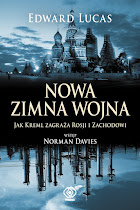
Edward Lucas is author of the forthcoming The New Cold War And How To Win It
Friday, July 27, 2007
| [+/-] |
make benefit glorious OSCE not Kazakhstan |
Europe.view
Security versus democracy
From Economist.com
Kazakhstan is at the centre of an ugly trade
| |
IF YOU believe in realpolitik, it is a no-brainer. Kazakhstan should chair the Organisation for Security and Co-operation in Europe (OSCE) in 2009. If you believe in the principles of democracy on which the OSCE was founded, the question of Kazakhstan is a no-brainer too: an undemocratic country should not chair one of the continent’s main democracy-promoting organisation.
This is no mere wrangle about protocol. The debate over Kazakhstan and the OSCE raises a fundamental question about Europe’s willingness to trade democracy for security.
The OSCE was founded on that bargain—but the other way round. The then Conference on Security and Co-operation in Europe, meeting in Helsinki in 1975, traded security, in the form of Western assent to the division of Europe, for freedom: the Kremlin’s formal commitment to support human rights across the continent. That helped destroy totalitarianism, because it gave dissidents behind the iron curtain a legal basis to challenge their communist rulers.
Now Russia and its allies want to cripple the OSCE until it turns into a mere talking-shop. They have systematically tried to strangle its election-monitoring outfit, the Warsaw-based Office for Democratic Institutions and Human Rights (ODIHR—pronounced, aptly enough, “oh dear”). The Kremlin also detests the OSCE’s openness to independent non-governmental organisations. The OSCE is one of the few places where outfits such as the Russian-Chechen Friendship Society (banned in Russia but now registered in Finland) can get a public hearing before an official audience.
The chairmanship of the 56-member OSCE changes every year. Spain holds the chair now; Finland is next. Kazakhstan desperately desires the job in 2009. Giving Kazakhstan what it wants, argue supporters such as Germany, would help reach out to the most important and promising country in central Asia. It would integrate Kazakhstan into the heart of Europe’s security structures—and maybe gain Kazakh support for a gas pipeline direct from central Asia to Europe, bypassing Russia.
| |
 | |
For make benefit glorious nation |
Perhaps. But it is hard to portray this as a move to counter Russian influence in central Asia, given that the Kremlin also strongly supports the Kazakh bid. Russia wants to set a precedent that a non-democratic country can hold the chair. This year Kazakhstan, so why not Belarus in 2010?
Britain and America are still holding out against the plan. Kazakhstan’s human-rights record is dire. It has never held an internationally validated election. Nursultan Nazarbayev (pictured), the president for 17 years already, has just claimed the post for life. Leaders in Washington and London fear that Kazakhstan may mute the OSCE’s effectiveness if, say, an election is rigged, a demonstration violently crushed or a journalist killed somewhere in Russia or another part of the former Soviet Union in 2009; judging from current affairs, such events are all too likely.
Certainly the evidence so far is that stretching democratic principles to accommodate undemocratic countries does not spread freedom, but merely dents those principles. Admitting Russia to the Council of Europe, another talking-shop with a grand human-rights mandate, now looks premature to say the least. The same applies to the G8, supposedly a grouping of big advanced democracies. Official harassment of pro-democracy protesters made Russia’s G8 summit in St Petersburg last year a shameful farce.
One solution would be to say that Kazakhstan can be chair in 2011—but only if it first meets some elementary democratic criteria. But it may be too late for such a deal. Anything short of the chairmanship in 2009 will be seen as a severe snub.
The sad truth is that an organisation like the OSCE can function only if its members mostly agree on most principles. That was the case through the 1990s. It no longer holds now. Rather than make shameful compromises in the name of security, it would be better to concentrate on the best long-term bet: promoting freedom.
Thursday, July 19, 2007
| [+/-] |
Berezovsky |
19/07/07 - World news section
No wonder Boris Berezovsky has so many enemies
By EDWARD LUCAS
Plenty of people have wanted to kill Boris Berezovsky. Personally, I wanted to strangle him. In the chaotic Russia of the 1990s, he was the epitome of the 'oligarchs': the profiteers from a no-holds-barred capitalism that had created a handful of billionaires while leaving millions of Russians destitute.
But even by Russia's demanding standards of unpunctuality and indiscipline, he was chaotic.
His office habitually denied all knowledge of his whereabouts. His mobile phone numbers - he had several - changed constantly. With luck, you would reach a bodyguard, who would take a note with your name into the tycoon's presence.
{R}
Berezovsky would either shake his head wordlessly, or - if you were very lucky - take the phone, offering anything between a minute and an hour; or the promise of a meeting; sometimes it would even happen.
His favourite meeting place was what he called his "club" (though it seemed to have only one member). This was a lavishly-restored and closely-guarded Tsarist-era mansion where he liked to show off the exquisite materials and workmanship.
The sources of Mr Berezovsky's money have never been entirely clear. Which explains, at least in part, why he is no longer a man of huge economic and political influence in his native land, but is living in exile in England, in permanent and justifiable fear of his life, travelling everywhere in one of his two armoured Maybach limousines (£400,000 each) and watched over by his protection team of former French Foreign Legionnaires.
Berezovsky likes to parade himself as a political dissident whose outspoken criticisms of President Putin's regime make him a true friend of democracy. That is not quite the full picture.
To understand the man and his motivations we need to travel back into his past, to a time when millions of Russians were trying their luck at business in the collapsing years of the Soviet Union.
Mr Berezovsky - a gifted mathematician - started as a dealer in cars, buying Ladas straight off the production line "for export" at a very favourable price and then selling them (without any export having taken place) at a profit.
How he managed to persuade the management of that run-down wreck of a factory to part with valuable stock at such a bargain price remains a mystery.
That business financed other ventures. Next came a scheme selling bargain-priced shares in a planned car factory. It was never built; nobody got a car and the scheme collapsed, wiping out participants' savings. Mr Berezovsky insists that the scheme was honestly run, and its collapse was not his fault.
He next moved into the media business, taking effective control of the main television channel, ORT, and purchasing a clutch of heavyweight newspapers. He also gained control of an oil company and became an influential force in the Russian national airline, Aeroflot, setting up a Swiss-based company to handle - and critics say to siphon off - its foreign-currency revenues.
As his business empire expanded, so his political influence soared. His office in the "White House", the seat of Russian government, adjoined that of the then prime minister, Viktor Chernomyrdin.
He was supremely well-connected in the Kremlin too, where an increasingly drunken and frail President Boris Yeltsin had given free rein to his daughter, Tatyana, and her husband.
As the Yeltsin family cast around for a successor who would keep them out of jail, it was Mr Berezovsky who pushed the case of a quiet, ex-KGB-man-turned bureaucrat, called Vladimir Putin.
He was unashamed about his abilities to turn power into wealth and vice versa. Although he insisted that he wanted Russia to become a modern democracy, it was hard to see his practical contribution-to this and outsiders who did business-with him were less impressed.
In 1999, at Moscow's leading investment conference, I watched Mr Berezovsky facing unaccustomed scrutiny from a western fund manager.
"Can you name any company you have been involved with where the cash flow has not been siphoned off and the other investors defrauded?" asked the irate banker. "Come on, sir, just name one."
Such fury had long been shared by the vast majority of Russians. In their eyes, Berezovsky symbolised the looting and influence-peddling that had so marred the Yeltsin era.
As such, he had many enemies. A car bomb in 1994 nearly killed him. And when Mr Putin began bringing a semblance of order to Russian politics after becoming president in 2000, Mr Berezovsky was an obvious target.
Berezovsky had made the fatal mistake of assuming that Mr Putin would be a weak president, who would not dare challenge the business empire of a fromer poitical ally.
He was wrong. In the summer of 2000, when Mr Putin first unleashed the prosecutor's office on him, Mr Berezovsky responded toughly, claiming that dictatorship was looming. Few sympathised with him.
In a few months, he had lost his most important assets. His television channel, ORT, was back in government control. Prosecutors and accountants were poring over the books at Aeroflot.
So Mr Berezovsky moved to London - taking up a promise made by the British government in 1998 when he brokered the release of two British hostages in Chechnya.
For all the luxury of his Mayfair offices and Surrey mansion, it is unlikely that Mr Berezovsky planned a long stay.
But like many Russian emigres in past centuries who kept suitcase packed for their imminent return home, it has been much postponed.
Mr Berezovsky's frequent entreaties against the Kremlin have come to nothing. Opposition parties shun his advances. His associates were mostly fringe figures such as Alexander Litvinenko, a renegade officer of the Russian security service, whose escape from Russia was facilitated by Mr Berezovsky.
As the world now knows, Mr Litvinenko was subsequently murdered after his cup of tea was poisoned with radioactive polonium in a London hotel, triggering the current diplomatic stand-off between Britain and Russia.
If, as some suspect, this assassination was meant to send a warning signal to Mr Berezovsky to halt his political rabble-rousing against the Kremlin, then it has had precisely the opposite effect. His pronouncements have become increasingly shrill.
He told a British newspaper that he wanted to remove Russia's rulers "by force" - infuriating the British government. At a recent debate at London's Frontline club, Mr Berezovsky kept Russia-watchers, journalists, spooks and fellow-emigres transfixed with his demolition of his native country's lethal fusion of business and political power, enforced by secret police tactics.
But a sardonic intervention from the audience left him - for once - speechless. "You have well described the monster that runs Russia. But it is one that you yourself created."
Mr Berezovsky's analysis may indeed be hypocritical, but it is still largely correct. And while he may be a difficult man to admire, if the Russian authorities have indeed tried to kill him, there could be little more convincing proof of the terrifying contempt in which the Kremlin holds our way of life.
Edward Lucas is author of a forthcoming book The New Cold War And How To Win It.


