


 Posts
Posts




Power, money and principle
Dec 4th 2008
From Economist.com
Defending political freedom in Russia and Britain
IMAGINE the outrage if the Russian police raided the Duma and arrested a leading opposition politician on the grounds that he had obtained leaked information embarrassing to the Kremlin. It would prompt pompous lectures from Western politicians and lobby groups about the dangers of autocracy, the need to maintain the separation of powers, and so on. When the same thing happens in Britain, it is not just bad for the political system in a country that likes to think it is the mother of parliamentary democracy. It also weakens the argument that tussles between Russia and the West are based fundamentally on values rather than geopolitics.
“Whataboutism” was a favourite tactic of Soviet propagandists during the old Cold War. Any criticism of the Soviet Union’s internal repression or external aggression was met by asking “what about” some crime of the West, from slavery to the Monroe doctrine. In the era when political prisoners rotted in Siberia and you could be shot for trying to leave the socialist paradise, whataboutism was little more than a debating tactic. Most people inside the Soviet Union, particularly towards the end, knew that their system was based on lies and murder. For all its shortcomings, the West was not that bad.
The modern Russian version is getting harder to counter. Many pro-Kremlin Russians seem sincerely to believe that no moral difference now exists between their rulers and those of other countries. Vladimir Putin is a former KGB officer? Well, George Bush senior ran the CIA. Chechnya was bloody, but Iraq was worse. Bombing Serbia and recognising Kosovo disqualifies the West from making any criticism of Russian behaviour in Georgia. These are all flawed arguments, but they are believed nonetheless.
Privately, the cynicism could be deeper still. Some may think, “We have learned that when we need something from the West, we find powerful people in a big country and pay them and then we get what they want.” The rule of law, contested elections, free media and so on are just fictions: they look nice and may fool the voters into thinking that their system is different. But in the end it is all about power and money.
It is not just the strength of the pro-Kremlin business lobby, particularly in the energy industries, in countries such as Germany and Italy. It is remarkable that politicians from both main British parties see nothing wrong in hobnobbing with Oleg Deripaska, a Kremlin crony and tycoon who is unable to visit America because of FBI concerns about his business practices and partners.
Events such as the police raid on the home and parliamentary office of Damian Green, a leading British Conservative politician, make it worse. Senior police officers saw nothing wrong with locking Mr Green up for nine hours and taking his private documents, computer, mobile phone, fingerprints and a DNA sample.
Nobody has resigned or been punished. One could easily get the idea that the British authorities not only believe they are above the law but act that way, with impunity.
Actually, things are not yet quite that bad. Voters will decide what they make of it. Unlike in Russia, nobody knows who will win the next general election in Britain, just as nobody knew in advance who would win the American presidency. Contested elections are the ultimate backstop. But real political freedom needs more than that. It is not just what happens at elections but all the other things in between them that matter—including opposition politicians being able to go about their business without being humiliated or intimidated. That’s worth fighting for; in Russia and in Britain.


So it is business as usual with Russia. And what a bad business it is. Britain's decision to allow France to lead the European Union back into normal relations with Vladimir Putin's ex-KGB regime in Russia is one of the most startling volte-faces in our country's recent diplomatic history. It has left our allies in Eastern Europe – Poland, the Czech Republic, Estonia, Latvia and Lithuania – aghast at our duplicity. "Our last European hope just ----ed us. We should have known. For we are but a small faraway country about which they know nothing," a senior official in the region wrote in a despairing email after The Daily Telegraph broke the news on Friday.
European unity after the war in Georgia was never terribly impressive – a mild public rebuke and the suspension of talks on a new "partnership and co-operation agreement" until Russia met the conditions of the loosely worded truce brokered by the French president, Nicolas Sarkozy.
Russia has met some of those conditions – but not all. EU monitors are still unable to inspect the war zone properly. If they could, they would see evidence of ethnic cleansing in the two separatist enclaves of South Ossetia and Abkhazia. They would also see that Russia has increased its military presence. The message to the Kremlin is clear: you can invade a neighbouring country, threaten Europe's energy supplies, and the EU will do nothing serious about it.
The reason is simple: Gordon Brown cares little about foreign affairs, but likes the idea of stitching up deals on the reform of international finance with his new friend Mr Sarkozy. France, which is running the EU until the end of the year, wants a triumph to present to the European summit in Nice this month. Showing that it has repaired relations with Russia is part of that. It will please all the pro-Russian countries in the EU. Russia's energetic cultivation of contacts in Germany, Italy, the Netherlands, Austria and France has built up a bridgehead of influence. Those in Whitehall who watch with alarm and disgust as parts of our establishment cosy up to rich and powerful Russians have been outmanoeuvred. The idea that the start of talks is balanced by a new, careful scrutiny of EU-Russian relations should fool nobody. This is surrender.
It must be especially humiliating for David Miliband, whose condemnation of Russia's actions, in a speech in the Ukrainian capital Kiev on August 27, inspired hopes from the Baltic to the Black Sea that Britain was now a champion of the ex-communist countries' freedom and security. He excoriated Russia's "unilateral attempt to redraw the map", calling it "the moment when countries are required to set out where they stand". This week's decision casts those words in a bitter light.
It is also part of a wider and gloomier picture. Even before the war in Georgia in August, Russia was bullying its neighbours, stitching up Europe's energy market and turning money into power across the continent. In the old Cold War, the Kremlin was shackled by communism. Now it has been turbo-charged by capitalism, through the boom in oil and gas prices that has brought it
$1.3 trillion in extra revenues since 2000. That enables it to exercise influence not only on us, but among us, too. It has built up assets, commercial and human, in positions of power across Europe. German industry makes tens of billions of euros in the Russian market; Russia is Germany's main energy supplier. The former German chancellor Gerhard Schröder chairs the consortium building a Russian-German gas pipeline (conceived, in secret, while he was still running Germany).
Even though the EU is far stronger than Russia on paper, three times bigger in population terms, and more than 10 times larger as an economy, it seems unable to stand up to the Kremlin. The financial crisis has hit Russia hard – but it has hit us harder. A few years ago, threatening to freeze dodgy Russian companies out of the developed world's capital markets would have been a real threat. Now, if they find London, New York, and Frankfurt unwelcoming, they can turn to the exchanges in Dubai, Mumbai and Shanghai.
Nor does Russia greatly care if it is excluded from clubs such as the Council of Europe or the G8, or if talks on joining the World Trade Organisation or the Organisation for Economic Co-operation and Development are frozen. Such "punishments" may even reinforce the message of the ex-KGB regime to the Russian people: that their country is surrounded by malevolent hypocrites. The Kremlin's message to Europe is cold and confident: you need us more than we need you. President Dmitri Medvedev is proving as tough and tricky as his predecessor, Vladimir Putin. His new security plan is to end the Atlantic alliance, pushing America out of Europe and creating a new security regime in which the continent's biggest countries – chiefly Germany and Russia – will boss everyone else about.
It is not too late to fight back. Nato has already changed its approach. Belatedly, the alliance's top-secret military planning bureaucracy is working out how it could defend the Baltic states and Poland. Nato warplanes last week held air exercises over Estonia, while senior American commanders are paying frequent visits to the Baltic states.
That is encouraging, but it is not enough. There are other matters that need addressing urgently – including Russian spying. This has reached unprecedented levels, and is probably more dangerous and destructive to Western interests than during the old Cold War. A co-ordinated, wholesale expulsion of Russian intelligence officers and their hangers-on from, say, London, Stockholm, Oslo, Copenhagen and Warsaw would send a powerful message to the Kremlin.
The key to the West's future security is the security of the Baltic states. Estonians, Latvians and Lithuanians have thrown in their lot with us and we must not let them down. Consider this scenario. Imagine that Estonian extremists start intimidating local Russians (who amount to around a third of the Estonian population). Russia can easily stoke this covertly, while demanding publicly that Estonia crack down. Then imagine that Russian activists (again, backed, discreetly, by Moscow) set up "self-defence units" which start patrols, and set up checkpoints. When the Estonian authorities try to stop this, the Kremlin complains; Russian military "volunteers" start mustering across the border, proclaiming their intention to defend compatriots from "fascism". The Russian media report this with wild enthusiasm; the Russian authorities say they cannot indefinitely restrain the spontaneous patriotic sentiments of their citizens.
Suppose Estonia requests support under Article IV of the Nato charter. At this point, Russia's cultivation of assets in the West pays off. Germany, Italy and other big European countries tell Estonia to sort out its problems with Russia bilaterally. The result is a worse split in the Alliance even worse than the one over Iraq. Faced with the West's weakness, the Kremlin ups the odds. Estonia tries to restore order; Russia terms that an intolerable provocation and demands a change of government, immediate changes in the language and citizenship laws, and the establishment of what it calls a "Swiss solution": cantons in which Russians will be allowed "to run their own affairs". To back this up, Russian forces start military manoeuvres.
So what does Estonia do then? America may offer moral support, but is it going to risk a Third World War with Russia to protect Estonia? Such a course of events is not inevitable, or even likely. But it is not as preposterous as it should be. Too many of the ingredients are in place and the Kremlin is perfectly capable of cooking them into a dangerous dish. The big question for Estonia and its friends is what can be done to make sure that never happens.
The answer is not to give up on Nato but to complement it with a regional grouping. The existing Nordic ties between Sweden, Norway and Finland, boosted by support from Poland and Denmark, would put this scenario back where it belongs: in the world of geopolitical thrillers. Add in British, Canadian and American involvement and you would have a formidable counterweight to Russian mischief-making in both the Baltic and the Arctic – the likely hotspots of the new Cold War.
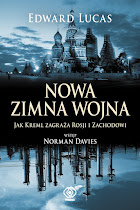
Edward Lucas is author of 'The New Cold War: How the Kremlin menaces both Russia and the West' (Bloomsbury). An updated edition is published thismonth.


