


 Posts




Europe.view
The spy who remained in the cold
Jan 15th 2009
From Economist.com
A new film honours a hero of the cold war
WATCHING Daniel Craig, an actor best known as James Bond, playing a Jewish resistance fighter successfully battling the Nazis is an unbeatable combination for film audiences in the western world. “Defiance”, a newly released film about the Bielski partisans, is likely to do well. Some Poles may argue that it does not give a complete picture of their resistance to the country’s double occupation by the Nazis and Soviets. But historical films necessarily tell only one strand of a story.
“Defiance” is a story of a group finding collective courage against impossible odds. Another new film, Polish-made for an international audience, tells a similarly inspiring story, of how one man, in the heart of the Soviet empire’s military machine, was able to make a difference and—perhaps—save the world from a nuclear holocaust. “War Games”, by Dariusz Jablonski, tells the story of Ryszard Kuklinski (pictured), once the West’s top spy behind the iron curtain.
As one of communist Poland’s top military planners, Kuklinski had access to the Warsaw Pact’s most sensitive secrets—including plans for a devastating military onslaught on the West. What his colleagues never suspected was that he had become a fervent anti-communist, who photographed thousands of documents and passed them to the CIA.
His disillusion started in the mid-1960s, and was crystallised by his outrage at the Soviet-led invasion of Czechoslovakia, which he helped plan. The film shows his CIA handlers and other American officials giving, for the first time on camera, vivid details of their meetings with Kuklinski. One hardened ex-spook weeps as he recalls his prize agent’s courage.
Kuklinski and his family were smuggled out of Poland shortly before martial law was imposed in 1981. Like many defectors, they lived a twilight life in the West, physically comfortable but emotionally isolated: making friends was risky. If he hoped for speedy vindication once communism collapsed, he was mistaken.
After the evil empire imploded, attitudes to those who had spied for the other side varied. The then-Czechoslovakia said that they were heroes; it invited those western agents who had escaped to return and help set up the new non-communist intelligence service (nobody, it seems, took up the offer). In Estonia, the late Mart Männik, a survivor of the disastrous MI6 post-war operation in the Baltic states, chose not to make himself known to the authorities, fearing retribution from the KGB, which he felt still had plenty of power in the post-occupation republic. His story is well told in a book “Tangled Web”, recently published in English by Grenader, an Estonian publisher.
But the post-communist Polish authorities were shockingly slow to rehabilitate Kuklinski. Many Poles thought he was not a hero, but a traitor who had broken his military oath. Only in September 1997 were charges of espionage dropped; he finally returned to Poland for a visit in 1998.
The film casts a thought-provoking light on that controversy, which the new film is likely to reignite. Lech Walesa’s evasive answers to the question why he as president failed to pardon Kuklinski are striking (he says he was surrounded by ex-communists but does not explain why he couldn’t overrule them).
Also troubling are the mysterious deaths of both his sons in 1994: just a boating mishap and a hit-and-run road accident? Or the belated revenge of his former colleagues? The film cannot answer that. Nor does it answer the question of who tipped off the Soviet authorities that the West had a mole in the Polish military: was it one of the traitors who has since been exposed? Or one who has to this day covered his tracks successfully?
Saturday, January 17, 2009
| [+/-] |
Europe View on "War Games" |
| [+/-] |
Freedom falters |
Tracking freedom
It never stays long
Jan 15th 2009
From The Economist print edition
One survey shows liberty shrivelling; another names the “spoilers”
WHETHER your purpose is to promote freedom, to curb it, or to quibble about its definition, the reports of Freedom House, an American lobby group, make good reading. The new 2009 edition paints a sombre picture of how the world fared during George Bush’s time in office. An initial five years of improvement were followed by a three-year decline—less in 2008 than previously, but still disappointing. Russia’s rigged elections and cowed media attract particular criticism in the gloomy ex-Soviet section. Though Iraq posts a slightly better score, Afghanistan shifts from “partly free” to “not free” in Freedom House’s broad three-category system. The Middle East and north Africa region—the centrepiece of Mr Bush’s efforts to promote freedom—showed little measurable improvement over the previous year.
More widely, the number of “electoral democracies” (those with tolerably free and fair elections) dropped by two, to 119 (thanks to four demotions and two promotions). The general trend was down too, with declines in freedom of expression and association, and a weaker rule of law.
As with most international rankings, headline comparisons and trends are often less interesting than the details and the underlying thinking. Freedom House sticks to measuring the rise and fall of political freedom: it eschews the idea, promoted by outfits like Amnesty International, that economic and social rights matter equally.
Raw country-by-country figures can be misleading: the population-weighted results published by Freedom House are more informative. From that point of view, the failure of the Beijing Olympics to bring any of the promised (or more accurately, hoped-for) changes in China’s policy towards dissent was probably the biggest disappointment of 2008.
A similarly heavyweight annual report from another American outfit, the New York-based Human Rights Watch (HRW), takes direct aim at what its director, Kenneth Roth, terms “spoilers”. He writes: “Those conducting the most energetic diplomacy on human rights are likely to reside in such places as Algiers, Cairo or Islamabad, with backing from Beijing and Moscow. The problem is that they are pushing in the wrong direction.” Such countries, he says, “hide behind the principles of sovereignty, non-interference and Southern solidarity, but their real aim is to curb criticism.” He pointedly criticises the stance taken by India and South Africa, which uphold human rights at home but undermine international efforts against regimes such as Burma, Sudan or Zimbabwe.

At least in the eyes of the world, Freedom House and HRW come from slightly different places. The latter is adamant that it accepts no government funding, while the former does get money from the American taxpayer (and is committed to the view that American leadership is a good thing for liberty), though it has a decent track record of criticising the United States and its friends where appropriate.
In any case, the prospect of Barack Obama’s presidency clearly delights HRW, which lambasts the “disastrous Bush years” for torture, secret prisons and “hyper-sovereignty” and hopes that America will now sign up for all kinds of international good causes, from landmine bans to the International Criminal Court. Freedom House is more cautious, praising Mr Bush for his championing of dissidents. It worries that the new administration will prefer improving relations with authoritarian countries to challenging them. Sadly, measuring government beastliness looks like a future-proofed business.
Thursday, January 08, 2009
| [+/-] |
CEE and America |
Europe.view
Thorns in the east
Jan 8th 2009
From Economist.com
Pipelines, missiles and maybe something worse
GAZA, rather than gas, is likely to be top of the new American administration’s to-do list. If the ex-communist world gets any early attention, it will be in search of Russian help over Iran and in the Middle East, rather than the pressing business of Europe’s energy and military security. If Barack Obama’s top foreign-policy officials pay even a nanosecond of attention to eastern Europe in the first few months of their time in office, it will be to bemoan locals’ inability to deal with their own problems.
Imagine the difference a single-minded and effective push on Nabucco a few years back would have made. If that pipeline, bringing Caspian and Central Asian gas to Europe via Turkey, was seriously underway—perhaps fed by a trans-Caspian gas pipeline, perhaps just with Azeri gas—then the effects of the current Russian-Ukrainian energy spat would have been to accelerate an existing project to early completion, rather than to highlight the shambles.
Now the Kremlin is well-placed to tell the European Union that if it wants to avoid headaches with transit through Ukraine in future, then it had better hurry up and help Russia build its pet pipelines, North Stream and South Stream. These projects, in the Baltic and Black seas respectively, do get round the corrupt and fractious gas transit industry in Ukraine. But they create another problem: strengthening Russia’s ability to play divide-and-rule with European customers. It is hard to see the American administration sparing much time to worry about that.
A renewed push on arms control, conversely, still looks possible. Whereas the Bush administration seemed to regard dominance in strategic nuclear weapons as an end in itself, the signs are that Mr Obama’s advisers see it differently. Russia is already twitchy enough about its decaying nuclear arsenal, and about its failure to make its new submarine-launched missiles work properly. The urgent need now is for talks on a new third START treaty on big nukes, coupled with measures to get Russia back into the Conventional Forces in Europe treaty (in which it has suspended its membership) and to preserve the INF (Intermediate Nuclear Forces) treaty. In addition, the new administration is unlikely to share its predecessor’s allergic reaction to any talks about an international legal order in space.
All that may go some way to defusing feelings of paranoia and neglect in the Kremlin. The most dangerous situation for the west is one where Russia feels vulnerable to an American first strike (because of nuclear or space-weapon superiority). Russia’s creaky command and control means that a move to “launch on warning” hugely raises the risk of a false alarm turning into a nuclear war.
That does not mean that America should make big symbolic gestures such as cancelling its planned missile-defence bases in the Czech Republic and Poland. Doing that would be a huge snub to its most loyal allies, and stoke fears of American disengagement from Europe. In truth, the new rockets and radar don’t work yet, and the Democratic congress is unlikely to vote money for them in a hurry. That gives plenty of wiggle room over timing, during which America can see if there is any way of getting Russia to share its concerns about rogue-states’ missiles.
The trickiest task will be dealing with an internal political crisis in Russia that leads the Kremlin to seek a distraction abroad, such as undermining the sovereignty of a neighbouring country—Ukraine, Georgia or perhaps even a Baltic state. That is not likely to catch attention in Washington until it happens.
| [+/-] |
Libel |
Libel tourism
Writ large
Jan 8th 2009
From The Economist print edition
Are English courts stifling free speech around the world?
SEEN one way, it is nothing short of a scandal. Small non-British news outlets and humble non-British authors (in many cases catering almost wholly to a non-British public) are being sued in English courts by rich, mighty foes. The cost of litigation is so high ($200,000 for starters, and $1m-plus once you get going) that they cannot afford to defend themselves. The plaintiffs often win by default, leaving their victims humiliated and massively in debt.
There is another side to the story, of course. Attempts to collect damages for libel and costs from people outside Britain are rare and often fruitless. Just because someone is rich, or holds a foreign passport, or lives abroad, that does not mean that they should not seek justice in an English court. Sometimes the defendants are global news organisations with a substantial presence in Britain. Sometimes the plaintiffs are dissidents, complaining about libellous attacks on them by state-friendly foreign media; a lawsuit in London may be their only chance of redress.
Yet some cases are still startling.
Two Ukrainian-based news organisations, for example, have been sued in London by Rinat Akhmetov, one of that country’s richest men. One, the Kyiv Post, had barely 100 subscribers in Britain. It hurriedly apologised as part of an undisclosed settlement. Mr Akhmetov then won another judgment, undefended, against Obozrevatel (Observer), a Ukraine-based internet news site that publishes only in Ukrainian, with a negligible number of readers in England. Judgment was given in default and Mr Akhmetov was awarded £50,000 (now $75,000) in damages in June last year. The best-known case is that of Rachel Ehrenfeld, a New York-based author. She lost by default in a libel action brought by a litigious Saudi national, Khalid bin Mahfouz, over allegations made in her book “Funding Evil”. It was published in America and available in Britain only via internet booksellers. Since then she has been campaigning hard for a change in the law.
Yet no attempt has been made to collect the £50,000 in costs and damages awarded against Ms Ehrenfeld, says Mr Mahfouz’s lawyer, Laurence Harris. He adds: “It doesn’t appear that we’ve had any chilling effect at all on her free speech.” (Even now, British booksellers are offering second-hand copies of Ms Ehrenfeld’s book over the internet.) Although Ms Ehrenfeld is sometimes portrayed as being unable to come to Britain because of the lawsuit, he says there is no reason why she can’t visit England “unless she is bringing a lot of money with her”. He notes: “We abolished debtors’ prisons some time ago.”
Nonetheless, cases such as these have outraged campaigners for press freedom in both Britain and America, who are trying to change the law in both countries. The states of New York and Illinois have passed laws giving residents the right to go to local courts to have foreign libel judgments declared unenforceable if issued by courts where free-speech standards are lower than in America. Ms Ehrenfeld sought such a ruling in late 2007 in New York state courts but failed; with the new law in place she may try again.
Now the campaign has moved to the American Congress. A bill introduced into the House of Representatives last year by Steve Cohen, a Democrat, sailed through an early vote but stood no chance of becoming law. A much tougher version submitted to the Senate, the Free Speech Protection Act, also gives American-based litigants an additional right to countersue for harassment. The bills have been strongly supported by lobby groups such as the American Civil Liberties Union, which fear that the protections offered by the First Amendment are being infringed by the unfettered use of libel law in non-American jurisdictions.
Similar concerns are being expressed in Britain. In a debate in the House of Commons last month Denis MacShane, a senior Labour MP, said that “libel tourism” was “an international scandal” and “a major assault on freedom of information”. Lawyers and courts, he said, were “conspiring to shut down the cold light of independent thinking and writing about what some of the richest and most powerful people in the world are up to.” He cited, among others, cases heard in London where a Tunisian had sued a Dubai-based television channel and an Icelandic bank had sued a Danish newspaper.
Mr MacShane also said the Law Society should investigate the actions of two leading British firms that act for foreign litigants, Schillings and Carter-Ruck, implying that they were “actively touting for business”. Neither wished to comment on the record, though both, like other big law firms, have websites promoting their services and highlighting their successes.
British members of a parliamentary committee dealing with the media are now broadening a planned inquiry into privacy law and press regulation. The chairman, John Whittingdale, says the committee has received a large number of submissions from people worried about libel tourism.
These go well beyond the usual media-freedom campaigners. Groups that investigate government misbehaviour say their efforts are now being hampered by English libel law. “London has become a magnet for spurious cases. This is a terrifying prospect to most NGOs because of legal costs alone,” says Dinah PoKemper, general counsel at the New York-based Human Rights Watch. It recently received a complaint from lawyers acting for a foreign national named in a report on an incident of mass murder. “We were required to spend thousands of pounds in defending ourselves against the prospect of a libel suit, when we had full confidence in the accuracy of our report,” she says.
The problem is not just money. Under English libel law, a plaintiff must prove only that material is defamatory; the defendant then has to justify it, usually on grounds of truth or fairness. That places a big burden on human-rights groups that compile reports from confidential informants—usually a necessity when dealing with violent and repressive regimes. People involved in this kind of litigation in Britain say that they have evidence of instances where witnesses have been intimidated by sleuthing and snooping on behalf of the plaintiffs, who may have powerful state backers keen to uncover their opponents’ sources and methods.
Private matters
A further concern is what Mark Stephens, a London libel lawyer, calls “privacy tourism”, arising out of recent court judgments that have increased protection for celebrities wanting to keep out of the public eye. In December alone he has seen seven threatening letters sent by London law firms to American media and internet sites about photos taken of American citizens in America. “Law firms are trawling their celebrity client base,” he says.
The more controversial and complicated international defamation law becomes, the better for lawyers. The main outcome of the proposed new American law would be still more court cases, with lucratively knotty points of international jurisdiction involved. Prominent Americans with good lawyers may gain some relief, but for news outlets in poor countries it is likely to make little difference. And as Floyd Abrams, an American lawyer and free-speech defender, notes, a book publisher, for example, will still be nervous about an author who has written a “libellous book”.
Mr Stephens, the London lawyer, is taking a case to the European Court of Human Rights, where he hopes to persuade judges that the size of English libel damages is disproportionate. If you get only around £42,000 for losing an eye, why should you get that much or more from someone writing something nasty about you, he asks. But even limiting damages is not enough. For reform to have any effect, it will have to deal with the prohibitive cost of any litigation in London.
| [+/-] |
Sikorski for NATO |
Europe.view
What Santa can bring Eastern Europe
Dec 27th 2008
From Economist.com
Radek Sikorski for NATO chief
THE reindeer are harnessed, the sledge laden. So what will Santa Claus bring the ex-communist countries for Christmas? Desirable presents are easy to think of. A respite from the economic downturn. A less chauvinist attitude from Russia. A more considerate approach from Germany. Attention from the new American administration. But these belong in the same charming but unrealistic category as a child’s wish-list on which “no school”, “a fairy carriage” and “machine gun” are scrawled in crayon.
Rather more likely—and genuinely desirable—would be the appointment of someone from the once-captive nations to a top international job. Since the collapse of communism, the record on this has been dismal. Russia chaired the G-8 (though most of the countries attending the St Petersburg summit did so while wincing at their host’s behaviour). Slovenia held the European Union’s presidency competently (though close inspection revealed a tight French embrace of the EU’s nominal leadership).
But in terms of the big appointments, such as running the EU Commission and NATO or even the lesser posts such as leading the Organisation for Security and Co-operation in Europe, the Council of Europe, the European Bank for Reconstruction and Development or anything at the United Nations, it is hard to find anyone from eastern Europe who has held anything remotely resembling a top job. The message is: be grateful for your EU commissioners; now shut up.
The new member-states of NATO and the EU feel they have been rather poorly treated in the past year or so. Germany snubbed them at the Bucharest NATO summit. The EU told them they were silly to care about Georgia, imposed a single flimsy sanction on Russia and then was unable to maintain even that.
Much of the responsibility for this lies with the French president, Nicolas Sarkozy. He has also flirted with the Kremlin’s new scheme for European security. This involves kicking the Americans out, sidelining NATO, and allowing Russia and the big EU countries to stitch things up between them.
In private briefings, French and other west European officials are already undermining the upcoming Czech EU presidency, sneering and jeering at the idea that the dumpling-munching peasants of Bohemia can match the grandeur of France. They also grossly overstate the importance (more accurately: nuisance value) of the abrasive Czech president, Vaclav Klaus. All EU states are equal, Mr Sarkozy concedes. But the bigger ones have “more responsibilities” (and are less equal, George Orwell might have concluded, than others).
Next year, if the Lisbon treaty is ratified, the following jobs will come open: presidents of the EU Commission (an existing post) and the EU Council (a new one), plus EU foreign minister, NATO secretary-general and president of the European parliament. As things stand, the east Europeans will get only the last of these—which is by far the least important.
That is not just unfair. It’s risky. It will alienate the east Europeans and make their political elites feel mutinous. East European countries have plenty of ways to slow down EU decision-making. So far, they have for the most part been at pains to show that they are good Europeans. That cannot be taken for granted.
Here is a possible way out: the NATO top job should go to a heavyweight Atlanticist politician, with expertise in defence policy, from a new member state. That produces a shortlist of roughly two: Radek Sikorski, Poland’s foreign minister (and former defence minister) or Sasha Vondra, the Czech deputy prime minister. Poland’s status as a defence heavyweight makes Mr Sikorski’s case the stronger. Let’s hope Santa sees it that way too.
| [+/-] |
Cromwell book review |
Oliver Cromwell
Headless story
Dec 30th 2008
From The Economist print edition
Cromwell's Head
By Jonathan Fitzgibbons
BEHEADED posthumously, as punishment for his part in the execution of Charles I in 1649, Oliver Cromwell’s fate after death matches his grippingly controversial life. Was it really his body that was buried in Westminster Abbey in 1658, with jarring pomp and ceremony? Was the same corpse exhumed and mutilated after Charles II came to the throne, ending Britain’s brief experiment with republicanism and military rule? Was it really the Lord Protector’s head that was rammed on a pike in Whitehall, to discourage regicides, only to be blown down in a gale and swiped by a soldier? And was it really that same head, battered and worm-eaten, with an iron spike still rammed through the skull, that became a souvenir, a vulgar curiosity, a treasured relic and was finally in 1960 secretly laid to rest in the chapel of Sidney Sussex College, Cambridge, where the young Cromwell briefly studied?
Jonathan Fitzgibbons answers these questions ably. The head is indubitably Cromwell’s: though the provenance is a little cloudy in the early 18th century, it beggars belief that a fraudster of that era would be able to fool forensic science many years later. The body was embalmed before it was beheaded; and the skull measurements correspond almost exactly with extant portraits of the Lord Protector.
The interesting historical detective work, and some neat demolition of myths and conspiracy theories, bring Mr Fitzgibbons half-way through a short book. After that comes a potted history of the aftermath of the English civil war, starting with the botched scheming that led the maddeningly duplicitous Charles I to lose not only the military conflict but also his head.
The regime that succeeded him was an uneasy tussle between idealists and a would-be military junta. Cromwell himself, that walking paradox, was neither as austere nor as principled as portrayed in most textbooks. His behaviour was marked by an oddly prankish streak and outbursts of genuine jollity. His refusal of the crown was both his greatest achievement and his biggest mistake. The author sums up his subject’s gravest weakness as “nihilistic overconfidence”. Like so many other revolutionaries, his regime became tyrannical and collapsed when he died.
This work is part of a venture into the book trade by Britain’s National Archives. Unlike stingy private-sector publishers these days, they have indulged in such rarities as a proper index, footnotes, bibliography and colour plates. It is a pity that they seem to have skipped the copy-editing. Cromwell appears chattily as “Oliver”. “May” and “might” are used interchangeably. An Oxford anatomy professor is said to have been “pouring” over documents in 1875 to expose a fake. Britain’s republican hero deserves better.
Thursday, December 18, 2008
| [+/-] |
Global warming--why our diet is getting hotter |
Chilies
Dec 18th 2008
From The Economist print edition
Why the world has taken to chilies
TASTELESS, colourless, odourless and painful, pure capsaicin is a curious substance. It does no lasting damage, but the body’s natural response to even a modest dose (such as that found in a chili pepper) is self-defence: sweat pours, the pulse quickens, the tongue flinches, tears may roll. But then something else kicks in: pain relief. The bloodstream floods with endorphins—the closest thing to morphine that the body produces. The result is a high. And the more capsaicin you ingest, the bigger and better it gets.
Which is why the diet in the rich world is heating up. Hot chilies, once the preserve of aficionados with exotic tastes for cuisine from places such as India, Thailand or Mexico, are now a staple ingredient in everything from ready meals to cocktails.
One reason is that globalisation has raised the rich world’s tolerance to capsaicin. What may seem unbearably hot to those reared on the bland diets of Europe or the Anglosphere half a century ago is just a pleasantly spicy dish to their children and grandchildren, whose student years were spent scoffing cheap curries or nacho chips with salsa. Recipes in the past used to call for a cautious pinch of cayenne pepper. For today’s guzzlers, even standard-strength Tabasco sauce, the world’s best-selling chili-based condiment, may be too mild. The Louisiana-based firm now produces an extra-hot version, based on habanero peppers, the fieriest of the commonly-consumed chilies.
But for the real “heat geeks”, even that is too tame.
Tesco, Britain’s biggest supermarket chain, recently added a new pepper to its vegetable shelves: the Dorset naga. Inhaling its vapour makes your nose tingle. Touching it is painful; cooks are advised to wear gloves. It is the only food product that Tesco will not sell to children. By the standards of other chilies, it is astronomically hot. On the commonly used Scoville scale (based on dilution in sugar syrup to the point that the capsaicin becomes no longer noticeable to the taster) it rates 1.6m units, close to the 2m score of pepper spray used in riot control. The pepper that previously counted as the world’s hottest, the Bhut Jolokia grown by the Chile Pepper Institute at the New Mexico State University, scored just over 1m. That in turn displaced a chili grown by the Indian Defence Research Laboratory in Tezpur, which scored a mere 855,000. The hottest habanero chilies score a wimpy 577,000.
The naga, originally from Bangladesh, was developed commercially by Michael Michaud, who runs a specialist online chili supply firm in south-western Britain. Having spotted it in an ethnic-food shop in the coastal town of Bournemouth, he bred a dependable and much hotter strain and had it tested. “I sent the powder to a couple of labs. They didn’t believe the reading. They thought they had made a mistake,” he recalls. Jonathan Corbett, the buyer who handles (cautiously) specialist chilies for Tesco says that the naga makes a standard hot curry “taste like a bowl of breakfast cereal”.
The naga has been a runaway success. In 2007, a Tesco outlet in Newcastle in northern England was supplied with 400 packs for a pilot period that was intended to last a month. The entire stock sold out on the first morning. According to AC Nielsen, a market-research firm, demand for hot chilies across all British retailers rose by 18% in the last year. At Tesco, the growth has been 29%. Demand for the naga has been so high that it has been forced to sell unripe green ones, intended for sale early next year. Tesco’s supplier is Britain’s biggest chili farmer, Filippo Salvatore. Based near Biggleswade, he is also a leading light in the Bedford Sicilian Association. He is hurrying to grow more.
Tesco is one of the world’s largest retailers, with outlets in both continental Europe and North America. But Mr Corbett says that his colleagues have no plans to stock the naga elsewhere, for example in the firm’s Fresh & Easy chain in America. “Tastes in the UK are hotter,” he says. That may be true, though the chili-eating milieu is certainly bigger in America, where the calendar is dotted with events such as the rumbustious Fiery Foods and Barbeque Show (in Albuquerque) and the more academic 19th International Pepper Conference (which took place in September in Atlantic City, concluding with a barbecue).
AP
AP
From pain comes pleasure
For connoisseurs though, the macho hullabaloo about ever-hotter chilies is distasteful, even vulgar: rather like rating wine only according to its alcohol content. Steve Waters, who runs the South Devon Chili Farm, says even the idea that the spectrum runs on a simple one-dimensional axis between “hot” and “mild” is misleading. He prefers the more complex Mexican matrix, which categorises chilies both by heat, and whether they are fresh, dried, pickled, or smoked. Any of these can produce big changes in flavour: he highlights the Aji (pronounced ah-hee), a Peruvian chili, which “ripens to bright yellow, with a strong lemony taste when fresh, very zesty. When dried it picks up a banana flavour.”
From this point of view, the most interesting trend is not in ever-higher doses of capsaicin for the maniac market, but in the presence of chili in a range of foodstuffs that previous generations would have regarded as preposterous candidates for hotting up. Chili-flavoured chocolate, for example, has gone from being a novelty item to a popular mainstream product. Mr Waters sells “hot apple chili jelly” as a condiment for meat, and chili-infused olive oil.
Adrenalin plus natural opiates form an unbeatable combination
The reason may be that capsaicin excites the trigeminal nerve, increasing the body’s receptiveness to the flavour of other foods. That is not just good news for gourmets. It is a useful feature in poor countries where the diet might otherwise be unbearably bland and stodgy. In a study in 1992 by the CSIRO’s Sensory Research Centre, scientists looked at the effect of capsaicin on the response to solutions containing either sugar or salt. The sample was 35 people who all ate spicy food regularly but not exclusively. Even a small quantity of capsaicin increased the perceived intensity of the solutions ingested. Among other things, that may give a scientific explanation for the habit, not formally researched, of snorting the “pink fix” (a mixture of cocaine and chili powder).
A chili-eating habit may develop to a startling degree (your author guzzled a packet of nagas while writing this article, and puts Tabasco in his coffee). But indulging in capsaicin does not quite meet the formal medical definitions of addiction. It is at most a craving, not a physical necessity. It does not cause loss of control when taken to excess, or illness in those deprived of it: heavy users may develop remarkable degrees of tolerance, but they do not require regular doses simply in order to feel normal. The preference does not wear off: ex-smokers, by contrast, may gag at the taste of a cigarette. And the effect on the brain is different: with nicotine, the more you smoke, the more you want.
Indeed, capsaicin has useful medical effects. By disabling a part of the nervous system called “transient receptor potential vanilloid 1” it can stop the body registering the pain caused by rheumatoid arthritis, for example. It can also be used to help patients with multiple sclerosis, amputees, and people undergoing chemotherapy. With rather less scientific evidence, a capsaicin product is marketed as an alternative to Botox, a wrinkle-smoothing cosmetic treatment.
But does it do any harm? The use of pepper spray as a weapon, and chili powder as a means of torture, suggests that it must. Certainly capsaicin can be painful, causing stress: in itself a potential health risk. A big dose incapacitates. But as far as permanent physical damage is concerned, the evidence is negligible to non-existent.
That seems to contradict common sense, which suggests that hot food causes an upset stomach—or what medical specialists call “gastric mucosal injury”. A study in 1987 on the effects of ordinary pepper produced some signs of gastric exfoliation (stripping away the stomach lining) and some bleeding—though the effects were less than those produced by aspirin. An alarming-sounding experiment a year later involved volunteers being fed minced jalapeño peppers through a tube, directly into the stomach. The results, observed by an endoscope (a camera on a tube) revealed no damage to the mucous membrane. Against that is a study of heavy chili-eaters in Mexico City, who appeared to have higher stomach cancer rates than a control group. But the rate of illness had no correlation with the frequency of chilies eaten, leading to speculation that other factors may be at work.
Humans are the only mammals to eat chilies. Other species apparently reckon that nasty tastes are a powerful evolutionary signal that something may be poisonous. Paul Rosin, a psychology professor at the University of Pennsylvania, who is one of the world’s best-known authorities on the effects of capsaicin, has had no success in persuading rats to eat chilies, and very limited success with dogs and chimpanzees: the handful of cases where these animals did eat chilies seemed to be because of their strong relationships with human handlers.
That offers a clue to the way in which mankind comes to develop a chili habit. In the same way as young people may come to like alcohol, tobacco and coffee (all of which initially taste nasty, but deliver a pleasurable chemical kick), chili-eating normally starts off as a social habit, bolstered by what Mr Rozin calls “benign masochism”: doing something painful and seemingly dangerous, in the knowledge that it won’t do any permanent harm. The adrenalin kick plus the natural opiates form an unbeatable combination for thrill-seekers. Just don’t get it in your eyes.
| [+/-] |
Latvia on the brink |
Latvia's troubled economy
Baltic brink
From The Economist print edition
Latvia has chosen economic torture over complete collapse
 | |
ONE of the more dramatic and controversial financial rescues in modern European history has been taking shape in Latvia over the past three weeks, led by officials from the International Monetary Fund and backed by neighbouring countries, the European Union and other institutions. Latvia’s central bank has burned through €1 billion ($1.4 billion), around a fifth of its reserves, since mid-October to defend the national currency, the lat. This is pegged to the euro in an arrangement similar to a currency board, but with an even bigger lump of foreign currency to back local money in circulation. As a stopgap measure, the Swedish and Danish central banks this week offered a combined €500m in short-term swap facilities, allowing the central bank to keep exchanging lats for euros. The IMF-led bail-out—so far agreed only in outline—is likely to amount to over €7 billion, with contributions from the Fund, Nordic countries and Latvia’s Baltic neighbour, Estonia.
The deal does not require Latvia to devalue its currency. This is highly controversial inside the IMF, where memories of the debacle over Argentina’s abandonment of its currency board in 2002 are still painful. But ending the currency peg would be tricky, not least because the central bank’s independence is constitutionally entrenched. It would bring little lasting benefit. And it would be deeply unpopular. Some 85% of loans to Latvian households and firms are denominated in euros and other foreign currencies.
The clinching argument was the damage that a devaluation could wreak elsewhere. Swedish and Finnish banks, which own the bulk of Latvia’s banking system, could find their own creditworthiness suffering. Although total exposure to Latvia is still small, the perception of risk is damaging. In late October, the Swedish government launched a loan guarantee plan of SKr1.5 trillion ($190 billion) to allay fears about its banks’ future.
A Latvian devaluation would also be likely to topple the currency boards of Estonia and Lithuania, and to endanger the precarious stability secured in recent weeks in other wobbly east European countries such as Hungary. The IMF said this week that it did not believe that either Estonia or Lithuania needed to abandon their currency boards. However, big current-account deficits there and in other east European countries remain a worry.
The bail-out plan makes unprecedented demands for fiscal adjustment to trim both the current-account deficit and inflation. After some years of double-digit growth (during which a complacent government signally failed to cool the economy), Latvia faces a 5% or greater contraction in GDP next year. The tax rises and spending cuts that have been agreed upon are worth a full 7% of GDP. Public-sector salaries will fall by 15%. Private employers are making deep wage cuts too.
Latvia’s flexible economy may fare better than the political system, which is notable for fragmented parties, squabbling mediocrities, dodgy business lobbies and abuse of power (the security police briefly arrested an economics lecturer who urged people to keep their savings in foreign currency in cash). The prime minister, Ivars Godmanis, is a heavyweight, but lacks a competent team. This matters as the plan calls for big structural changes, including thorough reform of the financial system. The crisis was precipitated by the near-failure of a locally owned bank, Parex, which enjoyed a lively offshore business taking deposits from Russians, some of which appear to have been lent, unwisely, to locals. Having pushed the central bank into printing 200m lats ($390m) to support Parex, the government is now nationalising it.
Assuming that the bilateral elements in the plan are finalised, it may yet be agreed upon at an IMF board meeting shortly before Christmas. Any delay risks creating new room for speculators to try to attack the currency, and for locals to panic and turn more lats into euros (after some unwise remarks by the finance minister about a possible devaluation, the central bank lost more than €100m in reserves in a single day). Negotiating the plan has involved hectic late-night sessions in which outside officials have given locals copious instructions on the details of reform measures and the lobbying needed to gain support for them. It seems to have worked. But only for now.
| [+/-] |
Europe view--change the Euro rules |
Europe.view
Time to change the rules
Dec 18th 2008
From Economist.com
The EU is asking too much of the ex-communist states that want to join the euro
MOST people who give the matter any thought agree: one of the main rules for countries wanting to join the euro is perverse. Yet adopting the common currency has gone from seeming a matter of national pride to national necessity, as the financial turmoil has highlighted the costs and risks that small countries face by keeping their national currencies. For places like the Baltic states and Bulgaria (which already peg their currencies to the euro) maintaining the current regime carries extra burdens and no benefits.
But euro-adopters must meet a European Union (EU) rule that stipulates a “high degree of price stability”, meaning that inflation must be no more than 1.5 percentage points higher than the three best-performing countries. (The other rules are less controversial. The second is sound public finances, meaning a government deficit below 3% of GDP and government debt below 60%. The third is stable exchange rates and the fourth is low long-term interest rates.)
The inflation rule is arbitrary in the sense that the benchmark is not the performance of the three best-performing (ie, lowest-inflation) countries actually in the euro zone, but rather the best three in the entire EU. So to join the euro, you might have to lower your inflation to the level of three countries that don’t use the common currency (eg Britain, Sweden and Denmark).
It is also harsh: as poor countries (such as the ex-communist states of eastern Europe) get richer, they should enjoy an appreciating exchange rate if their currency floats. But if they have their currency pegged, then it can’t appreciate. So prices and wages measured in the local currency will rise instead (economists call that the Balassa-Samuelson effect). That is not inflation of the kind that the euro zone’s managers should mind about.
Thirdly, the risk now is that the three benchmark countries may be suffering deflation. That is a nasty state of affairs which most countries would do much to avoid (because it leads consumers to postpone consumption while they they expect prices to fall further, thus triggering a long slump). It would be truly bizarre if countries battling for survival were to force deflation on themselves willingly.
So what to do? Andrus Ansip, Estonia’s commendably blunt prime minister, recently questioned the value of the current approach. But the European Central Bank and the EU’s monetary minders are not in the mood for treaty-tweaking. A better idea would be for the non-euro countries in the EU (ie, all the ex-communist ones bar Slovenia and Slovakia—plus Britain, Sweden and Denmark) to get together and warn the ECB that they will support any member that adopts the euro unilaterally. Then Estonia, Latvia and Lithuania, for example, could euro-ise on their own. Countries with currency boards and similar arrangements can do that almost at will: the money in circulation is covered by the central bank’s reserves, so you just substitute one for another.
That would turn the tables on the gnomes of Frankfurt. But it requires leadership. Only with one or more big countries—preferably Poland and Sweden—giving the small countries political cover will they have the nerve to take a step like this. The ECB could complain loudly, while privately accommodating the change. Then it would say that it had to change the rules to reflect the fait accompli.
This would not solve the underlying problems of the euro zone. Nor would it cure the ex-communist countries’ economic hangovers, which are the result of reckless borrowing and slow reforms. But it would at least remove the risk that some of the most vulnerable countries in Europe’s east suffer needless harm—at a time when the rich half of the continent is ill-placed to help them.
| [+/-] |
Wprost column |
Okiem Brytyjczyka - Listy z Czekistanu
Numer: 51/52/2008 (1356)
Nie nazywajmy tego państwa Rosją, bo to nie fair wobec Herzena, Sacharowa, Achmatowej i innych inspirujących, bohaterskich postaci z historii „prawdziwej Rosji”. Polish version available here
Don't call it Russia--that is unfair to Herzen, Sakharov, Akhmatova and the other heroic, inspiring figures from the history of "real Russia". I prefer "Putinland" or "Chekistan". That highlights the way in which the entity born on the rubble of the Soviet Union was hijacked by the ex-KGB "Chekists", with their toxic mixture of authoritarianism and chauvinism. During the past eight years they have squandered the better half of $1.3 trillion in extra oil and gas revenues. A lot was scammed and stolen. A lot was wasted. A lot went in a boom in consumption, and associated spending on private construction (retail malls, luxury apartments etc). Very little went into worthwhile projects in infrastructure and public services.
And now the economic crisis has caught the Chekists with their pants down.
Russia's huge reserves (nearly $600 billion at their peak this summer) are down by a quarter. The rouble is sliding down. Default is looming for the big Russian companies that so recklessly borrowed tens of billions of dollars from equally reckless foreign lenders.
In theory, the answer is clear: to liberalise Russia's economy, dismantle cartels, open up decisionmaking to public scrutiny, allow the courts to deal with high-level corruption, restore political competition so as to punish the incompetent and crooked. That is about as likely as Disneyland opening a new theme park on Red Square. The system that the Chekists have built up is the basis of their wealth and their political power. Reforming it means their own destruction. Can you imagine Vladimir Putin going on television to announce that in light of the failures of the past eight years, he is retiring to a villa in Montenegro and wishes the country's new rulers well? I can't.
Indeed, from Putin's public statements so far, it seems that he does not understand the nature and extent of the economic crisis facing Russia. His instincts are to use administrative means--directing credit and fixing prices. If (in fact, when) that fails, the next step will be to impose capital controls. Kremlin cronies will still be able to get their funds out of the country. For less-favoured businesses and individuals, that will be a lot harder (creating another lucrative source of income for whatever lucky bureaucrat is in control of the procedure).
So what can they do? Restoring a planned economy won't work: that's the one big lesson that the ex-KGB learned from the "catastrophe" (as Putin described the collapse of the Soviet Union). Another option is the blame game: Putin loses no chance to point out that the crisis is "made in America". That is not actually true. If you want to find an over-leveraged financial system, feeble regulation and rich people with too much political influence, Moscow is not a bad place to look. Maybe the Kremlin will next start blaming the bankers: greedy (and Jewish), they can easily be demonised. If the authorities don't do that, the mob may. Having hammered shut every safety valve in the political system, the Chekists will have only themselves to blame if public anger explodes into pogrom-style violence--perhaps directed against ethnic minorities, perhaps against the rich.
In the Soviet era, the Kremlin could deal with rare episodes of public unrest (such as revolts in the Gulag, or the workers' protest at Novocherkassk in 1962) by using brute force. Now I wonder if they can do that. Already. the authorities are losing control of the north Caucasus. What happens when big industrial towns start rioting? The danger is that--squeezed between public discontent and the lack of an economic policy alternative--the Kremlin tries to find a foreign adventure to distract the population. That could mean a new war in Georgia, a provocation in another ex-Soviet country or--most alarmingly--something to stir up a conflict in the Middle East. That would send the oil price soaring, divide Europe and America, and let the Kremlin play peacemonger. Fasten your seatbelts: the end of this ride will be rough.
| [+/-] |
Standpoint: Germany and Russia |
Bearhugged by Uncle Vlad
EDWARD LUCAS
January 2009
Germany's relationship with Vladimir Putin's Russia is the most puzzling and troubling feature of modern European politics. Not only is Germany Russia's biggest trading partner, it is also her biggest ally. It is Germany that has derailed Nato expansion. Germany reversed the EU's initially tough line on Russia after the invasion of Georgia. Germany prevents the Council of Europe scrutinising Russia's flawed elections. Germany forces the European Bank for Reconstruction and Development to channel money to companies run by Kremlin cronies. Germany keeps Europe's energy market rigged in favour of Russian gas imports.
Germans find these accusations infuriating. In the past eight years, they say, Vladimir Putin, the judo-loving ex-KGB officer, has transformed Russia from a basket case to a great power: self-confident, wealthy, even belligerent. The cost has been political freedom, spiralling corruption and the erosion of the rule of law. But for many people inside and outside Russia, this is a price worth paying. Western policy towards Russia in the Boris Yeltsin era was triumphalist and clumsy, force-feeding Western-style democracy, and it didn't work. Now Russia is running its own affairs, with the broad assent of the vast majority of the population. Political developments are distressing, but they are surely only temporary. And there's not much we can do about it anyway - Russia is now too big and too rich to push around. So if we don't like it we can lump it.
Germans who argue along these lines feel that they are carrying out a vital role - helping Russia integrate economically with Europe. The worst way to deal with Putin's Russia, they say, would be the mixture of paranoia, posturing and provocation exemplified by Georgia's President Mikheil Saakashvili and his nutty East European and American neocon backers.
Setting up such straw men only to incinerate them is the usual, rather facile, German approach to criticism. Nobody is suggesting that we ignore Russia. Nor is anyone arguing for broad economic sanctions. And it is possible to support Georgia's desire for freedom and security without endorsing its reckless and ill-advised president. The truth about the Putin regime is that it has been startlingly incompetent, as well as aggressive abroad and repressive at home. The fall in the oil price is making that increasingly clear.
The really puzzling question is why Germany feels this way towards the Russian regime. Are the Germans deluded? Or just ill-informed? Have they been bought by the profits from ballooning exports? Is their unwillingness to confront Russia the result of historical trauma - the defeat, destruction, rape and looting of the Soviet march westwards? Is it guilt about the mass murder that accompanied Germany's attack on the Soviet Union? Or is it deeper - the echoes of a frustrated colonial relationship that goes back to the days when the German-born Tsarina Catherine the Great invited German farmers to settle on the Volga?
It is hard to think of a more promising guide to these questions than Michael Stuermer (as he spells his name in English; in German it would be Stürmer). He is the archetypal good German: urbane, Anglophile, Atlanticist and brainy, spanning the worlds of academe and journalism in a way that is quite common in the Anglo-Saxon world, but still rare in the German-speaking one. His rough equivalent in Britain would be Timothy Garton Ash.
He is a world away from the sinister Russophilia of someone like Gerhard Schröder, the former German Chancellor, who regards Putin as a "flawless democrat" and chairs a controversial Kremlin-backed pipeline consortium.
He is certainly not the sort of person to fall foul of lazy thinking or the conventional wisdom. By the standards of the German chattering classes, he is something of an iconoclast - a man who delivers blunt truths about the real world to the pampered and idealistic Heimat.
To be fair to Stuermer, in his new book Putin and the Rise of Russia (Weidenfeld and Nicolson, £20), he does not adopt the main themes of Kremlin propaganda. He does not claim that the West's behaviour is just as bad as or worse than anything of which Russia is accused. He does not overlook corruption, nor claim that the Soviet Union was much misunderstood and that Stalin was "one of its most successful leaders" (as a Kremlin-endorsed school textbook calls him). He does not think that the West is entirely to blame for deteriorating relations in recent years. He doesn't even demonise the Bush administration.
He also grasps, every now and again, the single most important fact about contemporary Russia: that it is run by the ex-KGB and its business cronies. "The FSB has become the State itself," he writes, referring to the Federalnaya Sluzhba Bezopasnosti, the service which Putin ran before becoming president and which is the main heir to the old Soviet secret police. He terms it the "spookocracy" and highlights the link between the state-owned energy behemoth and the Kremlin: "Russia is Gazprom; Gazprom is Russia." He rightly exposes the combination of brutality and brittleness in the regime and the weakness in the much-touted "Putin plan", which he terms "a road-map to the promised land but without any detail, landmarks or clearly-defined goals".
But instead of using these points as the foundation for a critical analysis of the criminalised, authoritarian and revanchist regime running Russia, he buries them in a noxious slush of error and wishful thinking. Among the notes scribbled in this reviewer's copy are: glib, grating, garbled, garrulous, coy, naive, starstruck, self-important, sloppy, chatty, repetitious, sententious, sweeping, ponderous, bitty, lazy, uncritical, ill-sourced and facile.
Part of the problem is that Stuermer's knowledge of Russia appears to rest chiefly on his regular meetings with Putin at the Valdai discussion group - a select group of mainly appreciative Western commentators who are given an annual lengthy audience with the Russian leader. The occasion displays Putin's best side: the former intelligence officer's ability to read a subject's mind, his remarkable grasp of detail and his self-confidence. How many Western politicians would submit to a four-hour grilling by several dozen foreign journalists, with no notes or aides needed? Putin is indeed steely, fluent and convincing in person. As Stuermer tells us breathlessly on at least four occasions, he speaks excellent German as well as (we are told) English and French. Stuermer is similarly impressed with Kremlin sidekicks such as Sergei Ivanov, another polyglot ex-spy, with whom he has, he informs the reader, an "exclusive" interview. He thinks that the current President, Dmitri Medvedev, previously the in-house lawyer to Putin and his pals, is charming and competent.
That hints at one of the fundamental problems with the book. Most of it is deeply flawed reportage, by a writer who speaks practically no Russian and hardly knows the country. By far the most interesting part is at the end, where Stuermer tries to outline how the West should deal with Russia. The attempt by the author to establish his credibility as an authority on Russia in the preceding 200 pages is a failure.
For a start, Stuermer's main source material, his enviable access to the Russian leadership, is not accompanied by a willingness to listen critically to what they tell him. He offers the reader some banal observations about the circumstances of the meetings, but scarcely a note of real analysis about what is said, or who is saying it. He takes at face value, for example, the question of Putin's academic credentials. Yet research by Clifford Gaddy, an American scholar, has identified a huge chunk of what purports to be original research in Putin's PhD thesis that had been copied from another book. Although he is willing to accept that corruption has rocketed under Putin, and that it gets worse the higher up you go, he seems unaware of any of the speculation surrounding the Russian leader's personal wealth. Indeed, he suggests - seemingly with a straight face - the comical notion that Putin might want to retire from politics and take up a provincial job in Gazprom in St Petersburg "to make real money". He also ignores Putin's notorious propensity to use gangster slang and his racism - for example, in banning non-Russians from trading in the country's markets. He seems to think that because Putin speaks Western languages and knows how to deal with foreign journalists, he is ipso facto no different from any other European politician. This is a severe misapprehension which weakens the rest of the book.
Stuermer's attempts to explain Russia are crippled by his shaky grasp of the country's recent history and a remarkable inability to get the details right. To take just one elementary example, he seems unaware that magazin in Russian means "shop" and writes of boutiques in the "old GUM Magazine buildings" near the Kremlin - a double mistake, because the "M" in "GUM" already stands for magazin. That is a bit like calling the Gestapo (Geheime-
StaatsPolizei or Secret State Police) the "Gestapo police". He misspells the name of the Tsarist-era secret police and mistranslates the FSB as the Federal Intelligence Service. He calls the pro-Putin youth movement Nasi, not Nashi (a word that means "Ours" in Russian). He thinks that Siloviki means the people in power; the word indeed derives from the Russian word sila, or power, but it means veterans of the Soviet security, intelligence and military organs . Though these people are again in power their label comes from their previous jobs. That is quite a revealing error.
Stuermer was ill-advised to write the book in English. Although his command of the language is exceptional, the difficulties of writing about a third country, especially one with complicated orthography, are formidable. Perhaps because they were rushing to get it out while Russia is in the news, the publishers appear not to have copy-edited the manuscript at all. In his native German, Stuermer is a fine stylist. One would not know it from this book, which exemplifies the cliché-strewn dangers of writing in a non-native language. With a bit more time, the author might have provided some footnotes; indeed the discipline of backing up his impressions about Russian energy policy and demography with some sources and facts would have saved him from many garbles, misapprehensions and lacunae.
But such shortcomings are trivial compared with the really serious charges against the book. Indeed, they would be forgivable if Stuermer were to conclude his book by warning his fellow-countrymen that they had got Russia wrong. It poses a profound challenge to the security and wellbeing of the continent and this threat is made graver still by the greed and complacency of his compatriots. He might even have argued, defensibly although in my view wrongly, that though Russian revanchism and corruption are not a huge problem for Germany itself, they do pose a threat to his country's allies in the EU and Nato, and that Germany is therefore honour-bound to defend them.
Not a bit of it. Despite having outlined the criminality and chauvinism of the ex-KGB regime in the Kremlin, and conceded that we are, if not back in a new Cold War, at least in a "new Great Game", Stuermer backs away from drawing the obvious conclusion - that we are involved in a contest with dangerous people who want to harm us. Sometimes, this will be through outright aggression (even Stuermer concedes that the Russian "assertiveness" seen in the war in Georgia was a "prelude" and that "more is to come"). More often, it will be by subverting our political and economic system to make it more pliant to their wishes.
Yet the tone is one of ineffable complacency. Russia "has not had a happy youth", he writes. Now it is behaving like a "lonely wolf". That can't last, so just give it time. We should expect snarls but not take them seriously. The big need is for some more intelligent management of clashes of interest, which are bound to occur from time to time. These are hugely outweighed by common interests in fighting the world's ills, from nuclear proliferation to piracy. The Americans need to calm down and stop pushing their interests in the Russians' back yard. The Europeans (by which he means Germany and the big countries of "old Europe") should concentrate on promoting trade and investment, thus building up the middle class which will one day run Russia in a friendly, predictable and manageable way.
That is wrong for lots of reasons. Stuermer ignores the way in which the Kremlin has created a powerful lobby in European countries, including his own. The scandalous behaviour of Gerhard Schröder rates only a solitary mention (and that is in the context of a remark by Putin defending the German-Russian gas pipeline that the former German chancellor first blessed and now runs). It appears not to trouble him in the least that the EU's efforts to diversify away from gas, to diversify its sources of gas, and to reform its gas market to make it less vulnerable to Russian manipulation, are all blocked or delayed thanks to a Kremlin veto. He ignores the scandalous (and largely invisible) use of Russian money to influence opinion in Brussels, in the decision-making bodies of the EU. He ignores the fact - surely troubling for such a distinguished Atlanticist - that his own compatriots think America is a greater danger to world peace than Russia.
His biggest misapprehension is the repeated assertion that Russia has no grand design. He appears not to have read much Russian foreign-policy thinking, instead quoting repeatedly from an article by a minor Kremlin adviser published in the International Herald Tribune. It would be interesting to set him some homework, such as reading Russkaya Doktrina ("The Russian Doctrine"), a revanchist manifesto published last year by a bunch of senior Kremlin henchmen. He might even look at the Russian foreign ministry website, where the official statement of Russian foreign policy endorses the use of energy as a political weapon (something that German politicians in general seem not to have taken in, as they avidly increase their country's dependence on gas imported through Russia's monopoly of east-west pipelines). He seems not to care that Russia's leaders explicitly want to break the Atlantic alliance - the cornerstone of Germany's security thinking since the days of Konrad Adenauer. Putin himself describes Atlanticism as "silly". Stuermer, instead, places a touching faith in the ability of Western institutions to spread civilisation eastwards. It is true that in the 1990s, the desire to be presentable in the eyes of Western law firms, accountants and capital markets was a big spur to improvement. Russian companies such as Yukos (now looted by Putin cronies) cleaned up their books, stopped diddling minority shareholders, dropped their livelier business practices and saw their share price rocket as a result.
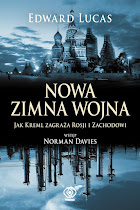
But the story in recent years is different. Instead of Russian companies raising their standards, foreigners have been dropping theirs. Foreign capital markets gladly handle stolen goods if the price is right. Western accountants audit the indefensible and hastily revoke audits for clients who have fallen foul of the Kremlin. Western law firms, disgracefully, let themselves be used to intimidate those who criticise powerful Russians. (A large chunk of the advance for my book, The New Cold War, was spent on legal fees; some of the most pungent passages were excised or diluted, not because they were incorrect, but because the cost of litigation is so high.)
It would be possible to argue (though Stuermer doesn't do so explicitly) that this is just too bad. The West has dropped its standards in dealings with Saudi Arabia and with China, so why not do so with Russia? Our system has survived the influx of petro-dollars and it will survive a flood of petro-euros too. All that talk of human rights, freedom and justice is just for show. It may have helped us win the last Cold War, but nobody takes it seriously now. Nothing short of a major war with Russia will be allowed to disrupt trade and investment, and as that is not going to happen, there's nothing to worry about.
That is a well-informed if cynical argument, and it is truer than I would wish. But it is not a clincher. Saudi Arabia and China have their interests, sometimes rather unpleasant ones. We have seen what Saudi financing of jihadism can do. We should not make the same mistake again. Crucially, if we think that only money matters, then we are defenceless when people attack us using money.
The second big reason why Stuermer's approach is mistaken is that he creates the impression (I hope a wrong one) that he does not care two kopecks for the countries between Germany and Russia. Nato expansion to Poland is dismissed airily as a piece of domestic politicking by Bill Clinton. The expansion to the Baltic states is described mockingly as "a bad idea whose time has come". This is a huge and revealing gap in his argument. The former communist countries of the Soviet empire ("ex-captive nations", as I like, rather unfashionably, to describe them) are not passive onlookers in all this. The new member states of the EU amount to 105 million people, not much less than Russia's fast-shrinking 142 million. Add Ukraine and they easily outnumber Russia. The huge benefit of Nato expansion in the past 15 years has been to stabilise this region. Countries such as Poland do not need to base their military planning on the central scenario that they may be fighting alone against Russia. Instead, they act as part of Nato. Their weapons, training and planning are all designed to fit into the alliance. That contributes greatly to everyone's security - not least Russia's. Georgia's disastrous incursion into South Ossetia would have been all but impossible had that country been a Nato member, or even close to it. Spheres of influence may look neat from the outside; for the countries concerned, they guarantee friction and conflict (as the origins of both world wars in the last century prove).
These countries feel scared, largely with good reason, and it is shameful that Germany does not take those fears into account. An opinion poll in the Financial Times last September showed that a majority of Germans would oppose going to war to defend the Baltic states, even if they were attacked militarily by Russia. Is it any wonder that the East European countries bordering Russia feel rather twitchy, and are disinclined to place complete trust in Nato's willingness to defend them? When they are then told by Germans such as Stuermer that they should "not get hot under the collar" and that America has no business in trying to bolster their security, it is not surprising if tempers shorten.
Of all the explanations for Germany's Russlandliebe, my favourite is the cheekiest. Russia is the closest that Germany has had to a colony. It is not just the German farmers invited by Catherine the Great. German engineers flocked to Russia in the Tsarist era (a Siemens power station built in those years is said to be running in Siberia to this day). It was not quite the "place in the sun" of which the Wihelmine German empire dreamed; more a place in the snow. For much of the last century it was an abortive dream. Under Stalin, ethnic Germans were deported from the Volga region to Kazakhstan and Siberia. Under Gorbachev and Yeltsin, they were allowed to move to Germany, a few still speaking the antique German dialects with which their forbears had left three centuries earlier.
Now it is third time lucky - Germany is Russia's biggest trading partner. It needs German investment, German habits, German management, German values. Just as German visitors to scruffy homes in Britain sometimes feel an irresistible urge to tidy the messy closets and cupboards, so Germans in Russia feel an almost mystical duty to set things in order. Never mind the corruption, the bellicose rhetoric, the dreadful unpunctuality - just get going and set an example. In return, Russia offers what Germany lacks: wide open spaces (don't call it Lebensraum though); a sense of fun, of spontaneity, of a different and less dull outlook on life. On top of all that, the profits are colossal. Russia's modernisation needs just the sort of construction, heavy machinery and know-how in which Germany excels. The same combination of gritty determination and brainpower that rebuilt Germany after the collapse of the Third Reich is what is needed in Russia now. Faced with another economic miracle in the making, is it any wonder that many Germans prefer Moscow to Munich in which to do business?
That is mostly to be welcomed. Even if the economic prosperity of recent years proves to have been superficial, Russia can only return to its natural place in the European mainstream through human contact and the growth of institutions. The dependability of German business, and German experience of creating order and the rule of law in the aftermath of dictatorship, should rub off on Russia to everyone's benefit. Had he stuck to making the case for pragmatic engagement, Stuermer would be on safer ground.
The problem is that the semi-colonial relationship that Germany seems to want with Russia is in fact a two-way street. As other imperial countries know well, you may start off exporting your values and outlook, but you end up importing theirs. German business was already surprisingly corrupt even before the great push eastwards that followed the collapse of communism. Dealing with Russia has accentuated that. Germany's commitment to the Atlantic alliance was looking wobbly from the 1980s onwards; now it is frayed and rotten. Rather than exporting German virtues to Russia, the danger now is that Germans are importing Russian sleaze, corporatism and anti-Americanism.
That is bad for Russia, bad for Germany and terrifying for the countries in between. Of that risk, however, the saturnine but self-satisfied Professor Stuermer seems blissfully ignorant.
Wednesday, December 17, 2008
| [+/-] |
Russia Economy |
Russia's economy
Boom to bust and worse
Dec 16th 2008
From Economist.com
The state of the economy in Russia looks worse with each passing day
ECONOMIC growth and political stability: those were the two proudest achievements of Vladimir Putin and his ex-KGB associates in the eight years since they gained control of Russia. Now the economy is looking wobbly—industrial output in November slumped by 8.7% compared with a year earlier, according to figures published on Tuesday December 16th—the big question is whether the regime’s political control will crack too.
The rouble—a rock-hard currency since the oil price started to rise—is losing value at an accelerating rate, down by 3% this week against a basket of currencies. It has lost around 15% of its value since the summer. Even so, Russia’s huge foreign-currency reserves are steadily shrinking as the authorities defend the rouble. They are down by more than a quarter, or around $160 billion, from their August peak of $600 billion.
Russia has been hit by a double blow. One is a collapse in the oil price. Urals crude is trading around $44 a barrel, whereas Russia’s budget had pencilled in an oil price of $70. The other is the credit crunch which means an end to cheap loans for an economy that had become used to a flood of petroroubles.
The stockmarket has fallen by some 70% since its peak in May. Lay-offs are mounting. Western credit ratings agencies are downgrading Russian banks; earlier this month Standard & Poor’s downgraded Russia’s sovereign debt for the first time in nearly a decade. Industrial production is plummeting: this week marked the steepest fall since the crisis of 1998. Oleg Vyugin, a former deputy finance minister, reckons that 2009 may see GDP shrinking by as much as 4%. (The Economist Intelligence Unit, more optimistically, has cut its growth forecast from 3.7% to 3%.)
Finding an economic-policy mix to deal with that is a daunting task. Russia’s main macroeconomic problem of the past two years—inflation—is far from vanquished: it was down only slightly to 13.8% in November. But a far bigger problem is maintaining growth in an economy that during the boom years borrowed recklessly and used the money for higher living standards rather than diversification.
The rouble's depreciation does cut Russia’s current-account deficit, by making imports pricier. It takes some of the strain off the budget. But it does not help much else. Russia’s underlying uncompetitiveness was disguised by the oil boom. Now it is exposed.
Nor do bail-outs seem to be working. A $200 billion programme is helping Kremlin-linked companies stay afloat (and also consolidating the authorities’ control of the economy). But much of the money that was meant to unblock the financial system is instead going offshore. Confidence is shrivelling.
A rise in the oil price might buy the Kremlin some time. President Dmitry Medvedev last week suggested that Russia might even join OPEC, the oil-producers’ cartel. It is unclear how that would square with the nominally private ownership of most of Russia’s oil industry, or Russia’s membership of the G8 club of rich industrialised countries. OPEC members themselves may be unconvinced by Russia’s new-found enthusiasm.
Public discontent is beginning to simmer. The problem is less the tiny self-proclaimed opposition, but spontaneous protests by citizens fed up with incompetent and arbitrary behaviour. A protest by drivers in the Russian far east brought a nervy response from official Kremlin media. The regime’s popularity rested on a combination of higher living standards and selective repression. The economic crisis has weakened the effect of the former. The latter is one of the few options left. The signs are ominous. Memorial, a group that champions the cause of truth about the Stalin era, has had its computers seized in a police raid. The Soldiers’ Mothers Committee, which campaigns against conscription, says law-enforcement officials have asked its staff to prove that their offices are not used for drug-dealing.
For now, the economic crisis is scarcely discussed in Russia’s mainstream media, which has come under steadily tighter control since Mr Putin came to power. That is not likely to persuade Russians that the authorities have everything under control.
Sunday, December 14, 2008
| [+/-] |
What next for NATO |
Europe.view
What about NATO?
Dec 11th 2008
From Economist.com
How the alliance should move forward
Get article background
BETWEEN the new American administration getting going and the NATO summit in Strasbourg in April lie a few short perilous months. The story since the war in Georgia has been that NATO proved reluctant to identify Russia as a military threat, but under the authority of the supreme allied commander, a brainy American called General John Craddock, is engaged in “prudent planning”, which allows for quite a lot without requiring the authority of the North Atlantic Council.
The worry for Poles, Estonians, Latvians and Lithuanians is that pushing too hard for formal contingency-planning might be vetoed by the Russia-friendly countries in NATO. That would be a disaster. So far the situation is not bad, but neither is it stable. Faced with a revisionist, and perhaps increasingly desperate regime in Russia, NATO’s credibility could do with a boost.
Now the new American administration must decide how much it wants to try to calm Russia (something that will please Germany and other key European allies), and how much it wants to publicly bolster the security of the twitchy, strongly Atlanticist countries in Europe’s east. These are valued allies in places such as Iraq and Afghanistan—small in numbers, but strong in symbolism.
The problem won’t be lubricated by money. Some countries may be able to boast that defence spending as a share of GDP is going up. But that will be because GDP is going down, not because more money is going for bullets and battleships.
On top of all that comes the question of a new NATO secretary-general.
The best way forward would have the following elements. First would be a series of new arms-control initiatives to show the Kremlin that America takes Russia seriously. That could include talks on START 3 (covering strategic nuclear weapons, where Russia’s arsenal is already embarrassingly weak); on anti-ballistic missile systems; on the Conventional Forces in Europe treaty (holed by a Russian suspension) and on weapons in space.
A second element would be to drop explicit talk of membership for Georgia and Ukraine (agreed in principle already) and concentrate on building up boring but important capabilities such as policing arms sales, storage of ammunition and training, planning, and managing reservists (the last being a glaring failure in Georgia’s case). As those reforms take root, the chance that other NATO countries find the prospective new members more credible will grow.
A third element would be to ensure that NATO’s original mission—territorial defence of its existing members—is in no doubt. That requires the capability to send forces on expeditions; whether these are to Darfur, Somalia, Estonia or northern Norway is a secondary question. If the question of formally categorising Russia as a threat is too politically ticklish, then it can be left. The main thing is to make sure that the right forces, properly trained and equipped, are available if needed.
So far, NATO has done all right on “force planning” (which is making lists of things that are in theory available) and less well on “force generation” (which is actually providing them in practice). It is striking that it took even America 72 hours just to find the planes to bring back 3,000 troops from Iraq to Georgia in August.
A final element would be to endorse, quietly, the burgeoning Swedish-Finnish-Norwegian defence partnership in the Baltic sea and “high North”. That needs outsiders to pitch in, such as Poland and Denmark. To be fully effective, NATO needs to be realistic about what it can’t do, as well as what it can.
Thursday, December 04, 2008
| [+/-] |
Cyberwarfare |
Cyberwar
The worm turns
Dec 4th 2008
From The Economist print edition
A cyber-attack alarms the Pentagon
BATTLEFIELD bandwidth is low at best, making networks sticky and e-mails tricky. American soldiers often rely on memory sticks to cart vital data between computers. Off-duty, they use the same devices to move around music and photos. The dangers of that have just become apparent with the news that the Pentagon has banned the use of all portable memory devices because of the spread of a bit of malicious software called agent.btz.
This is a “worm”, meaning that it replicates itself. If you have it on, say, the memory card of a digital camera it will infect any computer to which you upload photos. It will then infect any other portable memory plugged into that computer (the cyber-equivalent, one might say, of a sexually transmitted disease). On any computer hooked up to the internet, this variant tries to download more nasty stuff: in this case two programs that access the hard-drive. Was it a humdrum crime of trying to steal banking details? Or something more serious? The trail has gone cold.
In any case, the malicious software (malware in the jargon) penetrated at least one classified computer network. The problem was severe enough for Admiral Michael Mullen, the chairman of the joint chiefs of staff, to brief George Bush on it. Officials are saying little more than that.
Kimberly Zenz, an expert on cyberwarfare at VeriSign iDefense, a computer security company that is investigating the attack, notes that it is not clear that agent.btz was designed specifically to target military networks, or indeed that it comes from either Russia or China (two countries known to have state-sponsored cyberwarfare programmes that regularly target American government computer networks).
Indeed, she says, by the standards of cyberwarfare, agent.btz is pretty basic; it is a variant of a well-known bit of malware called the SillyFDC worm, which has been around for at least three years. By contrast, a government commission warned Congress last month that “since China’s current cyber operations capability is so advanced, it can engage in forms of cyberwarfare so sophisticated that the United States may be unable to counteract or even detect the efforts.”
The most remarkable feature of the episode may not be the breach of security, but the cost of dealing with it. In the civilian world, at least one bank has dealt with agent.btz by blocking all its computers’ USB ports with glue. Every bit of portable memory in the sprawling American military establishment now needs to be scrubbed clean before it can be used again. In the meantime, soldiers will find it hard or outright impossible to share, say, vital digital maps, let alone synch their iPods or exchange pictures with their families.
| [+/-] |
Poland |
Europe
Poland
The tough go politicking
Dec 4th 2008
WARSAW
Poland’s lightweight government is facing its first serious challenge
IT IS more an election campaign than a government. Since he won power a year ago, Poland’s prime minister, Donald Tusk, has seemed less interested in ruling the country than in preparing for the presidential election in 2010. That is when he hopes to defeat Lech Kaczynski, whose twin brother Jaroslaw was prime minister before Mr Tusk. President Kaczynski delights in vetoing government laws and elbowing Mr Tusk aside at international meetings. So long as Poland was booming, Mr Tusk’s approach may have been sensible enough. With too small a majority in parliament to overturn the president’s veto, pushing potentially unpopular reforms has seemed pointless. So it may have appeared wiser to concentrate on highlighting the contrast between the presentable, football-loving Mr Tusk and the gaffe-prone, conspiracy-loving Kaczynskis.
The world’s economic crisis is now forcing a change of gear. Poland has not been badly affected so far. But it faces a sharp slowdown in growth, to a (probably optimistic) government forecast rate of 3.7% next year. Polish companies complain that banks, mainly foreign-owned, are raising charges punitively on short-term loans. As credit dries up, job losses are rocketing.
The government launched a new stimulus programme this week, supposedly worth 91 billion zlotys ($31 billion) and featuring loan guarantees and infrastructure spending. The packaging was good, but much of the content was a rehash of old promises. The government’s aim seems to be to keep fiscal policy tight so that the central bank can cut interest rates. That may help Poland get into the euro. Mr Tusk surprised many recently when he said this might happen as soon as 2012.
After years when soaring tax revenues disguised the inefficiency of much public spending, budget discipline is both unfamiliar and unwelcome. A plan to raise 12 billion zlotys next year from privatisation looks ambitious in the current climate. This highlights the chances missed by the previous government, which largely halted sales of sprawling state holdings that take in news-stands and furniture factories, as well as some big firms.
To keep spending down, Mr Tusk will rely heavily on his peppery finance minister, Jacek Rostowski, a British-born economics professor. He has steered through a tax reform (conceived by the previous government) that has flattened rates and simplified some of the most frustrating rules (such as the requirement that all records be kept on paper). The government has also tried to reform lax early-retirement rules. Michal Boni, Mr Tusk’s economic adviser, says the plan is to make social spending more efficient and cut paperwork that slows construction of roads and so on. But such changes risk both a presidential veto and opposition from vocal trade unions.
It all looks daunting. But Poland’s government is probably the least feeble in eastern Europe. It does not have to cope with either a collapsing property bubble or a highly leveraged financial system. Its biggest flaw is probably going easy on corruption, which the Kaczynskis tackled with wild (but often counterproductive) zeal. The uklad—Polish shorthand for the stew of ex-spooks, officials and tycoons who some believe still wield the real power in the land—may be relaxing. But all Poles are facing the economic downturn with increasing nervousness.
| [+/-] |
Europe View: Damian and the Duma |
Power, money and principle
Dec 4th 2008
From Economist.com
Defending political freedom in Russia and Britain
IMAGINE the outrage if the Russian police raided the Duma and arrested a leading opposition politician on the grounds that he had obtained leaked information embarrassing to the Kremlin. It would prompt pompous lectures from Western politicians and lobby groups about the dangers of autocracy, the need to maintain the separation of powers, and so on. When the same thing happens in Britain, it is not just bad for the political system in a country that likes to think it is the mother of parliamentary democracy. It also weakens the argument that tussles between Russia and the West are based fundamentally on values rather than geopolitics.
“Whataboutism” was a favourite tactic of Soviet propagandists during the old Cold War. Any criticism of the Soviet Union’s internal repression or external aggression was met by asking “what about” some crime of the West, from slavery to the Monroe doctrine. In the era when political prisoners rotted in Siberia and you could be shot for trying to leave the socialist paradise, whataboutism was little more than a debating tactic. Most people inside the Soviet Union, particularly towards the end, knew that their system was based on lies and murder. For all its shortcomings, the West was not that bad.
The modern Russian version is getting harder to counter. Many pro-Kremlin Russians seem sincerely to believe that no moral difference now exists between their rulers and those of other countries. Vladimir Putin is a former KGB officer? Well, George Bush senior ran the CIA. Chechnya was bloody, but Iraq was worse. Bombing Serbia and recognising Kosovo disqualifies the West from making any criticism of Russian behaviour in Georgia. These are all flawed arguments, but they are believed nonetheless.
Privately, the cynicism could be deeper still. Some may think, “We have learned that when we need something from the West, we find powerful people in a big country and pay them and then we get what they want.” The rule of law, contested elections, free media and so on are just fictions: they look nice and may fool the voters into thinking that their system is different. But in the end it is all about power and money.
It is not just the strength of the pro-Kremlin business lobby, particularly in the energy industries, in countries such as Germany and Italy. It is remarkable that politicians from both main British parties see nothing wrong in hobnobbing with Oleg Deripaska, a Kremlin crony and tycoon who is unable to visit America because of FBI concerns about his business practices and partners.
Events such as the police raid on the home and parliamentary office of Damian Green, a leading British Conservative politician, make it worse. Senior police officers saw nothing wrong with locking Mr Green up for nine hours and taking his private documents, computer, mobile phone, fingerprints and a DNA sample.
Nobody has resigned or been punished. One could easily get the idea that the British authorities not only believe they are above the law but act that way, with impunity.
Actually, things are not yet quite that bad. Voters will decide what they make of it. Unlike in Russia, nobody knows who will win the next general election in Britain, just as nobody knew in advance who would win the American presidency. Contested elections are the ultimate backstop. But real political freedom needs more than that. It is not just what happens at elections but all the other things in between them that matter—including opposition politicians being able to go about their business without being humiliated or intimidated. That’s worth fighting for; in Russia and in Britain.
Tuesday, December 02, 2008
| [+/-] |
Wprost--Britain, Poland and History |


I have a new sideline as a fortnightly columnist for the Polish weekly Wprost. My opening salvo is here (in Polish). For the non-Polonophones, the English version follows
Did the British kill General Wladyslaw Sikorski? Or connive in a Soviet plot to do so? I doubt it. But as the wartime leader’s fate comes again into focus, so too comes Britain’s irritatingly lopsided view of wartime history.
It’s personal for me: my great-uncle, Charles Portal, (known in the family as “Peter”) was chief of the air staff during the war (and knew Sikorski).
He argued strongly for Polish pilots to be allowed to fly alongside the RAF in the Battle of Britain (some British military bureaucrats thought they were too ill-disciplined). His beaky face can be seen, just behind Churchill, in the most famous picture of the Yalta conference (see above, ringed in red). After the defeat of the Nazis, he insisted, against Soviet objections, that Polish aircrew be allowed to march, in uniform, in the Victory parade in London. He won that fight-but the Poles said that unless all military units were included, the airmen would not take part.
Sadly he died when I was nine, so I could not quiz him about General Sikorski, Yalta, or anything else. But I like to think that he was horrified by the post-war settlement in Europe that handed half the continent over to the Soviet occupiers.
Most British people see it differently. For them, the story of the war is a Hollywood one, of heroic solitary struggle followed by glorious victory. Every time I hear talk of how Britain fought “alone” after the fall of France in 1940, I complain (on behalf of the Poles, and also the Greeks). And as Poland gets forgotten, Stalin’s Soviet Union gets a whitewash: sanitised as our “wartime ally”, with little mention of the cost borne by both Russians and others.
Every time I hear that victory in 1945 brought “freedom” to Europe, I quibble: to Western Europe, maybe, but what about our allies? And what’s this about a neat end in 1945? The Żołnierze wyklęci were fighting for years afterwards and Józef Franczak was not caught until 1963. The last Estonian partisan, August Sabbe, hid in the woods until 1978 (he drowned trying to escape from a KGB search party). It was not until the last Russian soldier left the Baltic states on August 31st 1994 that one could really say that the military venture launched by Hitler and Stalin was really over.
It would be nice to think that this is just an interesting argument for historians. But Vladimir Putin’s Russia makes it topical. When I am presenting my book, the New Cold War, I like to shock audiences by asking them to imagine that the Third Reich had survived for decades, with Hitler dying in 1953 like Stalin, and being followed by a long period of stagnation under a German version of Brezhnev. Then I ask them to imagine that a “reform Nazi” (called Michael Gorbach for the sake of argument) tries to reform the unreformable with a mixture of “Öffenheit” and “Umbau” (ie “Glasnost” and “Perestroika”).
Then Herr Gorbach is toppled by a failed hardline coup (just like Gorbachev); the Third Reich collapses (just like the Soviet Union); long-forgotten nations like Denmark, the Netherlands and Austria return to the map of the world from which they were obliterated in 1938-40 (just like the Baltic states).
Then we get a new country called the German Federation, supposedly democratic and friendly. But after a few years a former SS officer (called Waldemar Puschnik) becomes leader. He moves swiftly to limit media freedom and control the political system (just like retired KGB officer Vladimir Putin). But outsiders argue that the German people want stability and it is not our job to interfere.
But then imagine that our putative SS-Obersturmbannführer Puschnik says that the Anschluss and the Munich agreement were “legal” (Just as Mr Putin does about the Molotov-Ribbentrop Pact). That German officials tell the Dutch and the Danes that they should be grateful to the German people for their independence, that they should keep German as a second official language and that they should allow automatic citizenship to all settlers who moved there during the occupation era. (This is pretty much what the Kremlin says to the Baltic states now).
And then imagine that a German government newspaper argues that there were no gas chambers at Auschwitz (Rossiskaya gazeta, a state-run Russian newspaper said in September 2007, followed by four other mainstream Russian news outlets since then, that the Katyn massacre was the work of the Nazis and not of the NKVD).
My British audiences often find that bewildering and shocking. But at least it gets them thinking. Dealing with Russia now is not just about geopolitics and realpolitik. It is about values-and they are particularly visible in our treatment of historical facts. General Sikorski knew that and complained fiercely about wartime Soviet lies on Katyn. I wish my compatriots took history seriously too.


