


 Posts
Posts




I am too embarrassed to repost this piece in full but it contains a vivid if highly-coloured account of what I was up to in 1989, written in the Daily Mail's trade-mark style.
Thursday, October 29, 2009
| [+/-] |
My memories of 1989: sex, cricket and revolution |
| [+/-] |
Estonia ahead |
Baltic economies
The Estonian exception
Oct 29th 2009 | RIGA AND TALLINN
From The Economist print edition
Estonia gets a boost, but worries persist about its Baltic neighbours
SMUGNESS is Estonians’ least attractive feature, at least in the eyes of their Baltic neighbours, Latvia and Lithuania. A surprise endorsement by the International Monetary Fund of Estonia’s plans to join the euro in 2011, coupled with gloom about the other two countries, will only make that worse.
All three Baltic states are facing double-digit economic declines in GDP this year, following the collapse of credit bubbles created by reckless lending and spending. Many outsiders have wondered if the three countries can maintain their fixed exchange rates, which peg the national currencies to the euro. A currency or banking collapse in the Baltic would spook markets elsewhere in the region, threatening wobbly economies such as Hungary’s.
So for the past year the focus has been on averting disaster. Plunging tax revenues made the chances of any Baltic states meeting the criteria for joining the euro look slim. In Latvia, for example, the government is struggling to keep next year’s budget deficit down to 8.5% (see chart)—a condition for the continuation of a €7.5 billion ($11 billion) IMF-led bail-out package. To join the euro, the deficit must be sustainably below 3%.
But it now looks as if, barring upsets, Estonia by the middle of next year will have met all the criteria for joining the euro. Inflation is low; government debt is negligible (indeed the country still has net public assets) and next year’s budget sets a deficit of 2.95%. That is thanks, the IMF says, to Estonia’s thrifty habits in public finances. The government has cut spending hard and early. It sped through modernisation projects financed by the European Union. This acted as an economic stimulus. Latvia and Lithuania have found it much harder to follow the same path. Lithuania has dodgy banks and spiralling debts; Latvia has lost credibility among outsiders because of its failure earlier this year to cut spending as promised.
For safety’s sake, the IMF still wants Estonia to raise and broaden taxes a little. Car-owners, for example, pay no car or road tax. But Andrus Ansip, the prime minister, already feels vindicated. He says the prospect of euro adoption will boost investors’ confidence and speed the country’s recovery.
Attention now shifts back to Latvia, where the IMF and EU are holding up a new budget, due to be passed on October 28th. They worry that the precarious governing coalition lacks political will, and that the crisis is unfairly hitting the poor. They want Latvia to dump its flat tax for a more progressive system. But Latvia says higher taxes would discourage entrepreneurs and that chaos in the state revenue office means that the higher rates would bring in little extra cash. No reason to feel smug there.
| [+/-] |
NATO and Russia |
War games
Oct 29th 2009 | RIGA AND TALLINN
From The Economist print edition
Jitters in eastern Europe over Russia’s military manoeuvres
SCAREMONGERING is where defence-planning and politics overlap. Big military exercises in western Russia and Belarus, which finished earlier this month, were based on the following improbable scenario: ethnic Poles in western Belarus rise up and “terrorists” from Lithuania attack the Russian exclave of Kaliningrad. More than 10,000 troops from Russia and Belarus countered them, reinforcing Kaliningrad from the sea and sending special forces behind the enemy lines. Three NATO–like brigades, one visiting, one Estonian and one Latvian, then invaded western Russia, where they were successfully rebuffed by the elite Pskov-based 76th air assault division, reinforced by a motorised rifle brigade.
Military exercises need a notional enemy and, from Russia’s point of view, NATO is the obvious choice. Because the alliance has expanded to Russia’s borders, taking in a dozen ex-communist members over strenuous protests from the Kremlin, it is all the more desirable to send a strong signal. What is more, Western countries have been urging (and helping) Russia’s military forces to become more professional. That requires practice drills.
The main aim of the Russian exercises may indeed have been to measure progress on military reform, particularly the creation of more Western-style autonomous brigades. And, plainly, Russia is neither willing nor able to fight a real war with NATO. Yet the war-games look alarming to neighbours. They recall that the war in Georgia in August 2008 followed many years of exercises, and they point out that NATO has no formal contingency plans to defend its vulnerable Baltic members. Nor has the alliance held land drills on the territory of any of its new members. Indeed, until two years ago NATO’s threat assessments explicitly discounted the idea of conflict with Russia.
Russia faces many security problems within its borders, and its armed forces are still rusty. It is hard to see why preparing for an implausible armed attack from the West should be a priority; these days America and its allies have little time to rehearse big-war manoeuvres because their soldiers are too busy fighting, or training to fight, insurgencies in Iraq and Afghanistan. Similarly, the idea of Lithuanian-based “terrorists” invading Russia is risible.
Western military analysts have noted Russia’s use of destroyers and landing craft from the Black Sea and Northern Fleets to back up its feeble Baltic-based naval forces. They also noted the deployment of Russia’s most advanced S-400 air defence system in Belarus and a parallel drill conducted by the Strategic Rocket Forces, the guardians of the Kremlin’s nuclear arsenal. “The scope of the exercises, the weaponry used, the troops involved and the scenarios rehearsed all indicate unequivocally that Russia is actually rehearsing a full-scale conventional strategic military operation against a conventional opponent,” says a report by Kaarel Kaas, an analyst at an Estonian security think-tank, the International Centre for Defence Studies.
Dividing the exercise into a northern war-game (called Ladoga) and a southern one (Zapad-09) brought each below the 13,000-troop threshold at which Russia is obliged to invite outside observers. Some neighbouring countries were not able to monitor the manoeuvres (Lithuania, with a handful of observers in Belarus, was an exception). That does not build confidence.
From what outsiders can gather, the performance of Russian forces was patchy. A joint Belarusian-Russian headquarters worked poorly. Drones—a big feature of Western armies—seem to have been used mainly for show. Moving large numbers of troops and equipment around, a weakness during Russia’s war in Georgia, took too long.
Polish, Baltic and other officials will meet in Warsaw shortly to discuss the significance of the exercises. NATO will assess them next month. America certainly took careful notes: the USS Cole, a guided-missile destroyer, visited Estonia. NATO warplanes mounted a modest air exercise. A planned exercise in the Baltic states next year is likely to be beefed up, perhaps with the involvement of part of NATO’s new mobile Response Force.
Russia’s armed forces may be ramshackle, but many European members of NATO are in poor shape too. The alliance’s ability to defend the Baltic states depends almost wholly on American involvement. NATO hawks complain that members such as Germany and Italy are blocking attempts to draw up formal contingency plans for all its members—something that President Barack Obama has demanded. The doves retort that NATO’s Article 5, which says that an attack on one member is an attack on the whole alliance, is deterrent enough; new members who question its worth are hurting their own cause.
Yet easterners are raising their voices in talks about NATO’s new “strategic concept”, a document to define its purpose that will be adopted next year. With NATO focused mostly on the fighting in Afghanistan, they want a clear statement that old-fashioned collective defence of NATO territory is still a priority. Only that, they say, will convince their voters that, with Russia flexing its muscles nearby, sending troops to Afghanistan is worth it.
| [+/-] |
Slovakia/Hungary |
Europe.view
Linguistic discontents
Oct 29th 2009
From Economist.com
Slovaks, Hungarians and missing data
THE row is over but the problems remain. Amid an outcry from neighbouring Hungary, and discreet pressure from other outsiders, Slovakia’s government has backed away, for the moment, from implementing its badly drafted and intrusive-sounding new language law.
Despite the backdown, hopes that membership of the European Union and NATO would bring a permanent end to central Europe’s tribal conflicts and historical grudges now look over-optimistic. It would be good if all concerned—the Slovak government, Hungarians in Slovakia and Hungary’s political parties—paused for reflection about the troubling issues that divide them. But the economic crisis, and the likely victory of the tough-talking Viktor Orban and his right-of-centre Fidesz party in Hungary’s parliamentary elections next year, are among the reasons for expecting another flare-up sooner rather than later.
A short list of Hungarian grievances would go like this. Since 1992 the new Slovak state has made its largest linguistic minority feel like outsiders. Native Slovak-speakers increasingly dominate the upper reaches of government; the handful of Magyarphones in the diplomatic service has been purged (from ten ambassadors to one, for example). The parts of southern Slovakia where Hungarians tend to live have missed out on foreign investment and have the worst public services. Bilingualism is declining: few mother-tongue Slovaks learn Hungarian; Hungarian-language schools teach Slovak remarkably badly. The rise of the Slovak National Party has made anti-Hungarian racism alarmingly acceptable in public life.
Slovak grievances read rather differently. Hungary has a conceptual problem in accepting that Slovakia is a real country. Public figures there stir up Slovakia’s Hungarians with reheated historical wrongs. The number of ethnic Hungarians in Slovakia is exaggerated: many of them are in fact Gypsies (Roma). All citizens of Slovakia are equal before the law and talk of discrimination is absurd. All efforts to pamper the Hungarians just make them complain all the more, in an annoying and disloyal way. If Hungarian-speakers really do not feel at home in Slovakia then they can leave.
To an outsider, the striking thing is the prevalence of assertion and the absence of facts. How many people in Slovakia are really “ethnic Hungarians” as opposed to, say, Hungarian-speaking Roma, or native Slovak-speakers with Hungarian surnames, or the products of mixed marriages who do not regard themselves as being fully in one camp or the other? Are those who self-identify as ethnic Hungarians better or worse paid, housed or educated than other population groups? Is this changing over time? Is bilingualism declining? How many go to Hungary for higher education? How do their fortunes compare to Slovak universities’ alumni? What are the statistics on mixed marriages, migration, and life expectancy? And how do all these compare to the comparable population groups in Hungary proper, and to Hungarians living in other places such as Transylvania in Romania or the Vojvodina province of Serbia?
Nobody seems to be collecting this data, either in official statistics or in academic surveys. Lessons could be learned from Britain’s diplomatic service, which makes a big effort to attract applicants from a wide range of class, ethnic and linguistic backgrounds and monitors how successful this has been. But Slovak officials react with shock at the idea that monitoring the composition of the civil service could help settle arguments about prejudice. “It would not be politically correct” says a senior government spokesman.
That seems a rather lazy and complacent approach. Consequently, without even the elementary information to know what is right and what to do, the two sides remain entrenched in their silos of ignorance, making myths, and sooner or later, mischief.
Thursday, October 15, 2009
| [+/-] |
British Waffen-SS Legion? Not likely... |
TWEAK history a bit. Imagine that in 1940 Hitler and Stalin divide Britain between them. Both occupying powers behave abominably but in different ways. After a rigged election, Scotland is declared part of the Soviet Union. Stalin imposes a one-party state and planned economy with a terrifying secret-police apparatus, liquidating normal life and decapitating the country. Tens of thousands of people—lawyers, teachers, businessmen, priests, journalists, and even philatelists—are woken in the small hours, given ten minutes to pack and then deported to slave labour camps in northern Norway. Few ever return. South of the border, the Nazi military dictatorship rounds up England’s Jews, supported by local anti-Semitic collaborators. Industry is commandeered by the Nazi war machine. Anti-Nazi activity is lethal; thousands are shipped off to work as forced labourers. Others, disgracefully, even volunteer as concentration-camp guards and for auxiliary police battalions in the hope of gaining privileges or settling scores. Life is dire, but for most of the non-Jewish population it is much less awful than in the Scottish Soviet Socialist Republic. In 1941 Hitler attacks Stalin. As the Red Army flees Scotland, Jews suffer terrible pogroms. Many Scots blame them, quite unfairly, for being allied with the communists. (In fact, though many Scottish communists are indeed Jewish, Jews feature prominently among the “bourgeois elements” deported to Norway). Many Jews die of starvation or typhus in the Glasgow ghetto. Most are gassed in death camps, some on British soil, some further afield. As the Nazis start losing the war they conscript thousands of teenagers into a “British legion” of the Waffen-SS. About one-third of this unit are volunteers, desperate to stave off another Soviet occupation at least for long enough for their families to escape to neutral Ireland. Some have ardently helped the Nazis. Despite last-ditch resistance, Soviet power is restored in Britain by 1944, with implacable vengeance. A doomed underground army fights on (its last partisan is killed only in 1975). Britain regains its freedom only when the evil empire collapses. Digesting that historical trauma would take time. Britons’ views of their country’s SS troops would probably be rather ambiguous: few would call them heroes, but few would condemn them outright either. Many British people might focus more on their own suffering than that of the all-but vanished Jewish population. Outsiders would do well not to jump to conclusions. Stereotypes linking the Holocaust in Britain to “endemic anti-Semitism” before the war would clearly be ludicrously simplistic. Amid the current row about the Conservative Party’s new alliance with Poland’s socially conservative Law and Justice party and Latvia’s nationalist Fatherland and Freedom/LNNK party, British commentators would do well to bear some history in mind. Fatherland and Freedom (which has roots in the anti-Soviet dissident movement) says Latvian SS veterans have the right to pensions and public gatherings. Yet Jon Snow, a British television presenter, misleadingly dubbed the party “neo-Fascist”. Also on the same programme, he failed to challenge a British comedian, Stephen Fry, who deplored Poland’s history of “right-wing Catholicism”, terming it “deeply disturbing for those of us who know a little history, and remember which side of the border Auschwitz was on”. Mr Fry is entitled to criticise Poland’s record on gay rights and the Tories’ choice of friends. But it is horribly unfair to mention Auschwitz (a death camp run by German Nazis in an occupied country) in the same breath. The million-plus Poles, both Gentile and Jewish, who perished there deserve better. And commentators from Britain, which escaped the war unoccupied, should try approaching other countries’ wartime history with more humility and less self-satisfaction.
Europe.view
Unoccupied BritainOct 15th 2009
From Economist.com
It looks simpler from across the Channel
Wednesday, October 14, 2009
| [+/-] |
Lebedev interview |
here
Thursday, October 08, 2009
| [+/-] |
|
Europe.view
Old rows, new book
Oct 8th 2009
From Economist.com
Albania and Macedonia quibble over an encyclopaedia
IT IS normally hard to get excited about encyclopaedias. Indeed, in the internet age, it is quite hard to sell them at all. But in Macedonia, a new national encyclopaedia has sparked a row worthy of the 19th century, with furious denunciations, forced resignations, hurried political intervention and appeals to outsiders to join in the condemnation of insulting entries.
The row underlines Macedonia’s still-fragile national identity. Here is a non-exclusive list of possible views. One is that Macedonia does not exist at all. It is simply a bit of Bulgaria, amputated by the rise of post-war Yugoslavia and then hijacked by self-interested local politicians (some Romanian nationalists see Moldova the same way). Those who think they are Macedonians are “ethno-politically disorientated” Bulgarians.
From another point of view, the country’s existence is not in doubt, but the name is an insult to Greece. Hardline Hellenes think that the “Skopjans” are cheeky Slavs trying to hijack the name of Macedonia, which was, is and will always be an inalienable part of Greece.
Another view comes from Albania, Macedonia’s western neighbour. From an Albanian nationalist point of view, Macedonia is not a state, but a compromise, and perhaps only a temporary one. A much-abused ethnic Albanian minority has finally managed, partly by force of arms and partly thanks to international pressure, to gain some constitutional rights, which must be defended vigilantly.
But what about the majority ethnic grouping in this country of 2m people? That is where the encyclopaedia comes in. Published by the Macedonian Academy of Sciences and Arts, it trod hard on some sensitive toes. For a start, it asserted that the Albanians were relative newcomers to the territory, settling it only in the 16th century. From an Albanian point of view, that is exactly the wrong way round: it was the Slavs who are the newcomers, and who should behave themselves in the company of their hosts. Worse, the encyclopaedia also referred to the Albanians as “highlanders”. That, apparently, is an insult.
Another entry describes Ali Ahmeti, the leader of the ethnic Albanian insurgency in 2001, as a war-crimes suspect. Many may query the methods he and his fighters used, but he has never been indicted, and he now heads the junior party in the country’s coalition government. Amid student demonstrations and other protests, Albania’s prime minister, Sali Berisha, called the book “absurd and unacceptable” and complained about “identity based on the forgery of history.”
The encyclopaedia is now being hastily rewritten. But it would be nice to think that some of the energy on display could be directed toward bigger issues. One is sorting out the name dispute with Greece. The new centre-left government in Athens may soften the Greek insistence that its northern neighbour drop “Macedonia” before joining international organisations. Macedonia could clear up a couple of troubling human-rights cases, such as that of Spaska Mitrova, a young mother who has lost custody of her two-year-old daughter, in a dispute with strong political overtones (she identifies herself as Bulgarian, and says Macedonians have ill-treated her in retaliation). From the Albanian side, Mr Berisha could be more careful in describing all of his compatriots as members of “one nation”.
Silly rows about encyclopaedia entries are not just distracting. They also damage outside perceptions of the region and thus its chances of integration into the rest of Europe. The sensible response to a bad book is to yawn, or to produce a competitor. And by complaining so loudly, critics have given the encyclopaedia publicity that most booksellers could only dream of.
| [+/-] |
Latvia (from Economist website |
Ailing fast
Oct 7th 2009
From Economist.com
Bad news from Latvia raises fears of contagion across eastern Europe
THE patient emerges from intensive care, hurls the medicine at the doctors and bites his blood donor. That may be an unfair characterisation of the recent news from crisis-stricken Latvia, but it is pretty much how outsiders see it. The prime minister, Valdis Dombrovskis, is refusing to make the spending cuts mandated by international lenders and has floated a new law that would partially expropriate foreign banks’ loan books.
It would be worrying enough if the European Union’s weakest economy defaults, devalues or implodes. But what scares outsiders more is the effect of Latvia’s latest wobble on other ex-communist economies, which until this week seemed to be surviving the financial crisis with less trouble than some had feared.
In recent weeks, the news from Latvia had seemed mildly encouraging, after a year during which the country has been kept afloat thanks to an $11.1 billion international bail-out. The breakneck decline has slowed: the economy is expected to contract by 17.5% this year, but by only 3% in 2010 and to return to growth in 2011, according to a forecast by SEB, a Swedish bank (and big lender to Latvia). The current account, which showed a yawning deficit of 1.42 billion lats ($3 billion) in the first seven months of last year has been transformed to show a 581m lats surplus in the same period of 2009.
The main outstanding issue is next year’s budget deficit. International lenders had softened the target to a mere 8.5% of GDP; the government still had to push through spending cuts of 500m lats to meet this.
But this week Mr Dombrovskis startled outsiders by saying that cuts of only 225m lats would be necessary. He has pencilled in a further 100m lats in better tax revenues—counting, apparently, on a faster economic recovery than anyone expects. The hesitation has brought stern warnings. Sweden’s finance minister, Anders Borg, said outsiders’ patience was “limited”—his country is due to provide SKr10 billion ($1.45 billion) in a loan tranche in early 2010. The EU’s monetary affairs commissioner, Joaquín Almunia, has publicly rebuked the government too. Mr Dombrovskis has now backtracked, saying that if the cuts are necessary, they will be made.
But doubts remain. Mr Dombrovskis lacks the authority to push tough measures through parliament and his public wobble could be seen as an attempt to summon up another burst of international pressure on the government to do the right thing. If so, it is risky.
The same could be said about another of Mr Dombrovskis’s moves—calling for a draft law that would restructure domestic assets of foreign banks. Borrowers would be liable only for the collateral value of their loan (eg, a house bought with a mortgage) rather than the whole amount. Banks would also be unable to evict defaulters from their homes without rehousing them. A fall in property prices of over 50% has sent Latvia’s private-sector debts to foreigners ballooning. They will need restructuring eventually. But this proposal looks unworkable, clumsy and damaging. Shares in Nordic banks, which have been the biggest private-sector lenders to Latvia, dipped on the news.
If Latvia fails, with a strike by international lenders prompting a debt crisis or a bank run, the spotlight then turns to the neighbouring Baltic states of Estonia and Lithuania. They are not in the same political mess, but both have also pegged their currencies to the euro and are facing huge and painful adjustments. Some wonder if the EU might accelerate its recognition of Estonia’s impressive progress in sorting out public finances by giving it early approval of its plans to join the euro in 2011. But where would that leave Lithuania, which is nowhere near balancing its books and borrowing expensively from private lenders instead of turning to the IMF?
An even bigger question involves the future co-operation between the IMF and EU. They worked together closely during the emergency rescue of Latvia in December. Now ties are strained: the IMF thinks Latvia should devalue its currency. EU officials are determined that it should not, for fear of the wider effect on ex-communist countries that are trying to join the euro zone. That has led the EU to squeeze the IMF into accepting softer conditions on Latvia than it would have wished for. For all those involved, in Brussels, Washington, DC, and Riga, patience is running out.
Thursday, October 01, 2009
| [+/-] |
extradition |
Extradition
Succumb and deliver
Oct 1st 2009
From The Economist print edition
Extradition laws are getting tougher and tighter. But they remain messy, even if your name is not Polanski
IT IS a fair bet that if a humble Polish immigrant called, say, Pawel Romanski had skipped bail after pleading guilty to raping a 13-year-old in Los Angeles 30 years ago, fleeing to France would have done him little good, and his fate, however unfair, would never have become a cause célèbre. Most of the time, international extradition is a boring business involving a lot of dull form-filling, after which wrongdoers are taken back to face justice.
But add a dose of celebrity, a dash of politics, and sharply clashing cultural attitudes, and things change. Swiss police arrested the film director Roman Polanski (pictured above) on September 26th, fulfilling an American arrest warrant issued in 1978. In that year Mr Polanski fled the country to avoid sentencing by a Los Angeles judge. Arrested for rape, he had agreed to a plea bargain in which he admitted unlawful sexual intercourse with a 13-year-old. A French-born Pole, Mr Polanski has dual citizenship, thus benefiting from France’s restrictive extradition laws. He has since travelled in Europe, but never returned to the United States.
His arrest has sparked a diplomatic rumpus. The French and Polish foreign ministers jointly asked America for clemency—though their governments later distanced themselves from these calls. Film-industry luminaries such as Woody Allen, Pedro Almodóvar and Martin Scorsese are supporting a petition calling for his immediate release. For Mr Polanski’s fans, the extradition decision is vindictive and sinister. His whereabouts were no secret: he was invited to Switzerland to receive an award at the Zurich film festival. Some suspect that the wily Swiss set a trap, hoping to placate America, which has been cracking down hard on Swiss tax shelters. Certainly Mr Polanski had travelled to the country many times in the past, without incident. Why had the American court only now sought to enforce the warrant?
Others, especially in America, see the issue differently. By jumping bail, Mr Polanski cocked a snook at American justice. The passage of time if anything aggravates that. So did his attempts (without showing up in person) to have a Los Angeles court dismiss the case late last year, and his successful lawsuit in London against an American magazine. (He gave evidence by videolink). The witness statement given by Mr Polanski’s victim still makes harrowing reading (though she has long since settled with him in a civil-law suit, and has supported his efforts to close the case). Justice would be ill-served if fame mitigated any crime, especially one like rape.
Mr Polanski’s case is one of several high-profile and highly politicised extraditions now in court. America is also trying to extradite Viktor Bout, a Russian arms dealer, from Thailand. Russia is trying to extradite Yevgeny Chichvarkin, a mobile-phone tycoon, from Britain on charges of extortion and kidnapping. He says his life is in danger if he is returned. Britain has previously refused to extradite other Russians, including a former Kremlin insider, Boris Berezovsky, on the ground that they cannot expect a fair trial in Russia.
Politics plays a big role in extradition. Some countries—France, Russia and Israel are examples—rarely or never extradite their own citizens (though they will send back foreigners). Diplomatic clout decides which countries conclude treaties with others, and on what terms. Exact reciprocity is rare. The fourth amendment to America’s constitution requires proof of “probable cause” for an arrest. But for America to extradite someone from Britain the level of proof is rather lower: information (not evidence) that provides a “reasonable basis to believe that the person committed…the offence for which extradition is sought”. Many find that imbalance galling.
Bond bound
The biggest flaw in extradition is not politics, however, but the treatment of those who lack Mr Polanski’s wealth and connections. As extradition becomes speedier and procedures tighter, the risk of miscarriages of justice rises, and in a way that the humble and innocent may find difficult to resist. A report to the British House of Commons this year highlighted the case of an elderly British citizen called Derek Bond, who was arrested, at gunpoint, in February 2003 while on holiday in South Africa. After being held for three weeks, it turned out that the American extradition request was based on a fraudster who had stolen Mr Bond’s identity.
A second concern is deeds that count as crimes in one country but not another. In October 2008 an Australian Holocaust-denier, Gerald Fredrick Töben, was arrested at Heathrow Airport while flying from America to Dubai. Germany wanted his extradition for publishing anti-Semitic material on his website. (An English court freed him after a month.) Free-speech defenders worry that in other cases vaguely worded laws against “xenophobia” could be used to extradite the controversial and eccentric, as well as the obnoxious.
The third worry is that rules on legal aid, interpreting, bail and the like vary widely between countries. That makes gaining justice in a foreign court dauntingly difficult. Such worries are particularly acute in the EU, where the “European arrest warrant”, a fast-track procedure agreed in 2002, has removed many of the bureaucratic barriers to speedy extradition—but also some of the safeguards. Charlotte Powell, a London-based barrister and chair of the Extradition Lawyers’ Association, notes that the desire to harmonise procedural rules has outstripped the harmonisation of substantive elements.
Moreover, the grounds on which a court may refuse extradition still vary sharply country by country. If a crime took place several years ago, notes Ms Powell, a Greek court may regard it as time-barred and decline to extradite, even though other EU countries would count it as still prosecutable. Another difference concerns what lawyers call “specialty”: making sure the person is prosecuted only for the crime the extradition order cites. Some countries’ courts are finicky about this. Others see warrants as small hooks to catch big fish.
Criminal-justice authorities understandably want their reach to be global. But they make mistakes. Standing trial in your own country is likely to give you a better chance of dealing with such errors than if you are hauled into court abroad—assuming, of course, that you come from a law-governed and civilised country.
| [+/-] |
Europeview/Germany and CEE |
Europe.view
Lostpolitik
Oct 1st 2009
From Economist.com
Will the Free Democrats quell east Europe's fears?
EASTERN EUROPE owes a huge debt to the Germans. By showing that capitalism worked better than planned economies, West Germany helped win the cold war. East Germans kept trying to escape, forcing the Soviet-backed regime to build the Berlin Wall, destroying communism’s claim to be popular. East German people-power brought that wall down and tore up Stalin’s map of post-war Europe by demanding unification. In the 1990s Germany forced expansion onto the European Union’s agenda and then made it happen (and paid for it, German taxpayers would add sourly). And to this day, Germany’s Vergangenheitsbewältigung is a template for other countries wanting to come to terms with their past.
All the odder, therefore, that Germany is not more popular in the east. The burgeoning trade and political ties between Berlin and Moscow have spooked the countries in between. Germany and Russia are planning a condominium, just like 70 years ago, the worriers say. An opinion poll last year showing that a substantial majority of Germans would oppose the military defence of the Baltic states if they were attacked further stoked those fears. The countries between Russia and Germany feel squeezed—all the more so now that America is distracted, NATO divided, and Britain out of the game.
Germans find that sort of talk rather hurtful, especially when it is laced with crude references to the Nazi past. Some Polish politicians have made a speciality of that. The result is a vicious circle. German policymakers see the easterners as ungrateful and mad, so concentrate more on the profitable business of selling things to Russia. The easterners see a game being played over their heads, and get even crosser.
Until this weekend, the easterners had a point. Even the best German diplomats could not conceal the fact that Germany’s economic relationship with Russia to some extent trumped the security fears of the nominal allies in the east. German scepticism about NATO expansion was well-known. Even the departure of the Russia-loving Gerhard Schröder, who after leaving the chancellery went to work for a German-Russian gas pipeline, made little difference. Angela Merkel might have the right instincts, the Poles and others reckoned, but she was constrained by the grand coalition with Mr Schröder’s old party, the Social Democrats.
This weekend’s election offers a glimmer of light. The Social Democrats are out and the liberal Free Democrats (FDP) are in. Their leader, Guido Westerwelle (pictured at right, above), is likely to be Germany’s new foreign minister. Although a foreign-policy novice, one of his few notable campaigns was against Mr Schröder’s business dealings. The ex-chancellor fought a lengthy legal battle to gain an injunction preventing Mr Westerwelle from repeating allegations of improper conduct.
It would be premature for the east Europeans to pin much hope on Mr Westerwelle. Even in the days of his FDP predecessor, the legendary Hans-Dietrich Genscher, it was the federal chancellery, not the foreign ministry, that largely decided Germany’s foreign policy. Freed from the baleful influence of the Social Democrats, Mrs Merkel may be tougher with Russia on some issues. But Germany’s business lobby is the biggest supporter of the “Russia First” policy. And conservatives in Mrs Merkel’s CDU/CSU have the closest ties to German industry.
What could make a difference is having a solidly pro-nuclear German government. If Germany makes serious plans to extend the lives of its nuclear power stations, it reduces the country’s dependence on imported Russian gas—the cornerstone of the “special relationship” between Berlin and Moscow. Perhaps countries such as Poland, which love whinging about energy security but have been slow in doing anything practical, may then get round to following Germany’s example. Just don’t expect gratitude.
Thursday, September 24, 2009
| [+/-] |
Happy anniversary! |
Europe.view
Happy holidays
Sep 24th 2009
From Economist.com
When to give good and bad news to east Europeans
HISTORY was a long time ago, unless it happened to you. Anyone with bad news for eastern Europe forgets that at his peril. The American administration stumbled this month when it cancelled a planned missile-defence base in Poland on September 17th. That is the anniversary of the Soviet attack on Poland in 1939, which sealed the country’s fate for the next 50 years.
Poland produces more history than it consumes, so almost any day will be an anniversary of something—usually something miserable. But this was a blooper: it would be a bit like giving America bad news about its security in the Pacific region on December 7th. That (as many Poles probably don’t know) is the anniversary of the Japanese surprise attack on Pearl Harbour in 1941.
Some big dates are also national holidays, but many others are not. So here is a handy guide to days that carry heavy emotional baggage.
If modern Russia wants to reach out to Estonia, or if western countries want to offer support, February 2nd would be a good day. That is the anniversary of the 1920 Tartu peace treaty, when Soviet Russia recognised the newborn republic. It is still legally valid but presently ignored by the Kremlin. For Latvia, the counterpart is the Riga peace treaty signed on August 11th of that year.
Poland and Lithuania could settle their still-festering differences (mainly arcane wrangles about spelling) on February 2nd. On that date in 1386, the Polish parliament elected Jogaila, Lithuania’s Grand Duke, to be king, immediately after he renounced paganism and married his Polish counterpart, Jadwiga, starting a mighty dynastic union. May 3rd would also work: in 1791, the Polish-Lithuanian commonwealth adopted Europe’s first modern national constitution.
Conversely, if the west has more bad news for Poland, it should at all costs avoid giving it between February 4th and 11th. Those are the dates of the infamous Yalta conference in 1945, when Stalin bamboozled Franklin Roosevelt into accepting the Sovietisation of Poland. The Molotov-Ribbentrop Pact (signed between Soviet and Nazi foreign ministers on August 23rd 1939) has similar echoes.
For the Czechs and Slovaks, August 20th and 21st are the miserable anniversary dates of the Soviet invasion of Czechoslovakia in 1968. Other bad days for Czechs include November 8th, when Bohemian nobility and Protestantism were defeated at the Battle of the White Mountain in 1620; and February 25th, when a communist putsch in 1948 extinguished a brief period of post-war freedom. Be particularly nice to any Czech foreign ministers you meet on March 10th. In 1948 the most famous of them, the much-loved Jan Masaryk, died in a mysterious suicide.
Tread carefully with Hungarians on June 4th. That is the anniversary of the treaty of Trianon which in 1920 dismembered old imperial Hungary. Hungarians are also particularly sombre on November 4th, when a Soviet invasion crushed their anti-communist uprising in 1956.
Every other country in eastern Europe and plenty elsewhere, have similar dates: they are left out this article merely because of reasons of space. Readers are welcome to complete the calendar by adding their comments.
But the big question is why the anniversaries still matter so much. One reason is the feeling of suffocation during communist rule, when marking the real version of history was risky. Another is the sense that historical wrongs are not yet put right. No outsider intervening in a wrangle between Denmark or Germany would worry about avoiding August 1st, which in 1860 marked a turning point in the bitter row about the Schleswig-Holstein Question. As you go east, the wounds are rawer.
| [+/-] |
Baltic turnaround? |
WORRIES about a financial meltdown across eastern Europe have receded, thanks to generous outside support, some canny policies and the start of a recovery in western Europe. Poland, the region’s biggest economy, has managed to avoid recession altogether. But even the worst-hit countries are breathing more easily. This week Moody’s, a rating agency, noted a “fragile stabilisation” in the three most vulnerable: Hungary, Latvia and Iceland. Some mildly encouraging signs are visible. Thanks to plunging imports, and foreign investors refinancing local subsidiaries, Latvia’s second-quarter current account showed a surplus of 14.2% of GDP. A year ago it was a 15.1% in deficit. The economy shrank by a grim 18.7% year-on-year, but the worst seems to be over and some industries are picking up. The slowdown has hurt the banks, which have lost nearly $1 billion this year. That is a big hit for the shareholders, mainly Nordic, whose managers lent so recklessly. But contrary to expectations, only one big local bank had to be rescued and nobody has pulled out. Doomsters who forecast bank runs and devaluation in Latvia (followed by Estonia and Lithuania, which also have currencies pegged to the euro) have little to show for their gloomy prophecies. Yet Latvia, in particular, is still in an economic and political mess. It survives because outside lenders, chiefly the European Union and the IMF, think it worth propping the country up with smallish loans (by bail-out standards). The European Commission lent €1.2 billion ($1.8 billion) in July, following an IMF-led €7.5 billion agreement in December. In theory, the money is conditional on spending cuts and tax rises. The IMF agreed, reluctantly, to a budget deficit of 8.5% of GDP in 2010, down from 10% this year. The measures have been striking: some civil servants’ pay is down by a third. But that followed big rises during the boom years. The real shortcoming is that Latvia’s squabbling politicians have ducked deeper changes in the public sector and the civil service. The People’s Party, supposedly part of the ruling coalition, says it may block a planned property tax. The government promised its lenders it would implement this, but it has to secure support in parliament. Some senior politicians in the People’s Party want to swap the currency peg for a band. The EU’s monetary affairs commissioner, Joaquín Almunia, lectured the Latvian prime minister, Valdis Dombrovskis, recently about the need for “national consensus” behind the austerity plan. But the prime minister cannot crack the whip over his coalition’s powerful party chiefs, who prefer carping about government policies to voting for them. Outsiders find Latvia’s politicians unimpressive and exasperating. But they are unwilling to cut the country adrift or to push it into a devaluation. Turmoil in Latvia could easily spread to the neighbours, or even to Hungary (see article). Latvia’s biggest asset is its neighbours’ popularity, says one weary international banker. Foreign money may plug the public finances for a bit and so avert disaster. But it is not a recipe for prosperity. Latvia did not solve its growth-choking problems, such as corruption and poor public services, when times were good. Nor is it solving them when they are bad.
Baltic economies
Feeling a bit fragileSep 24th 2009
From The Economist print edition
A Baltic meltdown has been averted, but the gloom may yet last a bit longer

| [+/-] |
Fakt article |
This is the English version. The Polish version (behind a pay barrier) is available here
Once is chance. Twice is bad luck. Three times is enemy action. That is the easy conclusion to draw about America’s treatment of what was until recently its strongest and most important European ally.
The first snub came over Radek Sikorski’s candidacy for the secretary-general’s post at NATO. His chances were slim, but he still deserved respectful treatment from America. Not a bit of it: Mr Sikorski struggled even to get a meeting at the National Security Council
Then came the commemorations on September 1st-a black day in Polish history and worthy of high-level attendance by Poland’s friends (Britain’s foreign secretary David Miliband turned up, and politely sat in a back row listening to other people make speeches). The initial American choice to lead the delegation bordered on the insulting: William Perry, who as defence secretary under Clinton opposed Poland’s NATO application. Only belatedly did the administration send Jim Jones, the national security adviser. By then the damage was done.
The third snub was the worst. Militarily and technologically, the decision to scrap George Bush’s ambitious, costly and unpopular missile defence plans makes sense. It would have been easy to reassure Poland and the Czech Republic that America was still taking their security seriously. Beefing up NATO’s planning, holding some military manoeuvres (to match Russia’s sinister Zapad-09), making it clear that the Patriots would be real ones-all would have showed America’s commitment to Poland. Instead, there was a hurried, almost amateurish announcement, with late night phone calls and a low-level delegation scurrying between Warsaw and Prague. And all of it on one of the blackest days in Polish history.
Actually, it is not enemy action-just carelessness and ignorance. I have tried explaining to American officials that September 17th is the Polish equivalent of Pearl Harbour. They sometimes seem only dimly aware of what I am talking about. For the youngsters at the White House and State Department, this is ancient history. At the top, there is the same feeling of detachment. Mr Obama is the first president of the United States with no sentimental or family ties to Europe. It would be quite unfair to say that for Mr Obama, Europe stands for slavery. It just doesn’t stand for much.
In particular, on the foreign-policy to-do list, eastern Europe’s security jostles for attention with other far more pressing problems (Afghanistan, Middle East, climate change, North Korea, Iran-and of course Russia). Until something goes badly wrong, it won’t be a priority.
The worst thing is that Russia knows this. America doesn’t need to sell out eastern Europe. Neglect will do fine. In theory, NATO’s security guarantee still holds. But without real contingency planning and regular manoeuvres, this is pleasant fiction, not hard fact. Once it becomes clear that Washington’s attention is elsewhere, Russia and its west European friends (Germany chiefly, but also Italy, Austria and others) can do their dirty deals, especially in energy, unchecked.. Without a powerful outsider to act as a counterweight, Europe’s power-politics are always vulnerable to a Russian-German deal. It has happened before and now, with America weak and distracted, it can happen again.
| [+/-] |
Sunday Telegraph on Obama |
Published: 8:30AM BST 20 Sep 2009
President Barack Obama is beginning to look out of his depth
It is lovely to feature in other people's dreams. The problem comes when they wake up. Barack Obama is an eloquent, brainy and likeable man with a fascinating biography. He is not George Bush. Those are great qualities. But they are not enough to lead America, let alone the world.
Admittedly, the presidential to-do list is terrifying. The economy requires his full-time attention. So does health-care reform. And climate change. Indeed, he deserves praise for spending so much time on thankless foreign policy issues. He is tackling all the big problems: restarting Middle East peace talks, defanging Iran and North Korea and a "reset" of relations with Russia. But none of them are working.
Regimes in Moscow, Pyongyang and Tehran simply pocket his concessions and carry on as before. The picture emerging from the White House is a disturbing one, of timidity, clumsiness and short-term calculation. Some say he is the weakest president since Jimmy Carter.
The grizzled veterans of the Democratic leadership in Congress have found Mr Obama and his team of bright young advisers a pushover. That has gravely weakened his flagship domestic campaign, for health-care reform, which fails to address the greatest weakness of the American system: its inflated costs. His free trade credentials are increasingly tarnished too. His latest blunder is imposing tariffs on tyre imports from China, in the hope of gaining a little more union support for health care. But at a time when America's leadership in global economic matters has never been more vital, that is a dreadful move, hugely undermining its ability to stop other countries engaging in a ruinous spiral of protectionism.
Even good moves are ruined by bad presentation. Changing Mr Bush's costly and untried missile-defence scheme for something workable was sensible. But offensively casual treatment of east European allies such as Poland made it easy for his critics to portray it as naïve appeasement of the regime in Moscow.
Mr Obama's public image rests increasingly heavily on his extraordinary speechifying abilities. His call in Cairo for a new start in relations with the Muslim world was pitch-perfect. So was his speech in Ghana, decrying Africa's culture of bad government. His appeal to both houses of Congress to support health care was masterly – though the oratory was far more impressive than the mish-mash plan behind it. This morning he is blitzing the airwaves, giving interviews to all America's main television stations.
But for what? Mr Obama has tactics a plenty - calm and patient engagement with unpleasant regimes, finding common interests, appealing to shared values - but where is the strategy? What, exactly, did "Change you can believe in" – the hallmark slogan of his campaign – actually mean?
The President's domestic critics who accuse him of being the sinister wielder of a socialist master-plan are wide of the mark. The man who has run nothing more demanding than the Harvard Law Review is beginning to look out of his depth in the world's top job. His credibility is seeping away, and it will require concrete achievements rather than more soaring oratory to recover it.
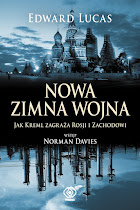
Edward Lucas writes for The Economist and is the author of The New Cold War (Bloomsbury, £8.99)
The President's domestic critics who accuse him of being the sinister wielder of a socialist master-plan are wide of the mark. The man who has run nothing more demanding than the Harvard Law Review is beginning to look out of his depth in the world's top job. His credibility is seeping away, and it will require concrete achievements rather than more soaring oratory to recover it.
Edward Lucas writes for The Economist and is the author of The New Cold War (Bloomsbury, £8.99)
Thursday, September 17, 2009
| [+/-] |
Thoughts (unpublished) on conspiracy theories |
Mysterious terrorist attacks prompt public panic, allowing a cynical government to trample on the constitution. Would that be
Many challenge the official account of 9/11, using an array of anomalies, loose ends, contradictory testimony, signs of official bungling and so forth. Their main case is inferential: 9/11 “allowed” the Bush administration to go to war in the
The apartment block bombings in
But the similarity is only superficial. For a start the 9/11 conspiracy theorists cannot agree on what theory they are propounding (were the hijackers real? Were the planes real? Did the authorities deliberately fail to prevent the attack or actually stage it?). The theories mostly involve implausibly intricate scenarios (planting large quantities of high explosive in skyscrapers, for example). The official account of the 9/11 attacks in
By contrast, those who have challenged the official version of events in
Cynics would argue that juxtaposing the two events sends two messages, aimed at different constituencies. To those who think the conspiracy theories about 9/11 are lunatic paranoia, the comparison suggests that questioning the account of the Russian bombings is similarly batty. For those who believe that the Russian bombings were indeed suspicious, it suggests that mass murder by governments is the norm: the American government conspired to kill thousands of its own citizens, so why worry about
Neither the atrocities in
| [+/-] |
Obama, Missile-Defence and Europe |
Missile defence in Europe
Pie in the sky
Sep 17th 2009
From Economist.com
America calls off plans for missile defence in Europe, pleasing peaceniks but worrying hawks
| |
 | |
MAYBE some jam tomorrow, but none today. That is the American message to its most stalwart allies in the ex-communist world as Barack Obama’s administration shelves plans to deploy ten interceptor rockets in Poland and a radar station in the Czech Republic.
The timing of the announcement is poor, coming on September 17th, the anniversary of the Soviet attack on Poland in 1939. In a country highly tuned to symbolic snubs, it matters that nobody in Washington seemed to know or care about that.
The news was broken clumsily too: the Czech prime minister was woken by a brief phone call from Mr Obama the night before the decision was made public. Poland is at least gaining some promise of a beefed up American contribution to its security. The Czech Republic receives nothing, for now, in exchange for its loyalty to a controversial scheme that was supposedly a symbol of America’s commitment to the region. Atlanticist politicians in Prague feel humiliated by that.
From a practical point of view, the American change of plan is understandable. The technology of the planned scheme was unproven, and the Iranian threat it was supposed to counter only nascent. “A scheme that doesn’t work, against a threat that doesn’t exist, in countries that don’t want it” was how Zbigniew Brzezinski, the hawkish former national security adviser to the Carter administration, has described it. As with the decision to deploy cruise and Pershing missiles in Western Europe in the 1980s, something that was meant to strengthen the Atlantic alliance ended up putting it under strain. Czech and Polish public opinion was increasingly sceptical, or outright hostile to the bases. Other countries worried that pro-American hawks in ex-communist countries were risking an unnecessary confrontation with Russia.
America’s new plan is different. Mr Obama described it as a “stronger, smarter, swifter” defence of American forces in Europe and of American allies. Reinforcing existing defences against possible long-range Iranian missiles is seen as a problem for the future, given that America now says the Iranians are working more on short- and medium-range missiles than on long-range ones. For now, the extra deployments will be less capable sea-based Aegis missiles which could shoot down any medium-range Iranian missiles aimed at Europe. After 2015, with further development, the scheme could involve land-based versions of the SM3 missile that would, the Pentagon says, ultimately cover all of Europe by 2018.
That would probably start off in bases closer to Iran but it might include central Europe too. “We will look forward to working with Poland about how they might fit into that,” says a senior State Department official. If a future Czech government wanted to take part, it would also receive a sympathetic hearing.
The administration has tried to sweeten the pill by reiterating a promise to place a battery of Patriot short-range missiles to defend Warsaw. Poles expect that these will be American-financed, part of NATO’s commitment to the country’s defence, and fully integrated with Poland’s own air-defence system. American officials are more cagey, saying only that there is still plenty to discuss.
Russia has welcomed the decision to shelve the existing scheme. It is unlikely to be pleased about any replacements based anywhere in the former Soviet empire, which the president, Dmitry Medvedev, has described as a sphere of Russian “privileged interests”. If America can obtain Russian help in squeezing Iran’s nuclear and missile programmes, and if Russia also backs down on its threatened deployment of missiles in the Kaliningrad region, which borders Poland, it would be easy for the administration to walk away even further away from missile defence.
Although Poles may bemoan the timing, America's calendar may be shaped by the forthcoming UN General Assembly. Russia and China have been reluctant to agree to further sanctions or other pressure on Iran. Mr Obama may hope that by demonstrating a willingness to engage Russia in Europe he might have a better chance of co-operation in the Middle East.
But the big task for America now is to reassure the Poles and other twitchy ex-communist countries such as the Baltic states, that it remains committed to their defence. It stresses that plenty of high-level structures exist to discuss these worries and that NATO is actively rethinking its plans for defence in the east. The question is what will really be on offer in these discussions. The east European countries, squeezed between an increasingly close Russian-German friendship, look anxiously towards America to safeguard their interests. But is America looking at them?
Thursday, September 10, 2009
| [+/-] |
praising Poland and Ukraine |
Europe.view TWO of the five most-commented-on articles on The Economist’s website last week were about east European history. One concerned the icy relations between Slovakia and Hungary. The other was about Russia’s failure (in some eyes) to apologise properly for the Soviet past. In each case the tone of the comments was often strikingly unpleasant, with sweeping accusations of anti-Semitism, genocide, imperialism, treachery and mendacity. It would be easy for outsiders to conclude that the ex-communist countries are prisoners of their past, tediously fighting the same old battles with the same old stereotypes. All the more reason, therefore, to highlight the happy state of Polish-Ukrainian relations, which is especially remarkable given the two countries’ miserable common history. Make grins, not war Take just a few events from (nearly) living memory. In interwar Poland, Ukrainians suffered savage repression; seen from another viewpoint, they behaved disloyally and ungratefully towards their country. During the war, the Ukrainian Insurrectionary Army murdered some 60,000 Poles in Volhynia. Were they vicious Nazi stooges or fighters for their country’s stolen independence? In 1945 Polish anti-communist soldiers shot hundreds of Ukrainians in the village of Pawlokoma. That was either an understandable retaliatory action for previous anti-Polish atrocities in the region, or a brutal and unprovoked massacre. In 1947 the country’s new Communist rulers deported 200,000 Ukrainian-speakers from south-eastern Poland. That could be seen as Bolshevik barbarity, or evidence of Polish ethnic nationalism. The town known as Lwow in interwar Poland is now in Ukraine. Some think that is where it should be, others think it tragically stranded. And so on. These are true controversies, about which even the best historians disagree. Evidence for what exactly happened and why is scanty and needs careful weighing. Just as it would be lazy and wrong simply to apportion equal blame to both sides, it would also be wrong to paint the history as a one-dimensional story of vicious Ukrainian attacks on Poles (or vice versa). The Wikipedia discussion pages for these events give a good flavour of the passions aroused and the scope of the disagreements. What is commendable, though, is the way in which politicians have behaved. For 20 years Polish and Ukrainian leaders have worked hard to accentuate their countries’ shared history and common tragedy, rather than stoke disagreements for political ends. In 2006, for example, presidents Lech Kaczynski and Viktor Yushchenko (pictured above) jointly unveiled a memorial in Pawlokoma. Previously, the Ukrainian authorities had supported the restoration of a war memorial in what is now Lviv, for Polish soldiers who died in the 1918-1920 war. This week Mr Yushchenko visited Poland, laying yet more wreaths jointly with his host. That is not just good business for florists. It could be a template for other countries seeking to step over the shadow of history. Neither Poland nor Ukraine tries to rub each other’s nose in its wrongdoing, nor does either insist on seeing their own soldiers as untainted heroes. Neither side expects the other to see history exactly its own way. Much more important is to focus on the common factors: the conflicts between Poles and Ukrainians were made immeasurably worse by the activities of outside powers, Nazis and communists alike. Disagreements remain, but are eased by practical cooperation. The planned Polish-Ukrainian-Baltic military brigade is a good example of this. Only 65 years ago, Ukrainians, Lithuanians and Poles were killing each other. A joint Polish-Belarusian-Russian peacekeeping force serving in some troubled and faraway corner of the world may seem unimaginable now. But it is not impossible. Poland and Ukraine have shown readiness to overcome some of their most painful historical traumas. Can Russia do the same?
Wreath by wreathSep 10th 2009
From Economist.com
How east Europe can step over history's long shadowAP

| [+/-] |
Mikhalkov obit |
Sergei Mikhalkov TALENT without flexibility was a dangerous thing in the Soviet Union, as thousands found to their cost. Sergei Mikhalkov had talent aplenty, as a poet, playwright, children’s writer and satirist. But, more important, he was flexible. Mr Mikhalkov penned the words to two versions of the Soviet national anthem, one glorifying Stalin and one ignoring him. After Russia shrugged off communism he wrote a third version, to the same tune. In between he denounced two of the country’s greatest writers, Boris Pasternak and Alexander Solzhenitsyn. Every regime he served gave him medals. Servility towards power is a ubiquitous phenomenon. An 18th-century English song, “The Vicar of Bray”, tells of a country clergyman who changed his allegiance with the times, Romish under James II, strongly Protestant under the Hanoverians, through every other point of the ecclesiological compass. The chorus runs: And this is Law I will maintain Mr Mikhalkov offered a Soviet version of the theme. He was born in the Russian empire to a noble family, with admirals and princes among his forebears. Many of that breed fled from the Red Terror that followed the Bolshevik revolution; those that stayed behind had their lives blighted, or ended, by the communist hatred of “class enemies”. But young Sergei slipped through that net, working humbly in a Moscow loom factory and writing poetry on the side. That was his ticket to the new aristocracy of proletarian cultural workers. He remained, at heart, a courtier and a cynic. He gained his first success with a children’s verse fable about the exploits of a very tall policeman, “Uncle Steeple” (Dyadya Styopa). Given what the real-life police were doing in the Soviet Union in the 1930s, it should probably be classed as escapist fiction. A little later, he wrote a poem praising—he claimed—a girl with a dark-blond plait whom he had met at the House of Writers. Her name was Svetlana. Since that was also the name of Stalin’s daughter, the poem brought the tall, tinny-voiced, stuttering young man to the dictator’s notice. In 1944 he was commissioned, along with Gabriel El-Registan, a Soviet Armenian poet, to write the words for a new national anthem to replace the “Internationale”. The rousing hymn of the international workers’ movement—freedom thundering against oppression, starvelings rising to end the age of cant—was felt not to fit the needs of the contemporary Soviet Union. Its replacement, set to a stirring tune composed by Alexander Alexandrov, was a sentimental and militaristic ditty that gave equal weight to Lenin and Stalin: Through days dark and stormy where Great Lenin led us Admittedly, national anthems rarely make great literature, and other Soviet poets, including on one occasion even the great Anna Akhmatova, found it expedient to put their pens at the service of the regime. But Mr Mikhalkov’s loyalty was exceptional. A good example of his work is “I want to go home”, a 1948 propaganda play about post-war orphanages in Germany, in which sinister British officials try to brainwash and kidnap Soviet children to use them as spies and slaves in the imperialist cause. The plot is foiled by heroic and kindly Soviet officers. The truth was exactly the other way round: it was the Soviet secret police who organised ruthless repatriations, often dividing families. Mr Mikhalkov’s lyrics did not long survive Stalin’s death in 1953. From then until 1977 the anthem was played without words, neatly illustrating the Soviet Union’s ambiguous attitude to Stalinism. Mr Mikhalkov adapted to the times, becoming a pillar of the Soviet literary establishment and a notable enforcer of party discipline in its ranks. He wrote, in 1970, some new lyrics to the national anthem. To mark the introduction of the new Soviet constitution in 1977, the authorities adopted them. They ignored Stalin, praised Lenin and highlighted Russia’s role in welding the “unbreakable union of free-born republics”. The union proved anything but. Given a whiff of freedom under Mikhail Gorbachev, the captive nations of the Soviet empire bolted for the exit. They found, or restored, their own songs. But Russia was tongue-tied. It dumped the Soviet anthem and adopted a resonant tune by Glinka, called simply “Patriotic Song”. It failed to catch on. In 2001 Vladimir Putin ordered the restoration of the Soviet tune—and it was Mr Mikhalkov’s turn to write, once again, the words. The anodyne doggerel that resulted is no better (and certainly no worse) than other countries’ national anthems. It praises Russia’s uniqueness, mentions God, and concludes: “Thus it was, is, and always shall be!” Except that it isn’t, and wasn’t. Few knew that better than the wily Mr Mikhalkov.Sep 10th 2009
From The Economist print edition
Sergei Mikhalkov, the Kremlin’s court poet, died on August 27th, aged 96
Until my Dying Day, Sir.
That whatsoever King may reign,
I will be the Vicar of Bray, Sir!
Our eyes saw the bright sun of freedom above
and Stalin our Leader, with faith in the People,
Inspired us to build up the land that we love.
| [+/-] |
US-CEE woes |
AFTER two decades of sometimes fervent Atlanticism in the ex-communist world, disillusionment (some would call it realism) is growing. At its height the bond between eastern Europe and America was based, like the best marriages, on a mixture of emotion and mutual support. The romance dates from the cold war: when western Europe was sometimes squishy in dealing with the Soviet empire, America was robust. When the Iron Curtain fell, ex-dissidents and retired cold warriors found they had plenty in common. America pushed for the expansion of NATO, guaranteeing the east Europeans’ security. In return, ex-communist countries loyally supported America, particularly in providing troops for wars in Iraq and Afghanistan. That relationship is now looking more wobbly. A new poll (see chart) by the German Marshall Fund, a think-tank, shows that western Europe is now much more pro-American and pro-NATO than the ex-communist east. Until last year, the eastern countries swallowed their misgivings about George Bush, while the west of the continent writhed in distaste at what many saw as his administration’s incompetence and heavy-handedness. The ascent of Barack Obama has boosted America’s image in most countries, but only modestly in places like Poland and Romania. Among policymakers in the east, the dismay is tangible. In July, 22 senior figures from the region, including Vaclav Havel and Lech Walesa, wrote a public letter bemoaning the decline in transatlantic ties. One reason is that the Obama administration is rethinking a planned missile-defence system, which would have placed ten interceptor rockets in Poland and a radar station in the Czech Republic, in order to guard against Iranian missile attacks on America and much of Europe. That infuriated Russia, which saw the bases as a blatant push into its front yard. Changing the scheme—probably using seaborne interceptors—risks looking like a climb-down to suit Russian interests. Poland is also worried that a promised battery of Patriot air-defence missiles, originally to protect the interceptors, may now be only a temporary loan of dummy rockets for training purposes—“just a sales exercise”, says an official in Warsaw, crossly. America says it never intended to station real rockets there permanently. The administration also botched its participation in Poland’s 70th anniversary commemoration of the start of the second world war on September 1st. Other countries, including Russia and Germany, sent top people. America, initially, offered only a retired Clinton-era official. William Perry, who was a notable sceptic about NATO expansion. After squawks of dismay, Jim Jones, the national security adviser, went too. But Poles sensed a snub. Another sore point concerns leaks from America suggesting that Poland, Romania and Lithuania hosted secret bases for the “rendition” and interrogation of terror suspects. All three strongly deny this, but in at least some voters’ eyes, the American alliance is now tainted with connivance in kidnap and torture, followed by cover-ups. The next time American spooks want some secret help, they may find their allies less handy, an official notes. NATO’s credibility is under scrutiny too. New members say that their voters will not support out-of-area expeditions—the alliance’s big focus just now—unless it is properly defending the home front against any threat from Russia. It does not help that Russia and its ally, Belarus, have just started a large joint military exercise, ostentatiously named “Zapad” (West). At a big NATO advisory conference in Brussels in July, east Europeans were aghast to hear one prominent German academic describe Article V, the alliance’s cornerstone collective-security guarantee, as a “fiction”. In the event of a Russian threat, say to the Baltic states or Poland, would NATO act or merely consult? A worried easterner describes the alliance as “like an 18th-century Polish parliament, hostage to its most irresponsible member”. NATO is trying to soothe those fears. A committee that writes the threat assessment has rejigged its view on Russia. Contingency planning, once taboo, is taking shape. The Obama administration has been more vigorous on this front than its predecessor. But what Poland wants, especially if the missile-defence base is cancelled, is practical preparations, such as regular manoeuvres, and fuel and ammunition stockpiles. Part of the problem is the much-publicised attempt by the Obama administration to “reset” relations with Russia. Few in eastern Europe object to that in principle. But many worry about how it will work in practice. Will Russia demand greater sway in the region in return for help, say, in squeezing Iran? The State Department has tried hard to reassure America’s allies. But the official at the National Security Council directly responsible for Europe, Liz Sherwood-Randall, used to work for Mr Perry and shared his views on NATO expansion. East European officials flinch when her name is mentioned. Admittedly, America has many other bigger problems than its relations with eastern Europe. Self-importance and public whingeing do not win arguments in Washington. The east Europeans may have been naive in their dealings with America in the Bush years. But for all that, even people inside the Obama administration agree that it could do better.
America and eastern Europe
End of an affair?Sep 10th 2009
From The Economist print edition
The Atlantic alliance is waning in Europe’s eastIllustration by Peter Schrank


Friday, September 04, 2009
| [+/-] |
Putin in Gdansk |
Russia, Poland and history
Mr Putin regrets
Sep 3rd 2009
From The Economist print edition
Russia bandages a wound in Poland
IT IS hard to imagine modern Germany haggling with Poland about opening wartime archives, let alone over who started the war. With Russia, it is different. Vladimir Putin’s visit to Gdansk, where a ceremony this week marked the first shots of the second world war in September 1939, was both a step forward and a depressing sign of continuing difficulties.
Polish officials struggled to stay polite before the Russian prime minister’s arrival. In June the Russian defence ministry website argued that Poland had caused the war by provoking Hitler. Last month a Kremlin-controlled television channel claimed that Poland had been conspiring with Nazi Germany against the Soviet Union. Russian intelligence echoed this in a new dossier. And Russia’s president, Dmitry Medvedev, denied that the Soviet Union bore any responsibility for the outbreak of war.
Poles find such talk outrageous. The liberation of Poland from the Nazis, in which some 600,000 Soviet soldiers died, is seen as a mixed blessing, as it led to 45 years of ruinous and sometimes murderous communist rule. The country’s president, Lech Kaczynski, spoke for many when he reminded Mr Putin that the Soviet Union had “stabbed Poland in the back” with its own invasion on September 17th 1939. He compared the wartime Katyn massacre of 20,000 captured Polish officers by Stalin’s secret police to the Holocaust. When the president’s twin brother, Jaroslaw, was prime minister, such blunt talk put relations with Russia (and with similarly detested Germany) into the deep freeze.
Since he became prime minister in 2007, the emollient Donald Tusk has made friends with Germany and is now thawing relations with Russia too. He hoped that inviting Mr Putin to Gdansk with the German chancellor, Angela Merkel, would make it impossible for the Russian leader to promote a Soviet-style version of history. Poland’s own account of its history may never quite chime with its neighbours’. But disagreements with Germany—chiefly over post-war expulsions of ethnic Germans—are manageable. With Russia, history is an open wound.
Mr Putin lightly bandaged it without admitting any responsibility. He called Katyn a “crime” and said that there were “good reasons” for condemning the 1939 Molotov-Ribbentrop pact between Nazi Germany and the Soviet Union (secret protocols to that deal divided up eastern Europe). But he did not use the unambiguous language that Poles had hoped for. He said the pact was one mistake among many, likening it to the Munich agreement of 1938 when Britain and France bullied Czechoslovakia into accepting dismemberment (a dismemberment, Mr Putin spikily pointed out, in which Poland participated).
Today Munich is seen as a shameful low point in British diplomacy. Few Russians see the Molotov-Ribbentrop pact that way. Indeed, no sooner had Mr Putin finished speaking than Konstantin Semin, a presenter on Russia’s official television station, said “we have nothing to repent of and we should not apologise to anyone: the pact was the only possible solution, which preserved the lives of Poles, among others.” He also doubted the authenticity of the pact’s secret protocols.
Even the hoped-for declassification of Soviet archives is proving inconclusive. Mr Putin said this would go ahead, but only on a strictly mutual basis. That may be tricky: Poland’s wartime archives are already declassified—and somewhat scanty, not least thanks to Russian visitors.


Subscribe to:
Posts (Atom)