


 Posts
Posts




Five 600-words pieces mainly about Estonia from the economist.com "correspondent's diary" slot
Estonia
In the eye of a Baltic storm
Nov 14th 2008
From Economist.com
Prosperous but uneasy on Russia’s border
Monday
“ESTONIANS OUT OF SIBERIA—SOVIETS OUT OF ESTONIA”. Amid the protests against the imposition of martial law in Poland in 1981, that slogan—on a banner carried by two elderly émigrés outside the Polish embassy in London—stood out as seemingly the most lost of all lost causes. True, Britain, like most other Western countries, recognised Estonia, Latvia and Lithuania as still existing de jure, but de facto, they were occupied by the Soviet Union and likely to remain that way for the foreseeable future. Britain had even handed over to the Soviet authorities the Baltic gold reserves entrusted to the Bank of England for safekeeping by the pre-war governments. Complaining about the occupation inside Estonia meant arrest and deportation. In the outside world, it just looked futile.
Undaunted by this gloomy prospect, your diarist promptly hitched himself to the Baltic cause, spending many of the years since then living in, travelling to, and writing about the Baltic states. In 1990, he received Lithuanian visa 0001, issued by the authorities there in defiance of Soviet border controls (he was deported from the Soviet Union a week later). In the years that followed, he lived there and edited a newspaper. His eldest son was born in Tallinn Central Hospital—the first baby from a Western country to be born in Estonia since the Soviet occupation of 1940.
So a few days in Tallinn recently offered the chance both to reflect on the past and to worry about the present. In both cases the picture is mixed. The humming streets of the Estonian capital, now dotted with skyscrapers and clogged with large western cars, epitomise a return to prosperity and freedom that on that cold December afternoon in 1981 would have seemed as unimaginably miraculous as Atlantis re-emerging from the waves.
Indeed, Estonia’s success has excited other countries. President Mikheil Saakashvili of Georgia, for example, is a huge fan of Estonia, and based his policies of deregulation, low taxes and privatisation explicitly on policies pioneered by Estonia in the 1990s. Scores of Estonians have spent time in Georgia, advising on everything from anti-corruption efforts to spy-catching.
The temperaments could hardly be more different: Estonians are reserved, unhierarchical and efficient. That makes them excellent team players—one reason why Estonia’s public institutions are the strongest and cleanest in the ex-communist world. Georgians, by contrast, are emotional, status-conscious and individualistic. This leads to a rather different style of work, to put it mildly. But opposites attract: Estonians and Georgians get on splendidly (much more so, in fact that either country does with its immediate neighbours).
But Estonia’s enthusiasm for “Misha” Saakashvili is now dented, partly because of distaste for some of his policies, and also because of what is seen in Tallinn as his scaremongering. After the war in Georgia, he proclaimed that “the Baltics are next”. Although Estonians and their neighbours are glad to have international attention for their problems with Russia, they are not happy about being bracketed with Georgia. “We are members of NATO and the EU; they are not. Misha’s wild talk makes it sound as if we are as crazy and vulnerable as they are,” said one official frostily.
Tuesday
THE skies over Estonia are full of American and Danish warplanes conducting a large exercise involving mid-air refuelling. It is the biggest such drill ever to take place in Estonian airspace. That is a sign of how NATO (and especially America) is already devoting more attention to Baltic security.
When Lithuania, Latvia and Estonia joined the alliance, Russia was officially not a threat; indeed, it was a NATO partner. So NATO’s presence in the Baltic states has been minimal, just a few fighter planes, supplied by a rota of other NATO countries, based at an airfield in Lithuania. The alliance bases its contingency planning on threat assessment: and if Russia is not a threat, then what is there to plan?
NATO membership for the Baltic states had excellent effects on many fronts (your diarist remembers the alarming days when excitable militias in both Lithuania and Estonia mutinied because they disliked the politics of the defence ministries). The Baltic states are far more stable, prosperous and predictable neighbours for Russia now than they were when they first regained independence. But the reverse is not the case. Russian warplanes have probed Baltic airspace to see if the foreign fighters would bother to scramble (first they didn’t; then they did; the provocations stopped). Across the border in Pskov, Russia’s most modern army units regularly practise intervention and reconquest of what some Russian politicians see as their country’s renegade Baltic provinces.
Since the war in Georgia, that has been changing. America’s top commander in Europe has specifically said that the alliance needs to work out new contingency plans to protect the Baltic states. Estonia is working out a new defence plan of its own, highlighting the need not only to engage in operations far afield (Estonia has more than 100 troops in Afghanistan) but also to protect the home front.
That will mean more anti-aircraft and anti-tank weapons, and more robust radar systems. NATO’s planning machinery is lumbering into action; the threat assessment in 2009 is likely to take formal note that Russia—perhaps not under this regime but another, nastier one—could be at least a potential military threat to alliance members such as the Baltic states and Poland. In practice, this will mean making sure that enough NATO resources—troops, helicopters, ammunition—are available in Europe for use at short notice. That will mean less for other places: not a costless policy.
NATO is also raising its visibility in the Baltic states; more exercises are planned. NATO’s cyber-defence centre is in Tallinn, and although it is not fully operational yet, it is already attracting inquiries from countries as far away as South Africa and India. A cyber-attack on Estonia in April 2007, during riots about a Soviet war memorial, failed to do much damage—Estonia is one of the most wired countries in Europe—but caused consternation in Washington, DC and elsewhere. An official speaks darkly of the possible threat created by countless billions of microchips in devices from cars to household dryers, increasingly networked but largely unsupervised. He highlights four levels of threat: disruption of the public internet; defacement of websites; theft of data (such as banking or passport details) and—worst of all—the hijacking of critical computers and introduction of false commands. That could shut down a nation’s power supply, telephone exchange or financial system.
The new centre is more of a think-tank than an operational outfit, but its experts are already in demand in other countries: two Estonians rushed to Georgia when, as war broke out, that country’s government websites were replaced with images of Hitler. Welcome to the world of cyber-commandos.
Wednesday
YOUR diarist breakfasts with an Estonian who has just been on an extended stay to Lithuania. The Baltic states have little in common apart from a tragic history and geographical proximity, so it is rare to find a local who knows all three. The Lithuanian hosts had tested their guest’s sense of humour with a barrage of jokes, mostly reflecting Estonians’ perceived icy reserve and inconsiderateness. A hitchhiker flags down a car and asks “Is it far to Tallinn?” After two hours, the driver replies, “It is now”. What really riled the Lithuanians, however, was when they asked their guest to tell some anti-Lithuanian jokes. “We don’t have any,” he replied dryly—perhaps unwittingly, if quite unfairly, confirming the stereotype of Estonians as smug and humourless.
The next appointment is a seminar for Estonian journalists about the Russian media—or as it should in most cases be called, the Kremlin propaganda machine. It is surprising that an outsider’s view is needed, but young Estonians don’t read Russian as fluently as their older colleagues. The Estonian media, especially its online bits, tend to react unthinkingly to “news”. A recent book by an obscure Finnish academic, claiming that Estonia will shortly be reincorporated into the Russian Federation, made front-page news. So did a report (which proved to be bogus) that two Estonian farmers were launching a campaign for the restoration of the “Estonian Soviet Socialist Republic”.
Yet another speaker showed why Estonians have some reason to feel paranoid: he produced a selection of Russian-language books bought at the main railway station in Tallinn, all containing outrageous falsifications of history and deeply xenophobic and threatening material towards Estonia and its neighbours. Stalin’s deportation to Siberia of the entire surviving Estonian elite, for example—many thousands of people arrested at midnight, given a few minutes to pack, and herded into cattle trucks—is in one book portrayed as an entirely reasonable response to Estonian “war crimes”.
The really worrying question is how much of this stuff Estonia’s own ethnic-Russian population believes. Your correspondent gives an interview to Estonian television urging the authorities to put more resources into Russian-language broadcasting.
In pre-war Czechoslovakia, the situation was broadly similar. Patriotic Czechoslovaks opposed German-language radio broadcasting because they believed the Sudeten Germans should learn Czech; if they wanted to listen to German programmes, they could listen to the ones from Germany itself. They did—and by the time the authorities in Prague realised their mistake, they had lost their fellow-citizens to the Nazi propaganda machine.
Most Baltic Russians watch Russian television these days—it is lavishly produced and highly watchable. Estonia and Latvia have a huge asset in the form of hundreds of thousands of ethnic Russians who have seen what life in a free society is like; many have learnt the once-despised local languages and acquired citizenship. But the authorities—still twitchy about anything that might blur the lovingly cherished national idea, have been culpably slow in making use of all their citizens. The price for that could be horrendous.
Thursday
The hottest topic in Tallinn right now—and one that no Estonian official wants to talk about, even on deep background—is a spy story. The only detail to have come out publicly so far is that a senior official at the defence ministry has been arrested and charged with spying for an unnamed foreign power (read: Russia). The Russian media is using the incident to push the idea that Estonia is a stooge for Western intelligence, and an unreliable one at that.
The ex-official is of course innocent until proven guilty, and it is right not to prejudice his trial by leaking information to the press. But some general points deserve to be made. One is that it is not much of a triumph when your spies get caught. Russia’s GRU (the formidable military-intelligence service) must be enjoying the humiliation of their great rivals, the snooty SVR (foreign-intelligence service), whose sloppy tradecraft seems to have let a prized asset fall into the hands of the enemy. Conversely, it is a healthy sign when you are an interesting enough country to be spied on, when your counter-intelligence service is smart enough to catch spies, and when you are bold enough to put them on trial rather than hushing things up. Not all NATO countries can make that boast.
Another interesting story on similar lines concerns a bunch of Irish republican extremists who were lured into a sting operation in Lithuania. Some leaders of the “Real IRA” had developed romantic attachments to Lithuanian women. Neat work by British officials and their Lithuanian colleagues created a few fake arms dealers—the basis for an elaborate sting operation in which the Irish gunmen found themselves, investigators say, caught red-handed trying to buy weapons to continue their terror campaign. Few details have come into the public domain yet. When they do, the story should help improve Lithuania’s slightly threadbare image in Britain.
The other big news today is that a recently retired Finnish military commander has written an article publicly supporting his country's membership of NATO. Finland is important to Estonia: their languages are closely related; the national anthems are sung to the same tune. After Estonia regained independence (and to some extent even before), Finland played a big role in modernising Estonia's reborn public administration.
But Finland is not in NATO, and the country’s current president, Tarja Halonen, has infuriated Estonians by saying that they suffer from “post-traumatic stress disorder” and should take a calmer attitude to Russia. That view is not shared by people in the formidable Finnish military and security establishment, who have been keeping tabs on Vladimir Putin since his days in Leningrad, when he and some associates developed a profitable relationship with some parts of Finnish society.
Another addition to the pro-NATO camp in Finland is Martti Ahtisaari, who has just won the Nobel peace prize for his work in the former Yugoslavia. All that is highly welcome in Tallinn, where officials also note the hawkish attitude of the Swedish government, and the intensifying military cooperation between the three big Nordic countries. But relations with the northern neighbour, though close, will never be quite cordial.
The Estonians think the Finns are a bit too taciturn, as this jokes illustrates. A Finn and an Estonian take a sauna together. After an hour spent in amicable silence, the Estonian produces a bottle of vodka and pours two glasses. “Terviseks”, (“Cheers”) he says. The Finn glowers. “Are we here to talk or to drink?” he asks sternly.
Friday
ESTONIA has been a hotbed of freemarket thinking, home of the flat tax, deregulation and privatisation in a way that puts other ex-communist economies to shame. But as the financial hurricane in world markets whips up the seas on the eastern Baltic, it is clear that the many pluses of those policies are matched by minuses.
Air travel, for example, is getting worse rather than better. Profit-maximising foreign airlines choose the cheapest slots for routes to small countries, not the most convenient one. Flying to Estonia from London means either leaving home at 3:30 in the morning, or arriving in Tallinn after 11:00 at night. Flights to Brussels and other European capitals are barely more convenient. The result is a subtle form of isolation—nothing like as bad as the Iron Curtain, to be sure, but a nuisance nonetheless.
A more serious vulnerability is that Estonia has sold all its banks to foreign buyers. In 1993, the newspaper in which your correspondent was the majority shareholder lost all its money when a locally-owned bank went bust. After that, selling the financial system to solid Swedes and Finns seemed by far the best way ahead. It would allow Estonian companies to borrow freely with the least danger to the country’s external financial stability. Coupled with the pegging of the newly reintroduced national currency, the kroon, to the Deutschmark (now the euro), Estonia willingly locked itself in an economic straitjacket: the only way ahead was ever-higher productivity and fast export growth.
That worked pretty well at the time. When the kroon came in, Estonia pledged its gold reserves and even its state-owned forests to support the new currency. Your correspondent and his colleagues threw away their old wallets, in order that the pristine new currency would not be tainted by even indirect contact with the despised Soviet banknotes—known dismissively as “occupation roubles”.
But later, the same arrangements stoked a property bubble. Estonians took out huge mortgages, confident that prices could only go up. When they plunged in 2007, building contractors went bust and economic growth halted. There is not much the government can do about that.
Now the worry is whether the foreign-owned banks will stand by their local branches and subsidiaries. In theory, they should. The Baltic region has been a hugely profitable and fast-growing backyard for Nordic investors of all kinds; it would be insane for them to abandon ship now.
That is the theory, and for now at least it seems to be holding. From outside, the Baltic economies may seem vulnerable and beleaguered; inside, there is a sense of calm. Indeed, some think that the downturn will prove rather beneficial. “Happiness is not just about money” was a slogan in the last election campaign, held at the height of the boom. As Estonians get used to (slightly) higher unemployment and shrinking demand, it is worth bearing in mind that today’s problems would have seemed like unimaginable good fortune only 20 years ago.
It is in that spirit that your diarist finishes his trip, giving a talk at a conference to mark 90 years of Estonia’s diplomatic service. For the majority of that period, the diplomacy was frozen: the task between 1940 and 1991 was survival, rather than active management of international affairs. All Estonia’s prewar diplomats were executed by the Soviet authorities, except for those already abroad, who were issued death sentences in absentia.
In the 1990s, Estonia’s brightest and best young people flocked to the foreign ministry to start work on making independence a reality—something that culminated in Estonia’s membership in the European Union and NATO. Now the foreign ministry seems rather underpowered—the burning, urgent patriotism that fuelled it is no longer needed. Long may that continue.
Copyright © 2008 The Economist Newspaper and The Economist Group. All rights reserved.
So it is business as usual with Russia. And what a bad business it is. Britain's decision to allow France to lead the European Union back into normal relations with Vladimir Putin's ex-KGB regime in Russia is one of the most startling volte-faces in our country's recent diplomatic history. It has left our allies in Eastern Europe – Poland, the Czech Republic, Estonia, Latvia and Lithuania – aghast at our duplicity. "Our last European hope just ----ed us. We should have known. For we are but a small faraway country about which they know nothing," a senior official in the region wrote in a despairing email after The Daily Telegraph broke the news on Friday.
European unity after the war in Georgia was never terribly impressive – a mild public rebuke and the suspension of talks on a new "partnership and co-operation agreement" until Russia met the conditions of the loosely worded truce brokered by the French president, Nicolas Sarkozy.
Russia has met some of those conditions – but not all. EU monitors are still unable to inspect the war zone properly. If they could, they would see evidence of ethnic cleansing in the two separatist enclaves of South Ossetia and Abkhazia. They would also see that Russia has increased its military presence. The message to the Kremlin is clear: you can invade a neighbouring country, threaten Europe's energy supplies, and the EU will do nothing serious about it.
The reason is simple: Gordon Brown cares little about foreign affairs, but likes the idea of stitching up deals on the reform of international finance with his new friend Mr Sarkozy. France, which is running the EU until the end of the year, wants a triumph to present to the European summit in Nice this month. Showing that it has repaired relations with Russia is part of that. It will please all the pro-Russian countries in the EU. Russia's energetic cultivation of contacts in Germany, Italy, the Netherlands, Austria and France has built up a bridgehead of influence. Those in Whitehall who watch with alarm and disgust as parts of our establishment cosy up to rich and powerful Russians have been outmanoeuvred. The idea that the start of talks is balanced by a new, careful scrutiny of EU-Russian relations should fool nobody. This is surrender.
It must be especially humiliating for David Miliband, whose condemnation of Russia's actions, in a speech in the Ukrainian capital Kiev on August 27, inspired hopes from the Baltic to the Black Sea that Britain was now a champion of the ex-communist countries' freedom and security. He excoriated Russia's "unilateral attempt to redraw the map", calling it "the moment when countries are required to set out where they stand". This week's decision casts those words in a bitter light.
It is also part of a wider and gloomier picture. Even before the war in Georgia in August, Russia was bullying its neighbours, stitching up Europe's energy market and turning money into power across the continent. In the old Cold War, the Kremlin was shackled by communism. Now it has been turbo-charged by capitalism, through the boom in oil and gas prices that has brought it
$1.3 trillion in extra revenues since 2000. That enables it to exercise influence not only on us, but among us, too. It has built up assets, commercial and human, in positions of power across Europe. German industry makes tens of billions of euros in the Russian market; Russia is Germany's main energy supplier. The former German chancellor Gerhard Schröder chairs the consortium building a Russian-German gas pipeline (conceived, in secret, while he was still running Germany).
Even though the EU is far stronger than Russia on paper, three times bigger in population terms, and more than 10 times larger as an economy, it seems unable to stand up to the Kremlin. The financial crisis has hit Russia hard – but it has hit us harder. A few years ago, threatening to freeze dodgy Russian companies out of the developed world's capital markets would have been a real threat. Now, if they find London, New York, and Frankfurt unwelcoming, they can turn to the exchanges in Dubai, Mumbai and Shanghai.
Nor does Russia greatly care if it is excluded from clubs such as the Council of Europe or the G8, or if talks on joining the World Trade Organisation or the Organisation for Economic Co-operation and Development are frozen. Such "punishments" may even reinforce the message of the ex-KGB regime to the Russian people: that their country is surrounded by malevolent hypocrites. The Kremlin's message to Europe is cold and confident: you need us more than we need you. President Dmitri Medvedev is proving as tough and tricky as his predecessor, Vladimir Putin. His new security plan is to end the Atlantic alliance, pushing America out of Europe and creating a new security regime in which the continent's biggest countries – chiefly Germany and Russia – will boss everyone else about.
It is not too late to fight back. Nato has already changed its approach. Belatedly, the alliance's top-secret military planning bureaucracy is working out how it could defend the Baltic states and Poland. Nato warplanes last week held air exercises over Estonia, while senior American commanders are paying frequent visits to the Baltic states.
That is encouraging, but it is not enough. There are other matters that need addressing urgently – including Russian spying. This has reached unprecedented levels, and is probably more dangerous and destructive to Western interests than during the old Cold War. A co-ordinated, wholesale expulsion of Russian intelligence officers and their hangers-on from, say, London, Stockholm, Oslo, Copenhagen and Warsaw would send a powerful message to the Kremlin.
The key to the West's future security is the security of the Baltic states. Estonians, Latvians and Lithuanians have thrown in their lot with us and we must not let them down. Consider this scenario. Imagine that Estonian extremists start intimidating local Russians (who amount to around a third of the Estonian population). Russia can easily stoke this covertly, while demanding publicly that Estonia crack down. Then imagine that Russian activists (again, backed, discreetly, by Moscow) set up "self-defence units" which start patrols, and set up checkpoints. When the Estonian authorities try to stop this, the Kremlin complains; Russian military "volunteers" start mustering across the border, proclaiming their intention to defend compatriots from "fascism". The Russian media report this with wild enthusiasm; the Russian authorities say they cannot indefinitely restrain the spontaneous patriotic sentiments of their citizens.
Suppose Estonia requests support under Article IV of the Nato charter. At this point, Russia's cultivation of assets in the West pays off. Germany, Italy and other big European countries tell Estonia to sort out its problems with Russia bilaterally. The result is a worse split in the Alliance even worse than the one over Iraq. Faced with the West's weakness, the Kremlin ups the odds. Estonia tries to restore order; Russia terms that an intolerable provocation and demands a change of government, immediate changes in the language and citizenship laws, and the establishment of what it calls a "Swiss solution": cantons in which Russians will be allowed "to run their own affairs". To back this up, Russian forces start military manoeuvres.
So what does Estonia do then? America may offer moral support, but is it going to risk a Third World War with Russia to protect Estonia? Such a course of events is not inevitable, or even likely. But it is not as preposterous as it should be. Too many of the ingredients are in place and the Kremlin is perfectly capable of cooking them into a dangerous dish. The big question for Estonia and its friends is what can be done to make sure that never happens.
The answer is not to give up on Nato but to complement it with a regional grouping. The existing Nordic ties between Sweden, Norway and Finland, boosted by support from Poland and Denmark, would put this scenario back where it belongs: in the world of geopolitical thrillers. Add in British, Canadian and American involvement and you would have a formidable counterweight to Russian mischief-making in both the Baltic and the Arctic – the likely hotspots of the new Cold War.
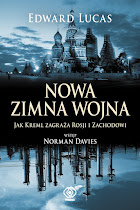
Edward Lucas is author of 'The New Cold War: How the Kremlin menaces both Russia and the West' (Bloomsbury). An updated edition is published thismonth.


